• Why Is My Aqueous Cleaning Solution Yellow? And Other Issues

    Why Is My Aqueous Cleaning Solution Yellow? And Other Issues

    Aqueous cleaning chemistries are customized for specific applications. Your aqueous cleaner can look dirty or yellowed as it works its magic. Depending on your needs, you may have a spray, immersion or ultrasonic parts washer. Many custom parts washers perform a combination of these cleaning methods. 

    Most of the time, cleaning solutions naturally change color as they work. However, the wrong concentration, temperature or amount of agitation could affect the cleaning solution—or worse, the parts. When your cleaning factors aren’t aligned, your industrial parts washer won’t perform optimally, and it could damage your parts.  

    Quick Guide to Parts Cleaning Problems  

    Problems with your chemistry or cleaning results? You can troubleshoot your aqueous cleaning chemistry by watching for these signs and always following your manufacturer’s recommendations. 

    Yellow or Brown Aqueous Parts Cleaner 

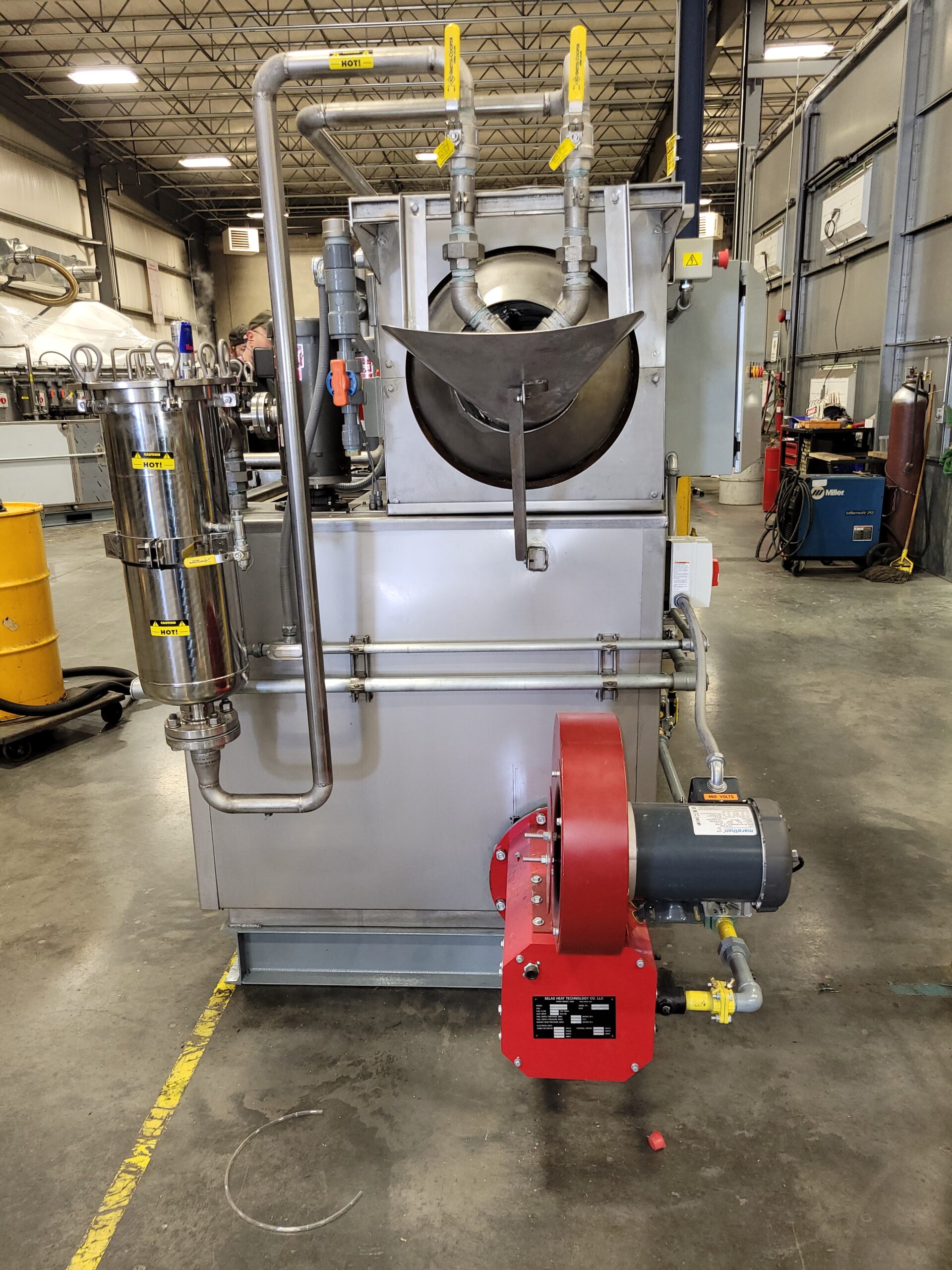
    Inside a parts washer, the cleaning solution is stored in a tank. It flows from the tank through high-pressure spray nozzles. As particles dislodge from the parts, they float in the cleaning solution, which can change the solution’s appearance. All of Jenfab’s aqueous parts washers filter out these soils so the cleaning solution can be reused. 

    Just because your cleaning solution changes color doesn’t mean something is wrong. Most aqueous solutions turn gray or brown, but this doesn’t affect their cleaning ability. Here are a few things to check if the problem persists: 

    • Temperature. The cleaning solution’s temperature could be too high. 
    • Concentration. A high concentration of cleaning chemistry can cause color changes. Be sure to follow the manufacturer’s instructions. 
    • Oxidation. Ambient air can cause oxidation with certain formulas, making the bath appear darker over time.  

    Foaming Aqueous Cleaning Solution 

    A foaming washing machine may be a funny comedy TV bit, but foam inside an industrial parts washer is downright frustrating. What causes a foamy cleaning solution? 

    • Temperature. Foaming can be caused by running the machine at a lower temperature than recommended. Be sure to run the machine at the minimum temperature stated in your safety sheet from the manufacturer. 
    • Type of soils. Lubricants or buffing agents could be the culprit. Natural oils or fats covering the parts can cause foaming. 
    • Oversaturation. Defoaming agents within your cleaning chemistry don’t work well if they are greatly overpowered by soils. Too many soils in the solution may override defoaming agents for a frothy bath. 

    You can determine if there is too much soil in your cleaning solution by taking a sample. Soils will congregate at the bottom of the sample over time, while grease and oil will float to the surface. When cleaning seriously soiled parts, you can wipe off heavy grease and oils beforehand to minimize soil saturation in the cleaning solution.

    Rainbow Pattern on Parts Post Cleaning 

    Rainbow patterns on parts typically relate to temperature, not good luck. If your metal parts develop rainbows, the aqueous cleaning solution or dryer temperature is too high. Keep in mind that raising the temperature by 17℉ can double reaction rates. Softer metals can be damaged by heat and aggressive chemical reactions. 

    Parts Are Darker After Cleaning 

    Have you noticed parts appear darker after being cleaned? You may be using the wrong type of chemistry or too much of it. Analyze these three factors: 

    • Temperature. Certain metal finishes can be altered by temperatures that are too high. Review your manufacturer’s directions to clean parts at the appropriate temperature. 
    • Concentration. Using too much cleaning chemistry at once can affect the parts. Be sure to only use the recommended amount based on the number of parts you are cleaning. 
    • Chemistry Type. Your current cleaning chemistry may not be the right fit for what you want to clean. A more aggressive chemistry can damage materials. Ask your manufacturer to test wash your parts to ensure the chemistry works as it should. 

    Starburst Pattern on Parts Post Cleaning 

    Are you seeing stars? That’s not a good thing. Starburst or spider web patterns on parts likely come from ultrasonics. An ultrasonic device emits sound waves that cause water molecules to implode upon impact. When the water molecules hit the parts, they knock off soils and particles. 

    If you’re seeing starburst patterns, your current ultrasonic frequency may be inappropriate for the parts you are trying to clean. Typically, lower frequencies knock off large soils, and higher frequencies target particles at the sub-microscopic level. Refer to your manufacturer’s directions on how to use your parts washer.

    Parts Appear Pitted After Cleaning

    Pitting is a type of corrosion that breaches a metal’s surface. Metals like aluminum and stainless steel can develop pits when their passive, oxide film is damaged. Pitting occurs if the damaged film does not immediately passivate again. Pits can be of any width or depth. 

    If your parts have small holes or cavities after cleaning, your cleaning chemistry is too aggressive for the part’s material. Check with your manufacturer to ensure you’re using the right concentration, or speak to an expert about changing your chemistry and cleaning process. 

    Make the Most Out of Your Aqueous Cleaning Chemistry   

    Aqueous parts washer solutions last longer than petroleum solvents. Water-based cleaning chemistries can be reused more often, cutting down on your company’s chemistry and waste disposal costs. Maintaining your aqueous cleaning solution is key to extending its life. 

    Here are a few ways to keep your aqueous parts cleaner fresh for longer: 

    • Use a filtering system. Polypropylene filter bags collect particles and debris to keep your tank clean. Catch larger particles and those as small as 50 microns so they don’t dirty up your cleaning solution. 
    • Get an oil skimmer. Oils left in your cleaning solution will leave residue on parts. If you’re cleaning oily or greasy parts, an oil skimmer will remove floating oils from the surface of the tank. 
    • Change solution based on performance. Don’t change your solution on a scheduled basis. If you do, you may be costing yourself money. Only replace the solution when you notice a decline in performance. 
    • Monitor the concentration. You may need to add chemicals as you use and reuse your cleaning chemistry. Additives help maintain the cleaning solution’s strength. You should review your manufacturer’s directions and test your cleaning solution before applying additives. 

    Your parts washer also plays an important role in cleaning performance. Maintain your parts washer by scooping out sludge build-up, checking the nozzles for wear, and removing deposits from heating elements. 

    Step up your parts cleaning. Jenfab Cleaning Solutions builds custom industrial parts washers. We test wash your parts for free upon request, so you can see how well our aqueous cleaning systems work.  

    Request a quote today. Tell us about your application, and our experts will design a parts washer tailored to your requirements. 

  • What’s in Your Aqueous Cleaning Chemistry?

    What’s in Your Aqueous Cleaning Chemistry?

    Aqueous cleaning chemistries are an effective way to remove soils from parts. Organic soils, including motor oil and grease, and inorganic soils, such as scale and rust, can be eliminated with the right system and chemistry. 

    Every aqueous cleaner’s solvent is water. Unlike petroleum solvents, chemistries that are water-based clean without any harmful effects. Aside from water, what’s in an aqueous parts washer solution? 

    Wetting agents, builders, sequestering agents, inhibitors and other materials are added to the chemistry, enhancing its cleaning ability. What’s added to the cleaning chemistry depends on the part’s material and soils. 

    Wetting Agents

    Water has a high surface tension. It doesn’t wet surfaces well. That’s why water is combined with a wetting agent, or surfactant, to make it an effective cleaner. Wetting agents lower the surface tension of water so that it can spread across a surface and slip underneath grime. Water and surfactants work together to pull soils from a part’s surface.  

    A Closer Look at Surfactant Cleaning Agents

    Surfactant cleaning agents are emulsifiers. They emulsify soils, like oil, ensuring the particles don’t adhere to the parts again. All surfactants have a hydrophilic end (water-loving) and a hydrophobic end (water-hating). 

    In water, surfactants group together, forming spherical structures called micelles. A surfactant’s hydrophilic ends are attracted to water, so they place themselves on the outside of the micelle. The hydrophobic ends dislike water, preferring to remain inside the micelle structure. 

    During cleaning, the hydrophilic ends lift soils from the part’s surface. The soils are attracted to the hydrophobic ends within the micelles. Once the soils are lifted, the micelles trap them inside, rendering them unable to stick to the part’s surface again. Then, the flow of the system washes them away.

    Types of Surfactant Cleaning Agents 

    • Anionic surfactants. Anionic surfactants have a negative charge and are most effective at lifting particulate soils. Examples of anionic surfactants are sulfates and gluconates.
    • Twice the production with lower energy costs.
    • Cationic surfactants. Lastly, cationic surfactants have a positive charge and can be used for antimicrobial purposes. 

    Builders

    Builders are inorganic salts that boost the alkalinity of the cleaning solution. Hydroxides, borates and silicates are common builders. These substances are used to help maintain or increase the pH level of the cleaning chemistry. A higher alkalinity helps break down grease and other soils with greater efficacy.   

    Breakdown of Cleaning Solutions by pH 

    Builders and other additives must be compatible with the part’s material. Incompatible materials can corrode or damage the part’s surface. The material that needs to be cleaned, the processes taking place and the contaminants are three things to consider when creating a custom chemistry. 

    Acidic Aqueous Solutions (pH 1-5)

    Surface treatments, such as phosphating and brightening, use acidic cleaning solutions. Moderate levels of nitric, sulfuric and phosphoric acids may be used for cleaning. Higher acidic levels may be used for descaling or derusting.

    Neutral Aqueous Solutions (pH 7-9)

    Neutral aqueous solutions are often used to clean parts after metalworking. These cleaning solutions need wetting agents to perform. They are gentle on softer metals and alloys, and they don’t leave residue behind. 

    Alkaline Aqueous Solutions (pH 9-12)

    Alkaline aqueous solutions are commonly chosen to clean industrial parts. These cleaning solutions work well for removing grease from various types of metals. After cleaning, alkaline solutions rinse well so little to no residue is left behind. 

    When spray cleaning, alkaline solutions produce little foam within the parts washer, saving you frustration down the line. 

    High-alkaline Aqueous Solutions (pH 12-13)

    Heavy-duty jobs call for an aggressive cleaner. High-alkaline aqueous solutions remove carbonized soils, heavy grease, rust and paint. On soft metals, these cleaning solutions can damage coatings and surfaces. After cleaning with a high-alkaline solution, parts need to be rinsed well to prevent corrosion and remove residue.  

    Chelators & Sequestering Agents

    Hard water is caused by the presence of calcium, magnesium and iron ions. When left alone, these ions interact with the surfactant or detergent, which depletes the cleaning chemistry before it’s able to reach the soils. Chelators and sequestering agents bind with metal ions to prevent them from interacting with the surfactant. 

    Metal ions act like dirt. They use up the available surfactant, leaving none behind for the soils we want to remove. Sequestering agents soften water by deactivating hard water minerals, allowing the surfactant to do its job as efficiently as possible. By binding with multiple metal ions, sequestering agents improve the effectiveness of the cleaning solution. 

    Chelating agents can only bind to one ion at a time. They capture ions in their claw-like structures and alter their electronic charge. Once altered, the ions remain stuck in the solution, unable to interact with the surfactant. 

    Inhibitors 

    Other additives can be included in an aqueous cleaner to protect parts from corrosion, change the viscosity or affect foaming. For example, many ferrous metals rust after getting wet. Rust inhibitors leave a protective coating on parts to prevent oxidation. Some inhibitors protect soft metals, like brass and copper, from higher temperatures and pH levels during cleaning. 

    Three Types of Soils

    The scientific principle of “like dissolves like” explains the larger relationship between solvents and solutes. Substances with a similar chemical makeup are soluble. In parts washing, cleaning solutions are often chemically similar to the contaminants.         

    1. Polar and inorganic soils are soluble in water. Machining processes produce polar salts, soaps and anti-wear additives that can be emulsified and washed away in the cleaning solution. Other polar soils include rust, tarnish and scale. 
    2. Non-polar or organic soils include stamping oils, heavy grease, wax, resins and other hydrocarbon or oxygenated contaminants. Soils produced from drawing and buffing fall under this category. 
    3. Particulates are soils that cannot dissolve in the cleaning solution. Metal chips, dust, fibers and shavings must be lifted from the part and washed away. 

    Troubleshooting Your Cleaning Chemistry 

    Sometimes, parts cleaning doesn’t go as expected. If parts aren’t coming out clean, you may need a higher concentration of the aqueous cleaner, increased pH levels or a higher temperature. Mechanics, time, heat and chemistry work in tandem to clean parts. If you run into trouble, try adjusting one of these cleaning factors or talk to your manufacturer for assistance. 

    Result: Part surfaces are dark after cleaning. 

    Possible Reason: 

    • The concentration of the aqueous chemistry is too high. 
    • The temperature of the solution is too hot. 
    • The cleaner chemistry is too aggressive for the material.

    Result: Parts have a rainbow after cleaning. 

    Possible Reason:

    • Temperatures are too high during cleaning and drying. 

    Result: The cleaning solution is yellow or brown. 

    Possible Reason:

    • The temperature is too hot. 
    • The concentration is too high for the materials. 
    • Too much emulsified oil has collected in the solution. 
    • Air has oxidized the solution, causing it to darken. 

    Result: Part surfaces appear pitted after cleaning. 

    Possible Reason: 

    • The chemistry is too aggressive for the material. Switch to a lower pH or add more corrosion inhibitors. 

    How can you make sure an aqueous chemistry will work? 

    At Jenfab, we test wash your industrial parts for free before you make a purchase. Our test lab provides particle count and molecular weight analyses from before and after the test wash.

    Are you ready to invest in an aqueous parts washer? 

    Request a quote or call (800) 524-9274 today for more information about aqueous parts cleaning. We manufacture aqueous parts washers of all sizes and configurations to meet your needs.