
When it comes to acquiring equipment for your business, there are a lot of decisions to make, such as how much to spend, what to buy, and how to pay for it.
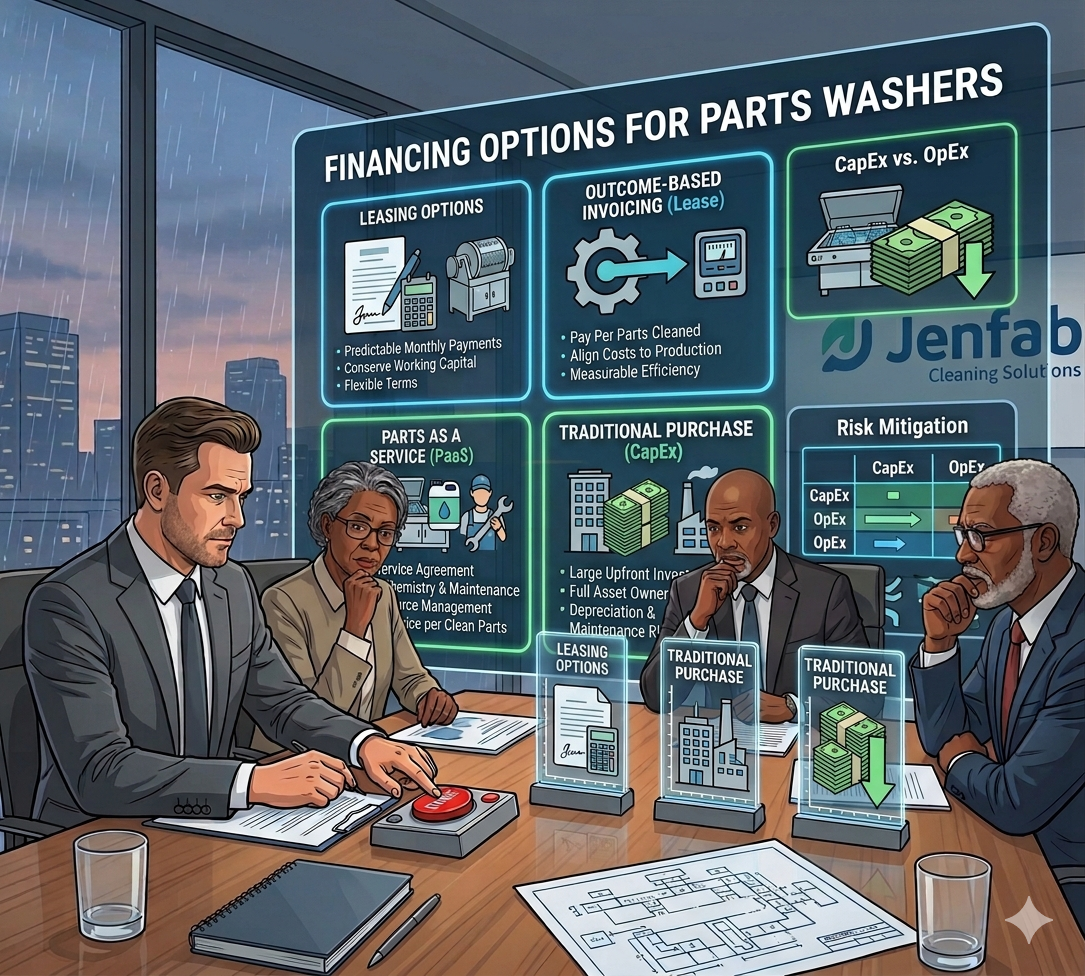
Jenfab offers leasing options to meet your unique needs. The difference is ownership and tax implications. New accounting methods under ASC 842 require either method to be posted to the balance sheet. Both options provide lower monthly installments vas a larger capital purchase.
-
Operating Lease – monthly payments where you do not take ownership. Often called a tax lease. While they function as tax leases for tax deduction reasons, recent changes to ASC 842 often require them to be recognized on the balance sheet.
-
Capital Lease – monthly payments where you do take ownership. Recorded on the balance sheet. Depreciation and interest are tax deductible. You take ownership at the end of the term but it is treated as a purchase for accounting purposes.
One financing option worth exploring is a operating lease (often called a tax lease), especially if you’re looking for ways to manage cash flow and potentially lower your tax bill.
You’ve likely heard the saying: “Use cash for what appreciates and lease what depreciates.” That’s the idea behind tax leasing, keep your capital working for you, while gaining access to the equipment you need now.
There are several differences between capital and operational leases. Let’s uncover these differences to better understand the tax advantages of both:
| Type of Agreement | Operating Lease | Capital Lease |
|---|---|---|
| Tax Write-Off |
Deduct Lease Payments: Monthly payments may be deductible during the life of the lease. |
Section 179 Depreciation: 100% of the equipment may be deductible in the tax year it is acquired. Expense up to $2,500,000 of equipment acquired in 2025. |
| Tax Savings Example | ||
| Lease Structure | $50,000 worth of equipment on a 36-month lease with FMV 10% purchase option. | $50,000 worth of equipment on a 36-month lease with $1 buyout. |
| Monthly Payment | $1,475 /month | $1,858 /month |
|
Projected 2025 Tax Savings (Assuming 35% Tax Bracket) |
$6,199 ([$1,475 x 12 months] x 35 percent) |
$17,500 ($50,000 x 35 percent) |
|
Projected 2026 Tax Savings (Assuming 35% Tax Bracket) |
$6,199 ([$1,475 x 12 months] x 35 percent) |
$0 |
|
Projected 2027 Tax Savings (Assuming 35% Tax Bracket) |
$6,199 ([$1,475 x 12 months] x 35 percent) |
$0 |
| Projected Total Tax Savings | $18,597 | $17,500 |
Capital Lease:
Also known as an equipment finance agreement. It is treated as a purchase for accounting purposes. By the end of the lease, the business has ownership rights over the equipment. A capital lease is considered an equipment purchase rather than a rental when it comes to tax. Due to this, the lessee can deduct both depreciation and interest expenses for taxes.
Operational Lease:
Allows business owners to use an asset without assuming ownership of the asset. The lessor maintains ownership and is responsible for maintenance and repairs. By the end of the lease, business owners have the option to buy the equipment for as low as $1 or 10% of the original purchase price of equipment. Because there are no ownership rights during the lease term, businesses can only deduct the lease payment as expenses from taxes.
Jenfab will work with you to construct the lease that works best for you. Availability of leasing options will depend on the size and scope of the project.