
• Test Wash Your Parts Before You Buy

    Test Wash Your Parts Before You Buy

    When deciding on the best parts washing system to suit your needs, it’s important to be sure the manufacturer can perform a test wash of the parts you need cleaned and then be able to analyze the results. This process will ensure the parts washer you have chosen can meet your cleanliness specifications before you pay for it. 

    Defining Your Cleanliness Standard

    How clean is clean? The first step in selecting a precision cleaning system is to have a specific definition of what constitutes clean. For some industries, it’s simply a matter of removing oils, dirt or debris. For others, such as those in the aerospace or pharmaceutical industries, cleaning standards can go down to the microscopic level. Regardless, you will need to set a cleanliness standard before you select a parts washer to purchase. 

    In-House Testing

    Once you have determined your cleanliness standard, you need to verify that the system you have chosen can meet that standard. This can be done by test washing a sample of the parts to be cleaned. For those with strict cleaning requirements, a professional lab analysis will need to be performed and a report provided to the customer that proves the system can meet specs. 

    Most precision cleaning parts washing manufacturers have an in-house lab that can provide this service to you free of charge. Jenfab has its own in-house test lab for this very reason. Our state-of-the-art equipment can provide analysis down to the micron level in order to accommodate those with strict cleaning requirements. These are the same characteristics you should look for when choosing a parts washing manufacturer to do business with.

    With in-house testing, you can rest assured that the manufacturer can deliver the performance and quality of cleaning you require. Be sure to insist on it before you purchase a parts washing system. 

    Jenfab | Aqueous Cleaning Systems

    Jenfab’s comprehensive product line ranges from small-footprint cellular washers to large, fully automated vertical agitation, rotation or spray-immersion washers and conveyor parts washers. Jenfab also offers a full line of cabinet washers to meet any need. All Jenfab systems can be equipped with a wide variety of options, such as chip collection baskets, chip removal, oil skimming or oil coalescing, and high volume filtration. The result is 100% clean and dry parts, with higher throughput than competing systems. 

  • Maximizing Your Parts Washing Solution

    Maximizing Your Parts Washing Solution

    Maximizing Your Parts Washing Solution–No one likes overpaying for essential supplies. That’s why it’s important to know how to get the most out of your parts washing detergent/solution. This will help to save money without sacrificing the cleanliness of your parts and help your parts washer operate more efficiently. The following are some tips that can help you achieve this goal.

    Batch Parts Washing 

    As with your dishwasher at home, it’s best to clean as many parts as you can at the same time rather than one part per cycle. If you do not need a certain part right away, try and wait until you have as many parts as the washer will allow and clean them all together. This will help save you money on disposal and the amount of parts washing solution you’ll need to purchase.

    Of course, batch washing may not be possible with the type of parts you are cleaning because of their size. If that’s the case, save batch washing for those parts that can be cleaned together.   

    Utilize Oil Coalescing

    Oil skimmers remove free-floating oil from the solution, reducing the amount of oil residuals left on parts and significantly extending solution life. This is an option that can be added onto your parts washer for a more effective clean. Adding an oil coalescing system can remove up to 98% of non-emulsified oil globules as small as 20 microns in size.

    This is a proven and effective method of maximizing solution life because you will not have to keep recleaning parts for a thorough and efficient clean. 

    Test Concentration of Solution

    It’s vital to always check your solution concentration to know you are maintaining the most efficient clean at the most effective cleaning strength. Be sure to adjust the amount of parts washing solution as needed to maintain its cleaning strength. Some chemical vendors offer easy-to-use test kits to measure the concentration of the solution and determine when chemical additions are necessary. Using such test kits will help you know when it’s the right time to make any adjustments.

    Change Solution When Necessary  

    To keep your parts washer in the best condition, it’s important to change out the solution when necessary. This will keep your machine functioning longer while maintaining its productivity. But, be careful not need to change the solution too often. If your solution is still adequately cleaning your parts, you do not need to immediately replace it.


  • What Are Volatile Organic Compounds And How Do They Affect Parts Washing?

    What Are Volatile Organic Compounds And How Do They Affect Parts Washing?

    Volatile Organic Compounds (VOCs) are sizable collections of carbon-based chemicals that immediately evaporate into the air. This can compromise worker safety due to the harmful effects of inhaling certain chemicals. Some VOCs posses less threatening elements in smaller amounts such as air fresheners and cleaning supplies. However, stronger VOCs that are used regularly, such as in industries that require parts washing, can start to envelop the work area and make the air harmful to breathe. 

    What Are The Risks Of VOC Exposure?

    The risks can range depending on how much of the chemicals are in the air and how long the person is exposed to it. Breathing low levels of VOCs for long periods may increase some people’s risk of health problems. These are much different exposures than those that occur in the workplace, which can cause even higher risks due to longer exposure. Each chemical has its own toxicity and potential for causing different health effects.

    Common symptoms of short-term exposure to high levels of chemicals are:

    • Eye, nose and throat irritation
    • Headaches
    • Nausea / Vomiting
    • Dizziness
    • Worsening of asthma symptoms

    Common symptoms for long-term exposure to high levels of chemicals are:

    • Cancer
    • Liver Damage
    • Kidney Damage 
    • Central Nervous System Damage

    Parts Cleaning Methods

    An industry that requires parts cleaning may need to meet specific regulations. Therefore, it’s important to select the best parts washer and parts washing solutions to provide the most effective clean and offer a safe work environment. 

    Petroleum Cleaning Solvents 

    These solvents have proved to be very effective but continue to raise significant environmental, health, and economic concerns. Petroleum solvents can be costly and potentially toxic to dispose of making it an effective solvent for cleaning but hazardous during the aftermath. The VOCs are toxic enough to increase the risk of cancer for the people who are involved. Employers can try and control the exposure but petroleum solvents evaporate quickly making the process difficult. Overall, a business will still spend more during the disposal process because these solvents sometimes leave a  residue that requires the parts to be washed again. 

    Aqueous Cleaning Solutions

    Aqueous cleaners are water-based solutions that, unlike petroleum-based solvents, are typically nonflammable and contain little or no VOCs. Instead of dissolving grease and solids, aqueous cleaners rely on heat, agitation, and soap action to break dirt into smaller particles. Although they clean differently, aqueous cleaners perform as well as solvents. A lot of businesses have switched to aqueous cleaning solvents because of the safer work environment and a simpler disposal process.

    Jenfab | Aqueous Cleaning Products

    Jenfab’s comprehensive aqueous cleaning product line ranges from small-footprint cellular washes to large, fully automated vertical agitation and rotation or spray-immersion washers. These washers can also be equipped with a wide variety of options, such as chip collection, chip removal, oil skimming or oil coalescing, and high-volume filtration. The result is 100% clean and dry parts, with higher throughput than competing systems. These machines utilize aqueous solutions for an effective clean and safe work environment without the harmful inhalation of VOCs. 
     

  • Three Effective Parts Washers For The Automotive Industry

    Three Effective Parts Washers For The Automotive Industry

    Automotive parts washers are necessary due to vehicle parts becoming dirty and grimy over time. Also, automobile engine components are exposed to several types of contaminants, which can contribute to energy inefficiency and degradation of functionality. So, what are some of the most effective parts washers for the automotive industry to help with these issues? Here are a few to consider.

    Mini Belt Washers 

    The mini belt spray washer is a compact, energy-efficient parts cleaning machine. The smaller washer provides a simple to use and low maintenance option that is beneficial to the automotive industry. Designed for in-line cleaning of machined parts, stampings, cold headed, and deep-drawn parts, the mini belt washer offers up to three tanks for washing, rinsing, and rustproofing. Additionally, the energy-efficient dryer incorporates a regenerative blow off with stainless steel air knives. Consider additional options for better quality cleaning Some of these include:

    • In-line Filtration
    • Chip Baskets 
    • Longer Tanks
    • Incline Belt and Immersion Spray Wash
    • Programmable Controllers 
    • Vertical Chain Conveyor Washer

    Vertical Chain Conveyor Washers

    A challenge for the automotive industry is to effectively remove chips, fines, and coolant from valve covers and completely dry parts while also meeting stringent millipore specifications. Vertical chain conveyor parts washers utilize front loading and unloading, variable indexing cycles, and dual bag filters at each station. The parts index into immersion tanks with turbulence cleaning as well as rinse and rust inhabitant baths, all with submerged high-volume direct sprays for chip removal. Also, a fresh filtered solution spray is used to finish before a complete energy-efficient drying cycle with recirculated air. 

    The vertical chain conveyor washer is ideal for one piece at-a-time inline parts washing combining both spray washing and agitated immersion cleaning with drying in one small footprint. This machine doesn’t take up too much floor space and takes advantage of a vertical conveyor movement. These immersion cleaning machines are ideal for ultrasonic washing and rinsing for precision cleaning requirements. 

    Large Rotary Drum Washer 

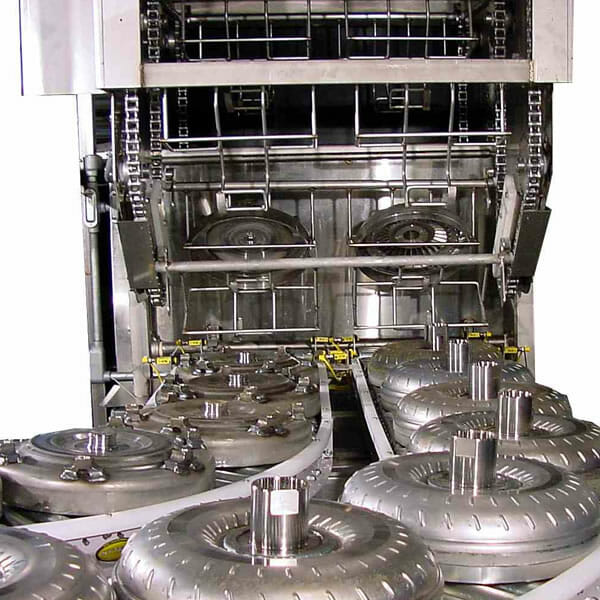
    This is a highly effective and heavy-duty washer with an energy-efficient modular design. This machine saves facility floor space as well as thousands of dollars per year in energy costs. The rotary drum is most beneficial for cleaning and drying delicate battery cans, deep drawn and automotive stampings, machined parts, fasteners, tubular rivets, and automotive castings without damage. 

    Rotary drum washers are also ideal for removing stamping oil from drawn components while processing large volumes of parts without damage.

  • Machined Parts Applications For Your Aqueous Cleaning Systems

    Machined Parts Applications For Your Aqueous Cleaning Systems

    Aqueous cleaning provides several benefits with quality cleaning in a safer and more productive environment. It’s important to maximize these benefits by utilizing the different applications with the best suited machine for your cleaning needs. This article discusses machined parts applications and which parts washers best apply these applications for the most effective clean.

    Inline Parts Cleaning 

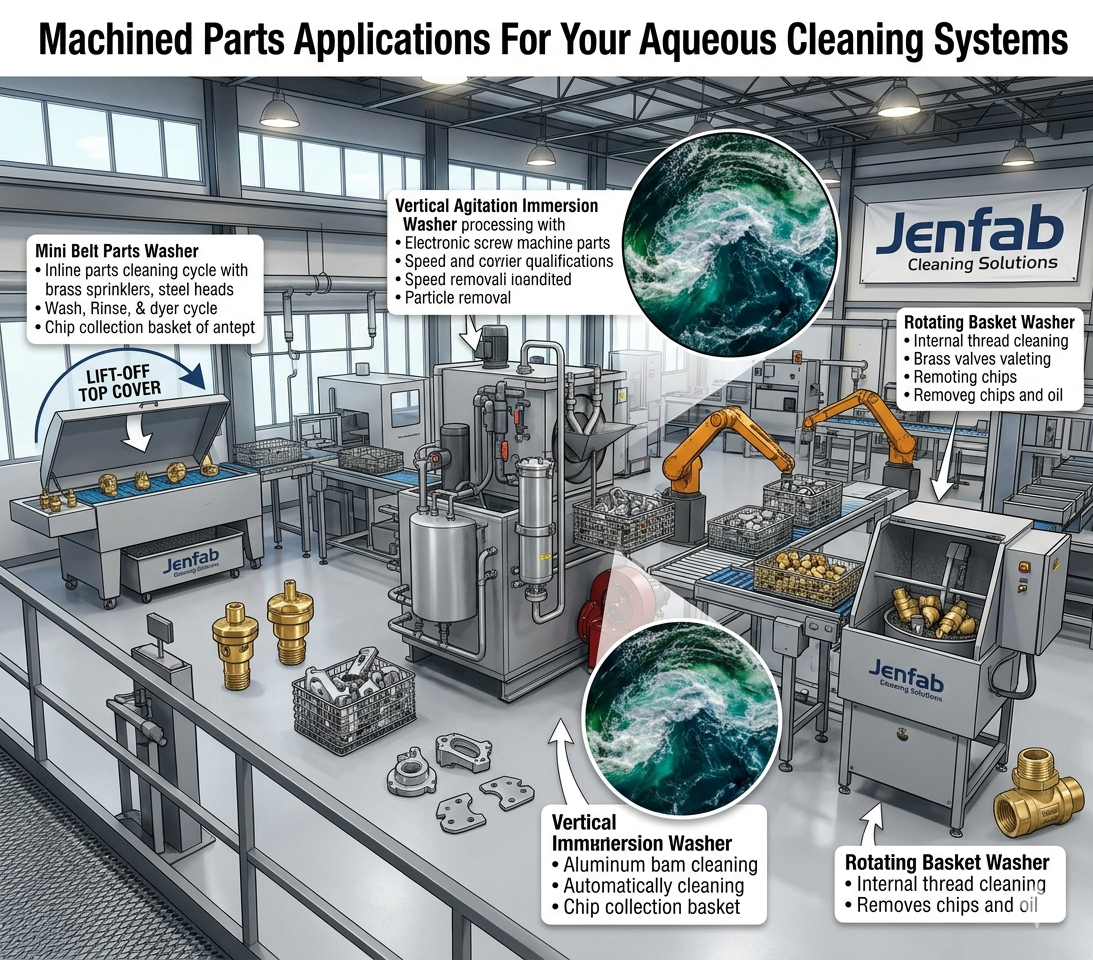
    This application is used to clean brass sprinkler heads with an inline parts washer after machining. A mini belt parts washers is the machine that is typically used for inline parts cleaning. This specific washer allows for easy access chip collection basket and lift-off top cover for full access to spray heads and dryer. This is an important feature for a simplicity in your maintenance efforts to maximize the life of your aqueous cleaning machines.

    The parts go through a filtered wash and rinse, and finish with a drying cycle. The biggest benefit of the mini belt parts washer with inline parts cleaning is the ability to eliminate cleaning using batch process by incorporating two separate steaming of parts.

    Centralized Washing Screw Machine And Stamped Parts 

    It can be challenging to clean aluminum, brass and steel screw machine and stamped parts is existing customer tote pans. The best machine to help with this struggle is a Vertical Agitation Parts Washer.

    This aqueous washer has basket rotation, automated handling or loading and unloading, automatic chip collection and coalescing oil separation system. Throughout the cleaning process the parts go through a wash with submerged spray, a rinse with submerged spray, a counter flow rinse and an optional rust inhibitor cycle.

    Lastly, the parts are finished with a multi-station, spot free and basket rotating and drying cycle. How does this machine benefit parts washing needs? A business is able to replace their existing machines with one compact unit and has the option to skip rust inhibiting cycles during cleaning operations of various types of metals simultaneously.

    Central Cleaning Electronic Screw Machine Parts 

    It’s important to clean steel, stainless steel, brass and aluminum precision electronic screw machine parts in existing customer pans as quickly as possible. Typically, an organization should be able to clean 90 baskets per hour. A Vertical Agitation Immersion Washer can help with this challenge and effectively clean in a quick and easy process. This machine can be highly beneficial with the option to skip rust inhibit cycles when brass and aluminum components are being processed. Important  and Specific qualities to look for in this type of machine are:

    • Zero discharge when UF and RO systems are integrated
    • An efficient clean with the elimination of particles or no larger than “.005 particles left after processing
    • Parts are thoroughly cleaned to a .0002 micron level per 10 components

    Cellular Cleaning Brass Valve Components 

    You may need a machine that can remove oil, coolant, chips and swarm form brass fitting with OD and ID threads and blind holes without causing discoloration and while meeting tight Millipore and dryness specifications. This can be challenging without the right Rotating Basket Washer.

    With the right cleaning process the parts go through an immersion wash with high pressure submerged spray, a final rinse and drying cycle. This machine is very beneficial to a facility as it does not take up a lot of space and can eliminate the use of solvents with safer aqueous solutions that still provide an effective clean.

  • Do Your Research! Qualities Of Manufacturing Parts Washers

    Do Your Research! Qualities Of Manufacturing Parts Washers

    With a large variety of parts washers to choose from, finding the best suited machine for you facility can be difficult. It’s important to do some research and fully understand what type of cleaning you need to best pair with your parts washing needs. This article discusses some important qualities to look for in an effective manufacturing parts washing machine.

    Maintaining Heat 

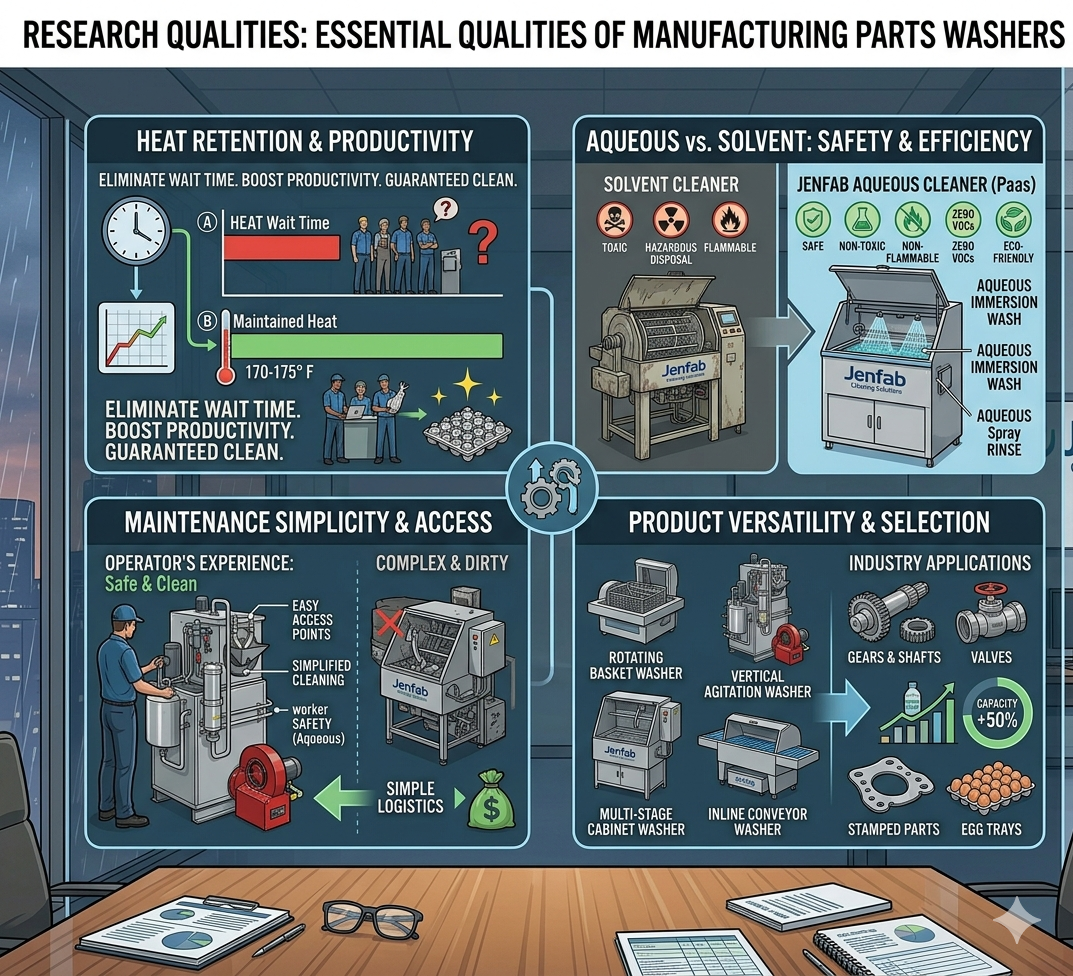
    For the most effective clean, you will need a machine that can maintain the heat throughout the work day. You lose productivity when workers have to wait for the machine to heat up each time it’s needed for parts washing. A machine such as manufacturing parts washers that can maintain heat will ensure the most effective clean and will eliminate the need to clean the parts again if not done right the first time. Typically, a washer works most effectively when it’s operate at a heat between 170 to175 degrees. This heat should be maintained throughout the day because any parts not cleaned at these temperatures may not be fully washed or free of metal chips and grease.

    Most Effective Cleaning Solution 

    Different facilities offer the solutions that work best with their washers but choosing the best solution is an important quality. For the most effective clean and the safest environment, aqueous cleaning is the most beneficial solution. Aqueous cleaners are water-based solutions that, unlike petroleum based solvents, are typically nonflammable and contain little or no VOCs. Instead of dissolving grease and solids, aqueous cleaners rely on heat, agitation, and soap action to break dirt into smaller particles. Although they clean differently, aqueous cleaners perform as well as solvents and provide a safer work environment a well as a simpler and less hazardous disposal process. Some units also have a fully automated feature, which reduces labor costs and increases productivity.

    Product Versatility

    It’s important to understand there are several washers available that are designed for different capabilities. Do a little research to see what parts washers like conveyor, rotary basket, monorail or several others, to see which will be best for the parts washing you need. Each machine works a little differently or is best suited for specific parts. Look for a facility that can offer a variety of design as well as detailed information about each so you can make the best decision for the most effective clean.

    Maintenance Simplicity 

    Aqueous washers are built to last but maintaining your machine will add to the length of operation. If you notice certain materials or functions are worn or damaged get them repaired, upgraded, or changed out, depending on what will benefit you and your parts washer the most. Aqueous cleaning systems are a good alternative to other parts washers especially because the solution is non toxic which aids in worker safety. This simplifies the maintenance process. The machines are typically placed in tough environments that often build up dirt and oils so it’s important that you are able to clean these sections effectively. Different designs offer different points of access to simplify the cleaning and maintenance access. Look into how that process works because it’s important workers are able to keep up with maintenance so your machine stays operational as long as possible.

  • Common Myths About Aqueous Cleaning Solutions

    Common Myths About Aqueous Cleaning Solutions

    Common Myths About Aqueous Cleaning Solutions – Workers typically use solvents for parts cleaning but want an alternative method that is safer for workers and offers a better clean. However, people may be wary of trying a new solution because of the costs and the worry of potential hazards. This article debunks those myths and describes several benefits of aqueous cleaning solutions.

    Creates A Hazardous Environment 

    Workers are used to the traditional methods of parts cleaning that utilize solvents for chip removal and degreasing but the solvents can create a hazardous environments that threaten worker health and safety. However, aqueous cleaning products are water-based solutions that, unlike petroleum solvents, are nonflammable and nonhazardous. Petroleum and chlorinated solvents contain chemicals that may be toxic if inhaled and can also increase the risks of cancer. The dangers increase because petroleum solvents evaporate quickly, which makes exposure difficult to control. Instead of dissolving grease, aqueous parts washer units utilize heat, pressurized water, soap action, and agitation to break up dirt and grease. They have the added benefits of minimal odors and no pollution which will benefit workers health as well the environment.

    Difficult To Dispose Of 

    Since petroleum solvents are hazardous to the environment, the disposal aspect is also a difficult process. Aqueous solutions are water-based so they are a lot simpler to dispose of and possess little to no VOCs so your safety will not be compromised. Aqueous is less toxic and safer than petroleum solvents but that doesn’t mean you do not need to manage the waste disposal. The best way to dispose of aqueous solutions is to take the waste to waste disposal centers. Furthermore, utilizing a licensed vendor reduces your liability and ensures that the waste is properly disposed. Vendors allow for more disposal management options for all sorts of aqueous waste disposal.

    Doesn’t Clean As Efficiently 

    Aqueous systems are designed to remove oils and solids . By using skimmers and filters, cleaning solutions can last indefinitely if they are properly maintained. Some solvents can even leave grease and oil on the parts requiring them to be washed again but aqueous products clean them fully right away so the process doesn’t have to be repeated which loses time and money. Most aqueous machines also dry the parts so when they come out they are fully cleaned and ready to use.

    Too Expensive 

    A specification to look for is a solution that can help save money. Many think because aqueous solutions can be pricier for start up costs that it will be too expensive to maintain. However, money is saved from reduced labor hours. Petroleum solvents need to be soaked for about two hours but with automated aqueous parts washers, the cleaning process typically takes less than 20 minutes. Workers can leave the station, work on other tasks and return when the process is completed. This increases worker productivity and helps save money. Also, since aqueous solutions clean efficiently, you’ll save money on the amount of solution you need since you won’t have to repeatedly  clean your parts.

  • What Are The Benefits Of Heated Parts Washers?

    What Are The Benefits Of Heated Parts Washers?

    What Are The Benefits Of Heated Parts Washers – At this point, the role heat plays in cleaning parts is common knowledge. A majority of chemical reactions are more active when subjected to higher temperatures. Considering, virtually every cleaner (hand soap, dish detergent, solvents) is a variation of chemistry, so it makes sense that these cleaners will work more efficiently when aided by hot water. Consider this: if you wanted to soak some dishes in the sink to loosen the grime and residue, you would use hot water, correct?

    Several studies have posited that soap works less effectively in conjunction with cold water when compared to hot water usage over the same amount of time.

    So, how does all of this relate to your parts cleaning efforts?

    Reducing Chemical Reliance | Speeding Up Processes

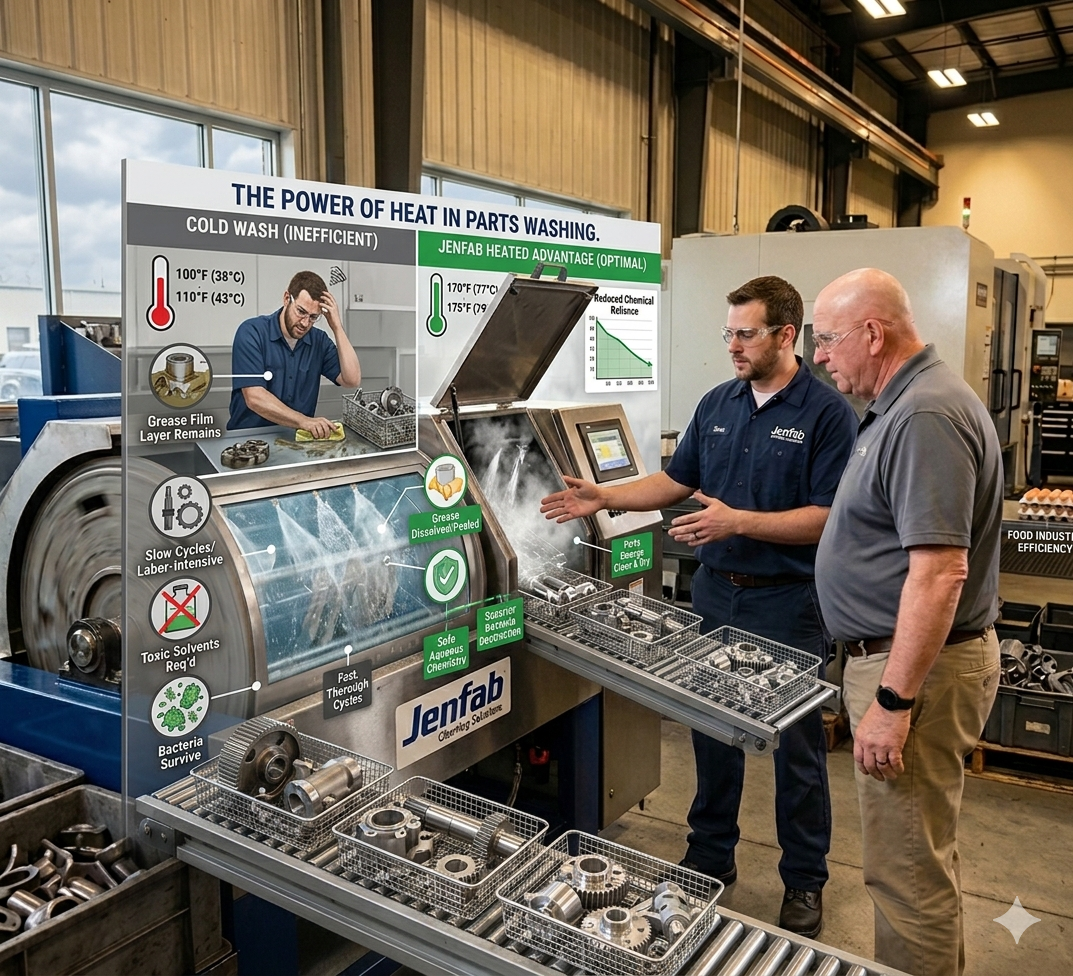
    With a heated parts washer, you are essentially replacing abundant chemical use with the natural effects of heated water. This is beneficial considering that these chemicals are essentially toxic and can be quite dangerous if they aren’t handled properly.

    With the collective effects of heat, water, and a small amount of chemistry working in a properly designed machine, parts cleaning can be accomplished much faster and more thoroughly than other methods that pose environmental, health and safety risks.

    Superior Ability For Breaking Down Bacteria

    Heated parts washers excel at destroying the tiny bacteria and microorganisms that reside on your dirty equipment and parts. Simply put, hot water is far better for breaking down bacteria when compared to cold water. Most of the detergents you would use for parts washing are more effective in elevated temperatures (though you still have to be careful and understand the reaction between heat and detergents).

    Kills Grease Film Layer

    When a part hasn’t been thoroughly cleaned, a greasy little layer of film often forms on top of the particular part. This occurs even after frantic scrubbing with a flow-through brush, as some grease will always be left behind when you’re using cold water. Typically, it takes about 100-110 degrees to really get hydrocarbon or petroleum products to turn loose from the material they are attached to.

    JenFab | Aqueous Parts Washers

    Since 1960, JenFab has developed innovative technology for aqueous cleaning solutions. With a versatile product selection, JenFab has what you need to get started on a safer and cost effective cleaning parts path.

    For more information on our aqueous products, fill out our online contact form or call us at 860-828-6516.

  • Qualities To Look For In A Rotating Basket Parts Washer

    Qualities To Look For In A Rotating Basket Parts Washer

    When searching for a rotary basket washing system, finding the correct machine for your desired process can be difficult. A number of items factor into the equation (desired output, footprint, part size, cycle times, cleanliness specs), but the choice doesn’t have to be overwhelming. Understanding the similarities and differences of the two systems can go a long way in helping you make your decision.

    At Jenfab Cleaning Solutions, we offer two styles of rotary basket units: the Lean Clean 360 series and the VAR (Vertical Agitation Rotation system). Both units implement submerged rotation in aqueous cleaning solution with optional ultrasonics, a process resulting in optimal precision cleaning when compared to traditional dip agitation. With rotary baskets, parts are rotated through the solution and particulates, soils and oils are removed from even the most difficult bends and blind holes. The rotation ensures nestled parts come into contact with the cleaning solution, which isn’t always the case when using dip agitation. The rotating action also cuts down cross-tank contamination drastically, as parts drain over one tank before moving on to the next stage.

    While both the VAR and Lean Clean units revolve around these aqueous cleaning principles, the two systems differ greatly and offer unique advantages.

    The Lean Clean 360 series is one of Jenfab’s staple lines. Ranging from the 360-1 (one basket system) to the 360-8 (eight basket system) the Lean Clean 360 features a favorable footprint, as small as 3’ 4” x 6’ on the 360-1, and maximizes on the benefits of “lean” manufacturing. The system features a favorable front opening door with a standard 42” load height, making loading and unloading an easy process for the operator.

    Lean Clean 360’s come standard with wash and rinse zones, and a sleek and simplistic touch screen interface makes tailoring cycle times to your needs a simple task. During the wash and rinse stages, the basket continuously rotates as it is sprayed with solution from multiple directions. The chamber fills with solution at the same time, eventually submerging the basket. At the end of the wash cycle, the basket continues rotating and is allowed appropriate time to drain into the proper tank before changing to the rinse stage.

    VAR systems are similar in theory but offer their own advantages and disadvantages when compared to the Lean Clean 360.

    One of the biggest advantages of the VAR system is the ability to handle various basket sizes, giving it nearly endless customization possibilities when speaking of part sizes and dimensions. Whether it’s a standard wash-rinse cycle you are in search of or a five tank system with multiple washes and rinses, the VAR could be the right decision for you and your business.

  • What Type Of Parts Can I Clean In A Front Load Parts Washer?

    What Type Of Parts Can I Clean In A Front Load Parts Washer?

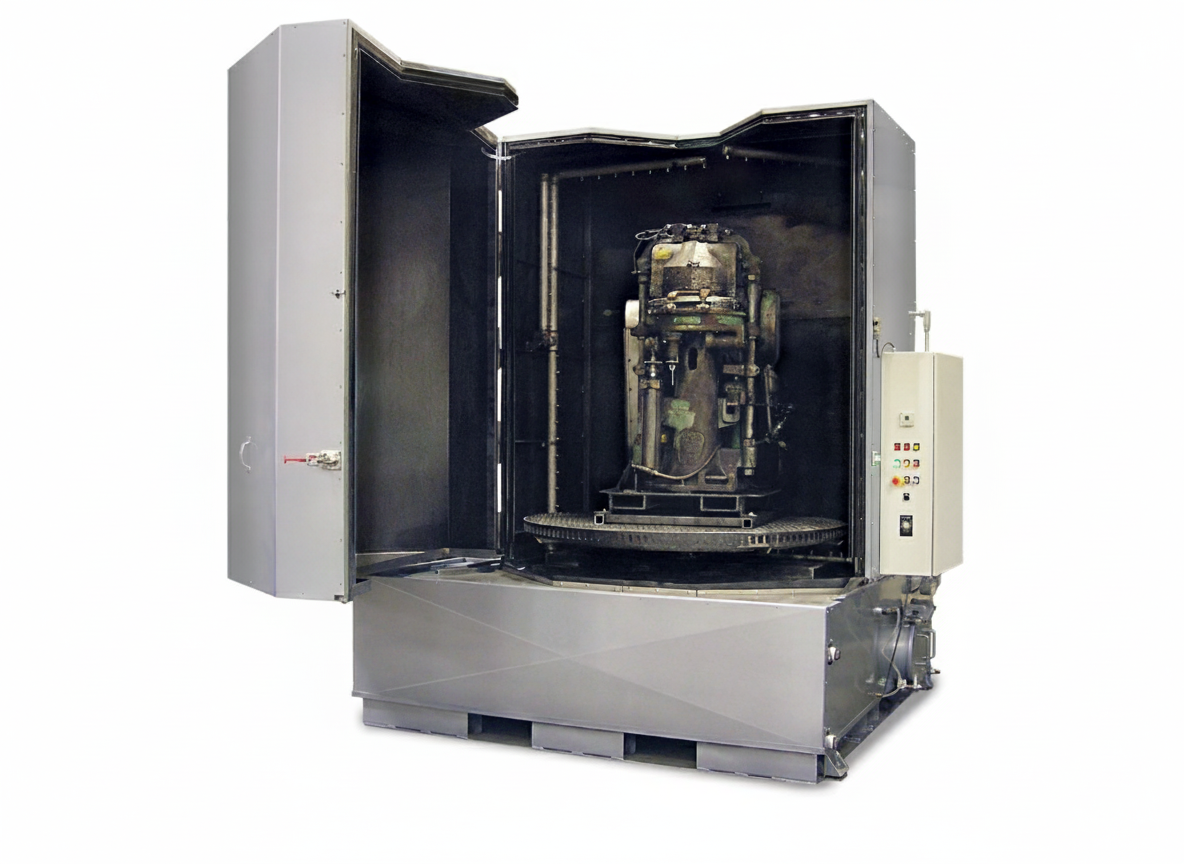
    Front loading parts washer cabinets are typically used for commercial parts washing systems to assist auto-repair shops, manufacturers, or other industrial parts cleaning applications. These machines are versatile, making it possible to save considerable time and labor commonly associated with manual parts cleaning.

    How Does A Front Load Parts Washer Work?

    To use this aqueous washer, a technician must put the dirty parts into the washer, turn a knob, and walk away. It’s really that simple. Within less than an hour, once filthy parts will emerge grime-free and ready to be used. You won’t have to worry about harmful solvents, health hazards or painstaking brushing (hand-cleaning).

    Here’s a more in-depth explanation: High-pressure front load parts washers clean manufacturing parts using a combination of heated aqueous based detergent with high-pressure spray nozzles that can spray in multiple directions.

    Spray nozzles positioned along the interior wall, ceiling and underside of the machine and turntable spray heated high-pressure streams of cleaning solution at the objects loaded inside the massive front-loading cabinet.

    What Type Of Parts Can I Clean?

    Front load parts washers are best suited for cleaning and degreasing small engine components, automotive components, car parts, heavy equipment parts, tools, and much more. Front load washers are also designed for newly manufactured parts. These machines have the ability to successfully clean machine coolant, machining oils, drawing compounds and other soils associated with manufacturing operations.

    What Are The Benefits Of Using A Front Loading Parts Washer?

    Typically, front-loading cabinet washers are designed to be compact so they require minimal floor space and will fit into tight manufacturing work cells. Besides requiring minimal floor space, front load washers help to save considerable time, since parts are cleaned automatically, as opposed to employees spending countless hours scrubbing parts by hand.

    Yet, labor savings is only one of the many benefits of an aqueous parts washer. They also have a considerable effect on the safety and health of your employees. If you currently use hazardous solvents in your cleaning application, your employees’ health may be at risk. A switch to the aqueous based cleaning solution used with our parts washers will minimize the risks to your employees and save you money on costly worker compensation claims.

    If you want more information on the benefits of front load parts washers, check out our line of PCS, F-Series and Heavy-Duty cleaning systems.