• Turn up the Heat: How Higher Temperatures Affect Cleaning

    Turn up the Heat: How Higher Temperatures Affect Cleaning

    Heat is a powerful tool in parts cleaning. Time, temperature, mechanical agitation and chemistry are the four main factors of cleaning. Each factor determines if the parts cleaning process is effective. 

    Strike the right balance, and you have a process that achieves the clean you need. Higher temperatures generally speed up the cleaning process, regardless of what or how you are cleaning. 

    Is it helpful to add heat to parts washers? Yes! 

    Adding heat removes soils from parts more effectively than pressure or agitation alone. An automated parts washer is the best choice for high heat. Hand and sink on drum washers become dangerous for operators when you turn up the temperature.

    Why does heat bump up cleaning speeds? Why does hot water make a difference? 

    It has to do with energy. 

    A Rule of Thermodynamics  

    All organic matter wants to exist at the same temperature. 

    We’ve all poured an ice-cold cup of water only to leave it on the counter for hours. When you come back to the glass of water, you notice something disappointing: it’s room temperature. 

    The same goes for a hot cup of coffee. Your mug of Joe cools off the longer it sits on your desk as heat transfers to the air around it. Eventually, if you don’t drink it up, it cools to room temperature. 

    Heat excites molecules. In hot water, molecules move faster. 

    Going back to the coffee example, the molecules in the hot coffee move faster than those in the cooler air around it. The energy from the hot coffee transfers to the cooler air, causing the cooler molecules to move more rapidly as they absorb the heat. The coffee’s temperature is reduced as energy is transferred. 

    Pretty cool, right? 

    Heat is energy. The more energy involved, the faster the molecules move and the quicker a chemical reaction will take place. That’s why adding heat to parts cleaning can help speed up the process. 

    How Heat Affects Parts Cleaning

    Aqueous parts washers use a water-based cleaning solution often referred to as a chemistry within the industry. The chemistry is tailored to the contaminants and material of the parts. 

    Molecules from the chemistry attach themselves to the part, allowing water to get between the part’s surface and the contaminant. The soil is loosened from part and carried away by the flow of water through the machine. 

    Temperature affects parts cleaning chemistries, as it does common household detergents and soaps. Most cleaners will work harder with the addition of hot water. Adding heat (energy) to your parts cleaning chemistry forces molecules to move faster, accelerating the chemical reaction.

    For every 17℉ increase in temperature, you could double your chemical reaction rates, so the entire cleaning process takes less time. Typical operating temperatures for heated parts washer tanks range from 120° to 160℉. 

    We’ve talked about heat in relation to cleaning chemistry, but heat can also affect the properties of the soils you’re trying to remove. Higher temperatures tend to decrease viscosity in contaminants and reduce the surface tension of water. Both factors make removing stuck-on soils easier. 

    Keep in mind that increasing heat only works up to a certain point. Water that’s too hot can damage the surface of the parts.

    Heated Aqueous Parts Washers & Managing Hot Water

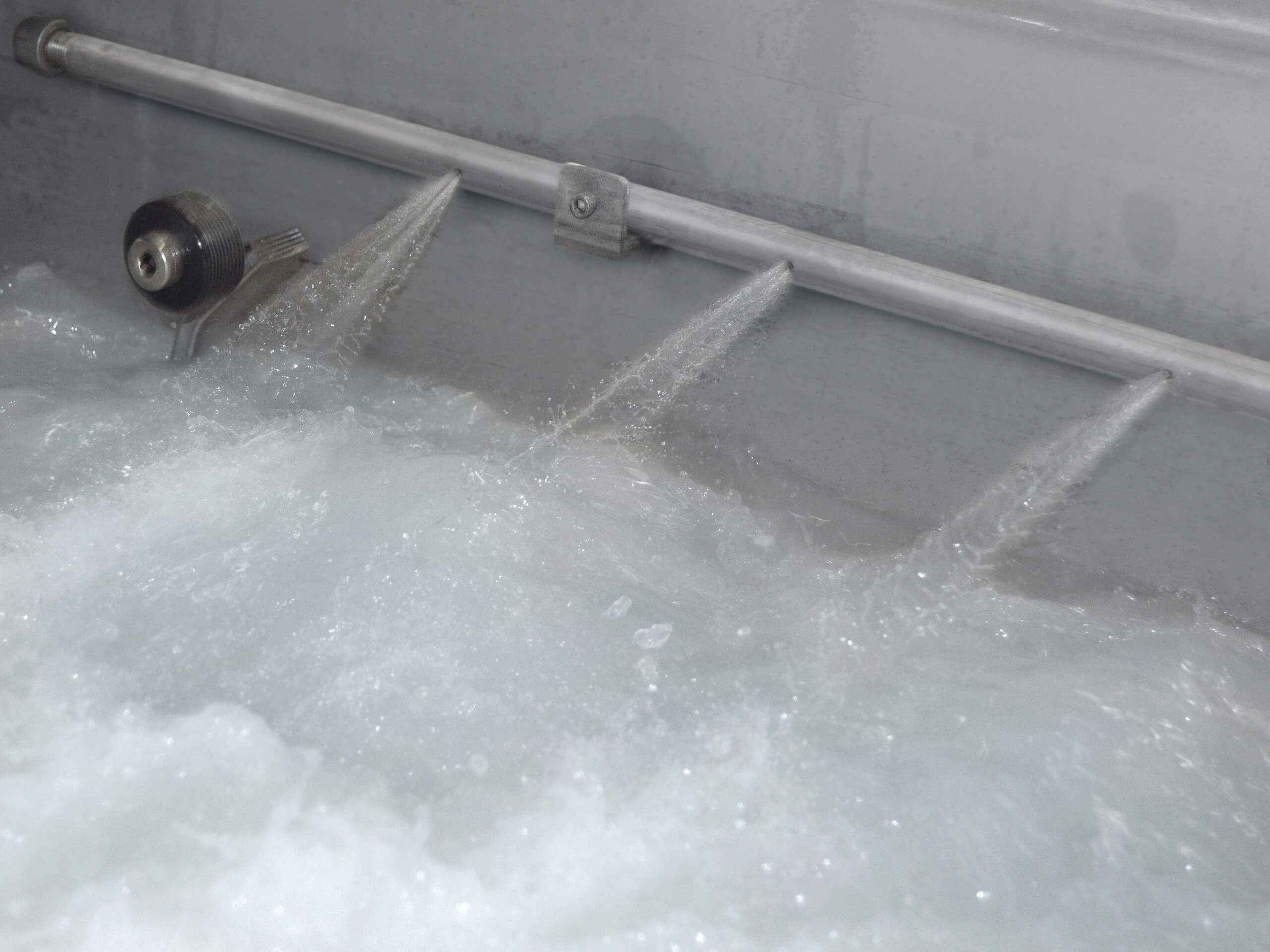
    Aqueous parts washers with heated tanks can be designed specifically for your application. Heated parts washers use spray, immersion or both techniques to clean parts. Heated parts washer tanks store cleaning chemistry at the proper temperature. Used cleaning solution is reheated when it returns to the tank. 

    A part washer’s heating element is attached to the tank. Most hot parts washers experience some amount of heat loss due to the air temperature outside of the tank. However, the proper design can alleviate much of the loss. 

    Sometimes, heat can reduce water pressure. This is important for heated parts washers that use sprayers. When choosing or designing your machine, the relationship between heat and pressure is something to consider.  

    An automated parts washer will regulate the cleaning solution’s temperature. You’ll want to follow the recommendations from the machine’s manufacturer. 

    Too much heat can be detrimental to part surfaces. Scorching solutions can cause corrosion or etching. Not to mention high heat can result in more evaporative losses. On the flip side, too little heat can cause chemistry to foam or delay the cleaning process. 

    4 Benefits of Heated Parts Washers

    Generally, you’ll get better results when your cleaning solution is at a higher temperature. Heated aqueous parts washers let you manage the temperature of the cleaning solution to maximize your efficiency. Adding heat to parts cleaning machines offers several benefits for your company or shop. 

    1. No need for harmful solvents. Toxic solvents, be gone! Heated aqueous parts washers harness a natural power: hot water. 
    2. Less chemistry is required. Heat makes chemical reactions more effective, reducing your need to use copious amounts of cleaning chemistry. With heated aqueous parts cleaning, you only need small amounts of chemistry.
    3. Better for sanitation. Heated washers help sanitize parts for the medical and food industries. Hot water does a better job of breaking down bacteria and eliminating minuscule microorganisms when compared to cold water. 
    4. Bye-bye, film layers. Greasy parts? Can’t get them clean? Some grease is bound to be left behind with cold water. Leftover grease forms a layer of film over the part. Hot water and parts washer soap thoroughly remove hydrocarbon and petroleum contaminants. 

    Heated Aqueous Parts Washers for Sale

    Are you ready to bring the heat to your floor? 

    Improve your parts cleaning process with our custom-built or ready-to-ship aqueous parts washers.

    Our knowledgeable team will help you identify the features you need in a machine based on the material, size and complexity of the parts and soils, as well as your space and budget. Explore our full line of industrial parts washers here

    Take aqueous parts cleaning to the next level. 

    Request a quote from us today or call (800) 524-9274 to speak with our team about your next heated cleaning system. 
  • Sinner’s Circle & the 4 Factors of Cleaning

    Sinner’s Circle & the 4 Factors of Cleaning

    There are many things you should consider before ordering a custom parts washer, including its price, speed and ease of use. The most important thing to evaluate is your cleanliness standard. What do you need to clean, and how clean does it need to be? Complex shapes, blind holes, cross holes and fragile materials make cleaning more challenging. 

    Once you know what you’re cleaning, you can determine what “clean” means to your company or customers. How clean do the parts need to be? How will you measure cleanliness? Some companies have requirements that involve analyzing contaminants at the microscopic level, while others only need a simple wash and rinse. 

    Each machine relies on interdependent factors to achieve your clean. These factors vary based on the level of cleanliness needed. What are the factors that influence the cleaning process of equipment and parts? Keep reading to learn how time, temperature, chemistry and mechanics factor into your ideal clean. 

    Sinner’s Circle & Factors of the Cleaning Process

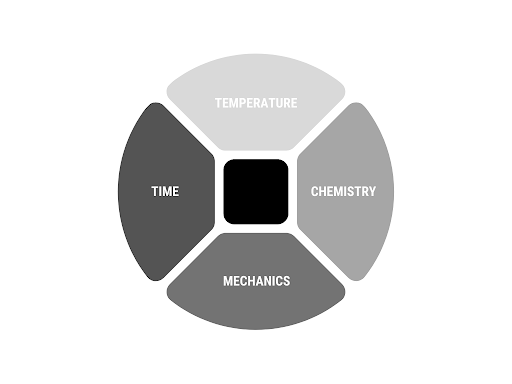
    In 1959, Chemist Herbert Sinner identified four factors involved in effective cleaning: time, temperature, chemistry and mechanics. These factors work together to complete a successful wash cycle. 

    If one factor is modified, you must change the other factors as well. For example, increasing the concentration of the cleaning solution may call for reducing the temperature, wash time or level of agitation. Often, these cleaning variables are visually represented by four parts within a circle named the Sinner’s Circle. 

    A visual representation of Sinner's Circle. A diagram including the factors of cleaning: time, temperature, chemistry and mechanics.

    1. Time

    One factor of cleaning is time. How long does it take for an aqueous cleaning solution (or chemistry) to work its magic? Whether the parts are soaked or sprayed, the time they are exposed to the chemistry affects cleanliness. The longer a part is in contact with the chemistry, the more time the chemistry has to attack soils. Thus, the cleaner the parts will be. 

    Think about the way you wash dishes at home. Food-covered plates are difficult to wash later if you leave them in the sink. You need extra elbow grease to get them clean. If you let the same dishes soak in soap and water, you can wash them easily. The more time the plates soak, the cleaner they will be! Similarly, leaving parts exposed to a cleaning solution for longer provides a better clean. 

    2. Temperature

    Temperature affects cleaning efficacy in most scenarios, which is why heated parts washers are standard. As temperatures heat up, the speed at which parts are processed increases. Heat causes molecules in the cleaning chemistry to move and vibrate faster, which quickens the reaction between the soil and chemistry. 

    As a rule, efficacy increases as the solution’s temperature rises but only up to a certain point. The top operating temperature refers to the highest temperature at which the cleaning solution is effective. Any temperature above the top operating temperature will no longer speed up the cleaning process and could adversely affect the parts.

    Typically, parts washers utilize aqueous spray cleaning. These machines operate best when heated at 140 degrees to 180 degrees Fahrenheit. 

    Working with a manufacturer will help you find the right balance of time and temperature. If the water becomes too hot, the solution could evaporate and leave behind unwanted residue. Evaporative losses affect your ability to maintain the continuous flow of water and cleaning solution.

    With certain materials, a solution that’s too hot could tarnish parts. For example, brass parts can tarnish once you remove them from extreme heat. Reducing the temperature and extending the washing time can prevent any ill effects high temperatures pose to the parts. 

    3. Chemistry 

    Parts cleaning solution, or chemistry, is chosen based on the part’s material and the soil. Water is the base of all aqueous cleaning solutions. Detergents, inhibitors and buffers are added to the solution as needed. The exact chemistry and its concentration are tailored to your application. 

    • Acidic solutions (pH 1-5). With a pH of 1 to 5, acidic solutions are not used for general cleaning. Treating surfaces, descaling and removing tarnish or rust are uses for acidic aqueous solutions. 
    • Neutral solutions (pH 6-9). Mild chemistries with a pH between 6 and 9 have less cleaning power and are best for applications with light soils, such as metalworking fluids, or delicate alloys. Neutral solutions are easy to rinse away because they don’t leave behind residues. 
    • Alkaline solutions (pH 9-12). These chemistries are used for general cleaning. Alkaline solutions remove oil, grease and organic soils within a wide range of temperatures. 
    • More ecoHigh alkaline solutions (12+). Tougher soils like heavy grease, carbonized contaminants and paint need an aggressive parts cleaning solution. High alkaline aqueous solutions fit the bill, but they require more rinses to prevent corrosion.nomical to operate than two separate belt and rotary drum parts washers.

    4. Impingement or Agitation

    The last factor of Sinner’s Circle is mechanics. Agitation (or impingement) in cleaning is the final variable that affects how clean the parts will be. Many aqueous parts washers apply mechanical movement to knock contaminants off the parts. 

    Added force can come from pressurized spray or parts bumping against each other. Agitating parts washers may include rotating baskets, sprayers or ultrasonics to agitate the parts or aqueous solution.

    • Sprayers. Spray impingement refers to the pressure and volume of the spray used. The distance from the spray nozzle to the part affects impingement. Impingement is stronger when the nozzle is closer to the parts. Spray manifolds can be combined with immersion tanks to offer more turbulence underwater.
    • Rotating baskets or turntables. Cabinet-style washers use rotating baskets or turntables to move parts as they are sprayed. Part-on-part contact, in addition to spray contact, helps remove soils. Baskets also keep smaller parts, like ammunition casings, together.  
    • Vertical agitation. Simple parts without blind holes or unique grooves may benefit from vertical agitation, which is simply a mechanical process of moving parts (often in a basket) up and down repeatedly. 
    • Ultrasonics. By emitting sound frequencies underwater, ultrasonics loosen stuck-on soils. Ultrasonics use a process called cavitation that causes surrounding water molecules to explode upon contact with an object. The force of the explosion shakes off debris. Companies with complex parts, including those with grooves and blind holes, commonly use ultrasonics.

    Rinsing and drying are also key cleaning components, though they are not included in Sinner’s Circle. Rinsing removes loosened soils and any residues left behind by the chemistry. Some parts need to exit the cleaning stage completely dry. Any remaining water on the surface could contaminate the next phase in manufacturing. 

    When you consider these factors, you and your manufacturing partner will be able to identify the right chemistry and requirements for your application.   

    Get Your Aqueous Parts Washer 

    Are you ready to give aqueous cleaning a try? At Jenfab, we don’t shy away from customization. We build custom parts washers in addition to standard models. We also provide free, in-house test washing to ensure the system and chemistry meet your cleanliness standards before you make a purchase. 

    Request a quote from us today or call (800) 524-9274 to tell us about what you need in an aqueous parts washer. 

  • Inside An Aqueous Parts Washer: Pumps, Tanks & More

    Inside An Aqueous Parts Washer: Pumps, Tanks & More

    The fabrication of parts often produces dust, shavings and burrs. Some processes also require the use of oils or lubricants. While they are inevitable byproducts of the process, dust and residue pose problems later in production if they are left behind. 

    Any residue remaining on the parts affects the latter stages of manufacturing and the final product. Therefore, many industries need to remove unwanted residue from components before finishing or assembly. Aqueous parts washers do just that. In addition to cleaning and drying, these machines can also passivate or apply rust inhibitors. 

    Aqueous parts washers are only as good as the sum of their parts, which work together to achieve the desired level of cleanliness. Each machine has a reservoir tank, pump, sprayers and control panel. Depending on the capabilities you need, the model may include an oil coalescer, conveyor belt, ultrasonic system or loading capabilities. 

    An Aqueous Parts Washer’s Design

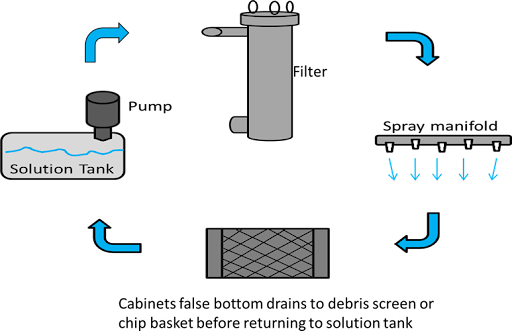
    All aqueous parts washers use a water-based cleaning solution. Regardless of a machine’s make or model, the cleaning solution flows in the same way. First, the cleaning solution moves out of a heated reservoir tank via a pump. The solution passes through a filter and then into sprayers inside the machine, as shown in the diagram below. The used solution then drains, moving through a screen or filter before returning to the tank.

    Inside An Aqueous Parts Washer

    Inside every machine, you will find the same primary components. Each part of the machine has a purpose and contributes to how it runs. All of the elements below are needed for a continuous flow of the cleaning solution.

    Cleaning Tank or Chamber

    A parts cleaning tank refers to the enclosed area where parts are cleaned. Some machines may have multiple stainless steel tanks, such as soaking tanks, washing tanks and rinsing tanks, for various stages of the cleaning process. Others, like many cabinet models, only have one chamber for cleaning and rinsing. 

    Solution Reservoir 

    The solution reservoir is the tank where the cleaning solution is stored and heated. You may also see it referred to as the solution tank or sump. The heated cleaning solution is pumped out of the reservoir and sprayed on the parts. Then, it is filtered and brought back to the reservoir. 

    Water Heater

    Heated parts cleaning tanks, or solution reservoirs, bring the cleaning solution to the appropriate temperature. Aqueous parts washers use heat, pressure and flow to clean effectively. Heat speeds up chemical reactions, which makes cleaning go faster. 

    At Jenfab, you can customize your machine to include electric heating elements or gas burner systems. Additionally, you can add other parts like immersion screw plug heaters and over-the-side L-shaped heaters to smaller machines. 

    Pump

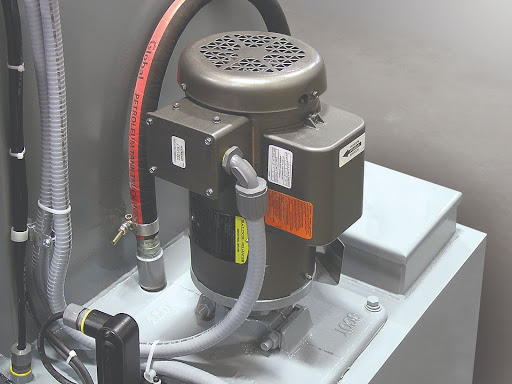
    Aqueous parts washer pumps bring cleaning solution into the cleaning tank or chamber. They move the solution through the spray manifold, where it is then directed onto the parts. These pumps work continuously to keep the cleaning solution flowing to and from the tank.

    Orca model parts washer pump.

    Sprayers 

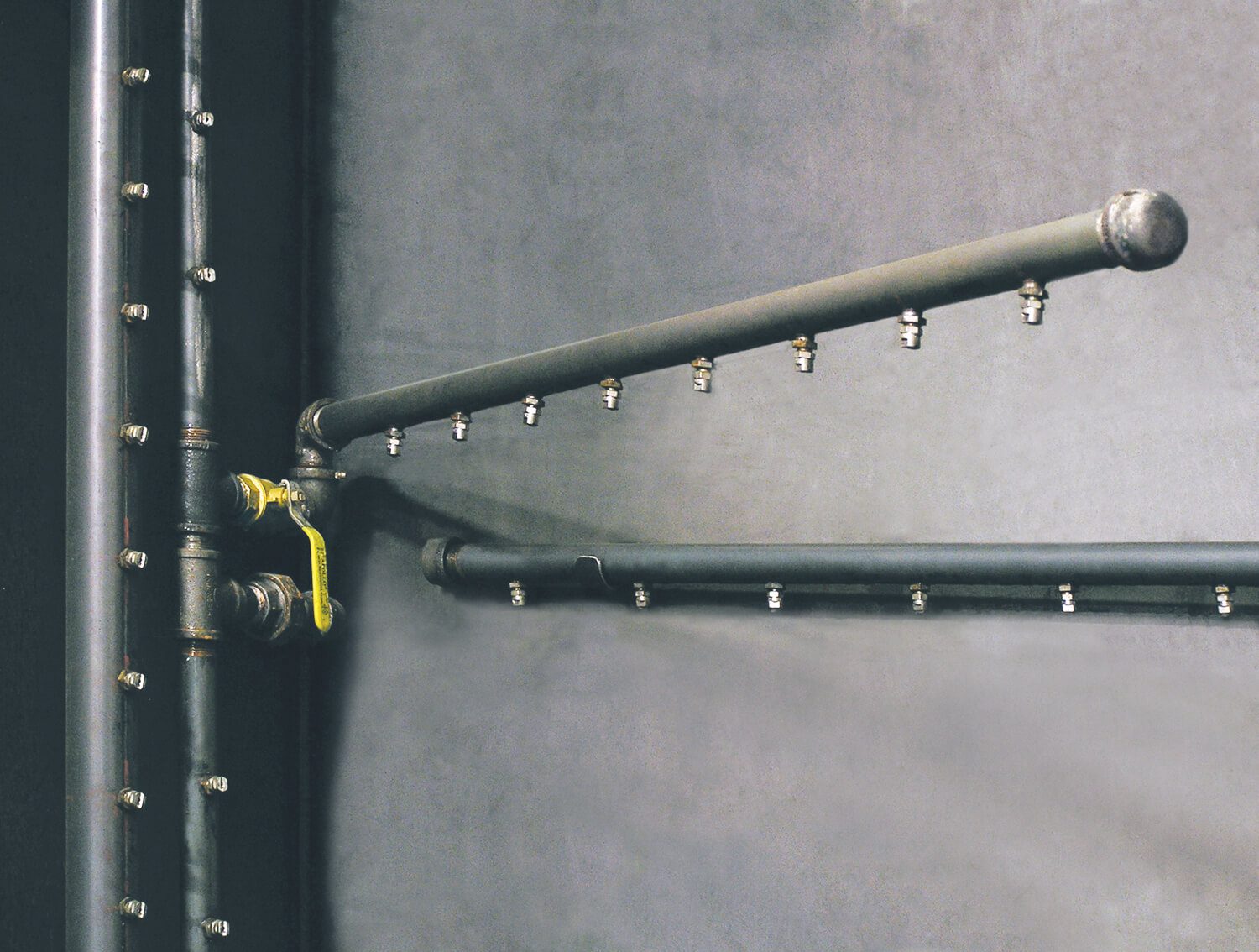
    The spray manifold is located inside the parts washer’s cleaning tank. As the pump brings the cleaning solution from the reservoir, sprayers shower the parts in the chamber with the solution. Sprayers can be placed on all sides of a tank and included in immersion tanks.

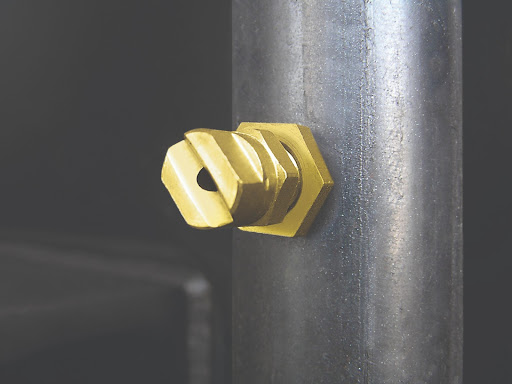
    Each sprayer head includes a spray nozzle made of either brass or stainless steel.

    Closeup of an individual spray nozzle.

    Filtration System

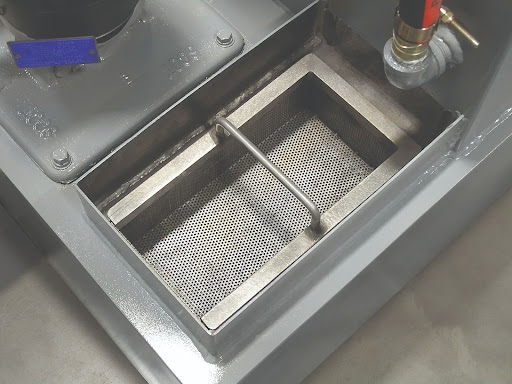
    Filtration systems remove unwanted particles from the cleaning solution so the machine can use it again. All aqueous parts washers use a filter and debris screen (or chip basket) to ensure the cleaning solution stays fresh. You will need to check and change the filter regularly as part of the machine’s maintenance. 

    Additional oil skimmers and oil coalescing systems can be added when cleaning heavily soiled parts. 

    Chip basket on the Orca model aqueous parts washer.

    Low Water Shut-off

    Low water levels can damage heating elements in parts washers. That’s why parts washers use automatic fill and low water shut-off systems that stop the machine until the water is at the appropriate level.

    What Else is Inside a Parts Washer?

    All parts washers include the parts mentioned in the previous section. However, depending on your model, your parts washer may also have one or more of the following:

    Parts Cleaning Basket

    Rotary basket models are built with parts cleaning baskets to contain and agitate parts. These machines use baskets to rotate large volumes of parts continuously. Often, baskets are used in combination with ultrasonics. 

    Turntable

    Some machines, including many cabinet parts washers, use turntables to rotate parts as they are sprayed with or immersed in the cleaning solution. Gear-driven turntables eliminate slippage that often happens with tire or chain drives.

    Conveyor Belt

    High-volume applications that require continuous throughput rely on conveyor belt systems. Belts can be made of stainless steel, plastic and woven mesh.

    Drying Station

    You may need a machine with ambient blow-off and heated drying features. Jenfab’s recirculating drying technology uses less energy to dry parts. In fact, our heating elements use 40% less energy than industry norms.

    Styles & Models 

    Now you know how a parts washer runs, but do you know which style to purchase? What aqueous parts washer would work best for your business? There are several types of aqueous parts washers, and each serves a different purpose. The volume of parts and level of cleanliness desired affects which style will work best for your application.

    Cabinet Parts Washers

    These machines are often compared to industrial dishwashers. They use a rotating turntable and pressurized spray, and can be front-loading, top-loading or made with vertical lifting doors. These machines come in various sizes, so you can find what fits the part size, part volume and physical space you have.

    Belt Parts Washers

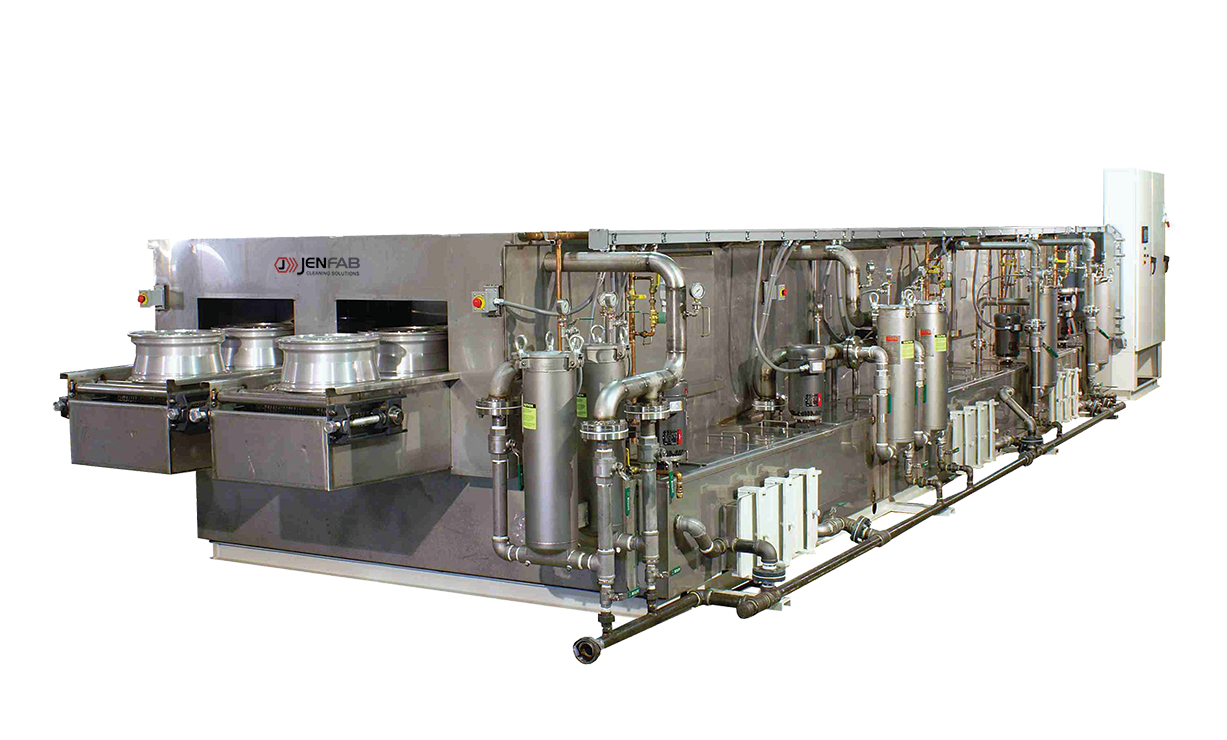
    Best for higher volume applications, belt washers use pressurized spray and a moving belt to take parts through the cleaning process. These machines are often used when you need continuous throughput or several cleaning stages. Aerospace, medical and automotive industries often use belt washers.   

    Drum Parts Washers

    Rotary drum parts washers combine spray and immersion for high-volume applications. They can be designed for batch or continuous inline feeding for ammunition, metal stamping and die casting industries.

    Rotary Basket Parts Washers

    These aqueous parts washers use rotating baskets, spray and immersion to clean small- to medium-sized parts. Rotary basket washers are ideal for parts with complex shapes like those in the aerospace, metal forming and medical industries.

    The LeanClean 360 and Vertical Agitation Rotation (VAR) systems are Jenfab’s two rotary basket models.

    Dip Agitation Parts Washers

    Lower volumes of small- to medium-sized parts can be cleaned using dip agitation models. These machines use mechanical and spray under immersion techniques to clean. 

    Vertical Agitation Parts Washers

    As the name describes, these machines use up and down agitation to remove debris while parts are in the cleaning solution. Vertical agitation models use multiple tanks for various cleaning stages, rinsing stages and coating applications. Often, they’re used for manufacturing aerospace parts and medical components.

    Monorail Parts Washers

    Monorail washers use an overhead conveyor to move parts through the cleaning process. These machines typically utilize both spray and immersion, and they are effective for high-volume finishing and metal fabrication industries. 

    Find the right aqueous parts washer for your application at Jenfab. We help you identify the model best for your needs or design a custom system just for your floor. Plus, we guide you through what you need to know to maintain your machine. 

    Request a quote today or call (800) 524-9274 to start the conversation about your new  aqueous parts washer. 

  • Is It Time to Invest in a Conveyor Belt Washer?

    Is It Time to Invest in a Conveyor Belt Washer?

    Streamlining your manufacturing process is crucial for your bottom line. When all stages of production work in tandem, everything goes off without a hitch. You save time and labor costs while increasing your capacity. Is parts washing causing a hiccup in your production flow?

    You need a parts washing system that can keep up, especially if you produce thousands of parts per day. Systems that are not up to the task cause delays as parts wait to be processed. Conveyor belt parts washers provide continuous throughput and can accomplish in-line feeding, so nothing gets stuck at the cleaning stage. 

    How Do Belt & Conveyor Spray Washers Work?  

    True to their name, belt and conveyor parts washers use a motorized belt to pass parts through the machine. Each machine uses sprayers to rinse and wash off parts. Conveyor belt washers tackle the required cleaning phases: washing, rinsing, drying, phosphating and sealing. Machines can be designed to repeat stages or use heated drying. 

    How Parts Pass Through the Machine

    Inside a conveyor belt system are multiple stations built for each cleaning phase. Parts enter and exit through a tunnel opening. We can customize the size and material of the conveyor belt based on the parts and soils. Generally, parts move through a belt conveyor spray washer like this: 

    1. Parts enter a wash station. Sprayers release a cleaning solution to remove debris from the parts. 
    2. The conveyor belt moves parts from the wash station to a drain station. Stainless steel walls and rubber curtains separate the wash and drain stations, preventing spray deflection while the solution drains. 
    3. Next, parts move to a rinse station, where they are sprayed again.
    4. Parts move through another draining station. 
    5. Lastly, parts enter a drying station. Ambient blow-off can be used when parts don’t need to exit completely dry. Heated drying is used when parts need to be dry upon leaving the machine. 

    All cleaning stages work simultaneously. As one group of parts exits a station, another group is brought into that station. 

    Materials & Belt Types

    Conveyor parts washers are made of stainless steel; however, depending on the application, the conveyor belt can be made from other materials. Stainless steel is a standard, but belts can also be galvanized steel, plastic and specialty-coated woven mesh. They can be designed with cleats or made of Omni-Flex®, which allows for 90- and 180-degree bends. With a wide range of material choices, you can design conveyor parts washers to meet your needs.  

    Is a Belt Washer Right for Your Company?

    Belt and conveyor parts washers are used in a variety of industries—from die casting to aerospace. Automotive and general manufacturers commonly use conveyor parts washers to clean wheels, transmissions, bearings, gears, machined parts and stampings. These machines easily accommodate oil skimmers and filtration systems. Their ability to clean oily and greasy parts is one of the many reasons large automotive manufacturers choose belt washers. 

    Conveyor spray washers process large volumes of parts, but that doesn’t change their effectiveness. These parts washers provide superior precision cleaning and drying. 

    It’s time to invest in a belt system if: 

    1. You need continuous throughput of parts. Conveyor belt spray washers keep parts moving through the machine and onto the next phase of manufacturing. Machines can be designed for in-line feeding to take parts directly from another machine. 
    2. You need to feed parts at a specific rate. Each machine can be configured to a rate you choose. Your parts washer will keep up with other production phases, increasing the efficiency of your processes. 
    3. You need to process parts at a high volume. Other parts washers can’t deliver on part volume. A belt parts washer can process thousands of parts per day. Parts move continuously through the machine so more are cleaned. 
    4. Your current cleaning process causes bottlenecks. You don’t want anything to stall production or cause products to back up in high-volume scenarios. Belt washers match the rate of your other processes so you reduce bottlenecks. 

    Ready to change the way your company works? Increase your capabilities and reduce delays when you add a conveyor belt parts washer to your floor. 

    Jenfab offers several customizable models, including mini belt washers, HD belt  washers, drum and belt combinations and modular conveyor belt washers. We tailor the machine’s zone lengths, belt width, number of lanes and pump sizes to suit your needs. 

    The belt dimensions of our models are as follows: 

    • Mini belt washers: 6” to 12” belt 
    • Mid-size belt washers: 18” to 24” belt
    • Large belt washers: 30” to 72” belt

    Request a quote today or call (800) 524-9274 to talk to someone about your custom aqueous parts washer. 

  • What Should Automotive Shops Look for in a Parts Washer?

    What Should Automotive Shops Look for in a Parts Washer?

    Automotive manufacturers and remanufacturers know that washing parts by hand takes time, and it may not achieve the level of clean needed. Trade your manual cleaning process for an automatic parts washer. 

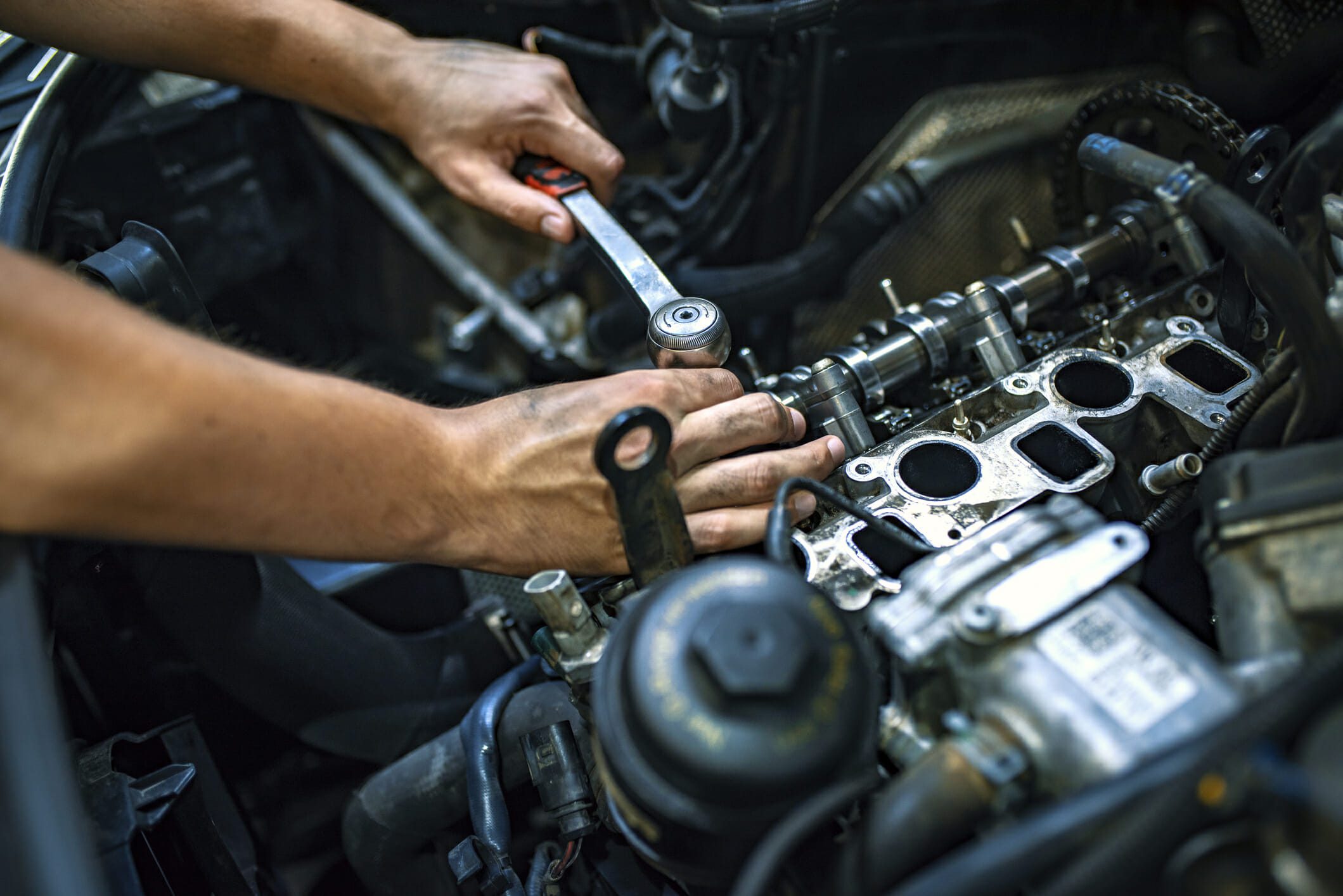
    Parts washers save your shop time and resources by cleaning engine heads, transmissions and smaller components. These machines clean car and engine parts covered in grease, rust and grime without taking up your employees’ time. 

    What should you look for in an automotive parts washer? What’s the best option for your shop? Keep reading to learn what type of parts washer would be best for your auto shop.

    Choosing A Type of Parts Washer: Solvent-Based vs. Aqueous Parts Washers

    The first thing to consider when choosing a parts washer is how it cleans. Solvent-based parts washers use chemicals to clean contaminants from parts. Though solvents may achieve the clean you need, they also pose several risks and disadvantages. 

    Before choosing a solvent-based washer, consider the following:

    • Disposal costs. Petroleum and chlorinated solvents create toxic waste. You can’t dispose of this waste as you would other materials. You will have to dispose of solvents safely, according to federal and state regulations. The cost of disposal adds up over time.  
    • Employee safety. Solvents are flammable, and they release harmful volatile organic compounds (VOCs) into the air. Employees exposed to high levels of VOCs can suffer from health problems. Your shop will need to provide employees with proper training and have a toxic management plan in place. 
    • Environmental impact. Solvent-based parts washing generates more emissions, water waste and hazardous waste than aqueous parts washing.  

    Aqueous parts washers use water-based solutions that are better for the environment and human health. Here are a few of the benefits of aqueous parts washers: 

    • Easier disposal. Waste from aqueous cleaning is much easier to dispose of since it is less toxic than waste from solvent cleaning. Aqueous cleaning reduces disposal costs. 
    • Better for health. Aqueous solutions are less harmful to the health of your employees. Because they contain little to no VOCs, aqueous cleaning solutions put fewer chemicals into the air, reducing the risk of long-term health problems. 
    • Environmental impact. Aqueous parts washers allow for more freshwater reuse during the cleaning process. Oil skimming or filtering also extends the life of the cleaning solution, allowing you to use the same solution for longer.

    Making the Switch: Benefits of Automatic Parts Washers

    Should your auto shop make the switch to an automatic parts washer? And should you choose an aqueous one? It’s time to invest in a different system if your employees spend hours each day cleaning automotive parts. 

    Reduced Labor

    Automatic parts washers reduce labor time and costs. Once employees place the parts in the washer, they can continue with other tasks. A machine lets your shop effectively clean parts without wasting too much time or effort. Parts washing machines also offer a better clean than manual washing. A suitable machine cleans to an exacting standard. 

    A Safer Way to Clean 

    Manual parts cleaning places employees in direct contact with cleaning solvents. Switching to an automatic parts washer is better for employee safety because it eliminates direct contact. Choosing an aqueous parts washer further reduces the health risks associated with chemicals in common solvents.

    Return on Investment

    Automatic parts washers pay for themselves over time by increasing employee productivity in other areas and reducing the time it takes to clean parts. With an aqueous parts washer, you’ll also be able to reuse cleaning solutions to maximize your washer’s longevity.

    Common Cleaning Techniques 

    What may take hours to clean by hand can be washed in minutes with a machine. Parts washers for car and engine parts work in a variety of ways. 

    • High-Pressure Spray. Spray cabinet washers hit parts with pressurized water and cleaning solution. Often, parts will rotate in a basket while being sprayed for optimal cleaning. Spray washing removes heavy soils effectively and works well for grimy transmissions and engine blocks.
    • Immersion Agitation. Some machines immerse parts in a cleaning solution and agitate them to knock debris loose. Automatic parts washers may use rotating or moving baskets to do this.
    • Ultrasonics. Achieve high levels of cleanliness with ultrasonics. Parts are immersed in a cleaning bath while ultrasonic transducers produce sound waves that agitate the liquid and help clean complex parts.

    Selecting A Machine: Aqueous Parts Washer Models

    Spray cabinet parts washers fit the bill for most automotive shops or service facilities. They provide effective, quick cleaning that reduces lead time and helps shops run smoothly. Jenfab has several spray cabinet models to choose from.

    PCS Front Load Parts Washer

    Jenfab’s PCS front load spray cabinet washers can be customized for your shop’s needs. PCS washers are available with turntables up to 72” in diameter and can be paired with equipment for oil coalescing systems, oil skimmers, steam heat and more. These models have large swing-out doors for better access and swing-away spray manifolds that work well for cleaning smaller parts. Our PCS systems can also be made from stainless steel. 

    Orca Parts Washer

    The Orca is a roll-in door model with a small footprint. Its design saves on space and makes it easier to load and unload. The powerful but compact Orca effectively cleans light and heavy-duty jobs, reducing lead time. It features a seven-day programmable timer for heat and oil skimming and makes it easy to dispose of oil.  

    You can order the Orca online for lease or purchase.

    Top Load Spray Cabinet Parts Washer

    The TL top load spray cabinet parts washer offers clear overhead access with a lid similar to a clamshell. Its top-loading design makes this machine perfect for small spaces. Jenfab offers models with turntables up to 72” in diameter and can further customize the system to handle specific sizes and weights. Each machine includes vertical pumps, mechanical door seals and a sprocket drive system. 

    Avenger Parts Washer

    If you need an affordable, entry-level parts washer, look no further than Jenfab’s Avenger. The Avenger is a compact, top-loading parts washer made to replace sinks and scrub tubs. Of all of our cabinet models, the Avenger has the quickest lead time, making it ideal for automotive service facilities. 

    You can lease or order the Avenger online today.

    Other Considerations for Your Auto Shop

    Changing your processes is a big step. Before you decide on a parts washer, consider what you will clean, what contaminants need to be removed, and how much space you have for new equipment. These factors will help you determine which model to purchase.  

    • What needs to be cleaned? Do you need to clean engine heads or cylinder blocks? Do you work with smaller parts like plugs or bolts? Knowing what you need to clean helps you determine the capabilities you need from a machine.
    • How clean does it need to be? Are you degreasing parts or removing rust and road grime? What’s the standard you want to reach? Your custom chemistry, or cleaning solution, will be determined by the parts and contaminants.
    • How much space do you have? Space is limited in smaller shops. A larger machine could overtake needed workspace. Small parts washers bring powerful cleaning capabilities while fitting into tight areas. Some small parts washers are also mobile. Take Jenfab’s Avenger, for example—you can roll it to different workspaces as necessary.

    Are you ready to make the switch for your shop?

    Purchase or lease Jenfab’s roll-in door Orca or top-loading Avenger online today. These machines are made for automotive shops that need a powerful clean for less square footage. 

    Need a larger, custom machine? Request a quote to take the first step toward a better clean. 

  • Aqueous Parts Cleaning: Why Focus on Flow Over Pressure

    Aqueous Parts Cleaning: Why Focus on Flow Over Pressure

    Many companies that offer industrial parts washers suggest pressure is the most important factor in parts cleaning. The force of spray or turbulence is only one piece of what should be considered during the cleaning process. Aqueous parts washers use time, temperature, agitation and flow. All of these factors work together to clean parts effectively. 

    For a successful clean, you must have the right balance of pressure and flow. Pressurized spray knocks off dirt and debris, but debris is left behind to recontaminate parts without proper flow. Jenfab emphasizes flow over pressure to provide a faster clean for our customers. Learn more about why flow is crucial to any aqueous parts washer. 

    Wade into the Cleaning Process

    First things first: How does a water-based parts washer work? How does it remove grease and grime? Aqueous parts washers use a combination of chemical, thermal and mechanical means to remove soils. Aqueous cleaning systems combine the following methods to achieve the proper clean: 

    • Cleaning solution. An aqueous cleaning solution removes a specific soil from a specific material. The water-based cleaning solution, or chemistry, helps remove residue without damaging the part’s material. It works in combination with heat and agitation. 
    • Heat. Heat can accelerate the cleaning process. That’s why many aqueous parts washers have heated tanks. Higher temperatures increase the rate of reaction between the water, chemistry and soil. Heated parts washers can also aid in melting soils from a part’s surface.
    • Movement. Aqueous parts washing requires agitation or impingement. The solution must move against or through the parts. Spray nozzles, rotating baskets and ultrasonics are built into commercial parts washing machines. These features work alongside the cleaning chemistry to remove soils from parts. 

    How Solution Flows Through A System

    The flow of Jenfab’s aqueous parts washers is the same across all our products. A heated tank holds the aqueous parts washing solution, and a pump sends it to the spray manifold inside the machine. After being sprayed onto the parts, the cleaning solution moves through a debris screen or chip basket and returns to the tank. The solution continuously recirculates. 

    Any left-behind soils will recontaminate the parts and slow the cleaning process. Using a debris screen or chip basket ensures removed soils aren’t brought back into the solution tank. An aqueous parts washer keeps the cleaning solution fresh for many washes. 

    Optional bag or cartridge filtration can be added in-line with the pump and spray manifold on most machines. This enhances precision cleaning capabilities by utilizing filtration down to 5 micron.

    5-Step Flow 

    1. Aqueous cleaning solution sits in a tank.
    2. The solution is sprayed onto parts
    3. Soils are filtered from the solution. 
    4. The solution returns to the tank.
    5. Repeat. 

    Pressure vs. Flow: Which is Better?

    You need both pressure and flow for a parts washer to work as it should. Yet, flow is arguably the most essential of the two. When you wash something, you scrub it and rinse it off. The same goes for parts washing. Pressurized water acts as the scrub and flow acts as the rinse. 

    Cleaning Under Pressure 

    Aqueous parts washers depend on pressure to remove soils from parts. Pressure is the force of water measured in pounds per square inch (PSI). Aqueous solution is sprayed onto parts—without the right force, tough soils will remain stuck to the material. The force of water, combined with the chemistry and heat, takes out soils. Once the debris is loosened, these soils are left suspended in the solution. 

    Parts Washer Flow Rate

    A parts washer’s flow rate measures its ability to rinse away soils. Flow is the volume of water measured in gallons per minute (GPM). Think of GPM as the flow of dirt and debris being flushed away from parts. Soils in the cleaning solution are captured before the cleaning solution returns to the tank. Adequate flow ensures that parts are not recontaminated with soils. If a higher volume of aqueous solution flows through the cleaning chamber, soils are removed at a faster rate.  

    Flow & Cleaning Power

    More pressure doesn’t produce a better, faster clean. Too much pressure can damage part surfaces. A better flow, on the other hand, does affect your cleaning capability. The higher GPM a machine has, the more efficiently it can clean. An aqueous parts washer’s flow affects the amount of time it takes to clean parts. The bottom line is a higher flow means a faster clean. 

    Choose a manufacturer with an emphasis on flow. Request a quote for a custom aqueous parts washer today, or order our ready-to-ship Orca and Avenger for your shop floor.

  • What Is A Rotary Drum Washer?

    What Is A Rotary Drum Washer?

    Industrial parts washers come in many designs. Depending on your application, you may need a large machine with a conveyor or a smaller, front-loading option that takes up less floor space. Rotary drum washers work well for cleaning high-volume parts, like stampings, fasteners and ammunition casings.

    What makes a rotary drum different from other parts washers? Keep reading to learn more about rotary drum washers and their applications. 

    What Is A Drum? 

    A drum is like a rotating tub. It moves during the cleaning cycle to agitate the parts or carry them to the next station. Think about a household washing machine. During its cycle, a washing machine’s inner drum moves around, agitating the water, detergent and laundry. At a basic level, industrial-grade drum washers work the same way to clean with an aqueous solution.

    Browse Jenfab Rotary Drum Washers

    Using A Rotary Drum Parts Washer

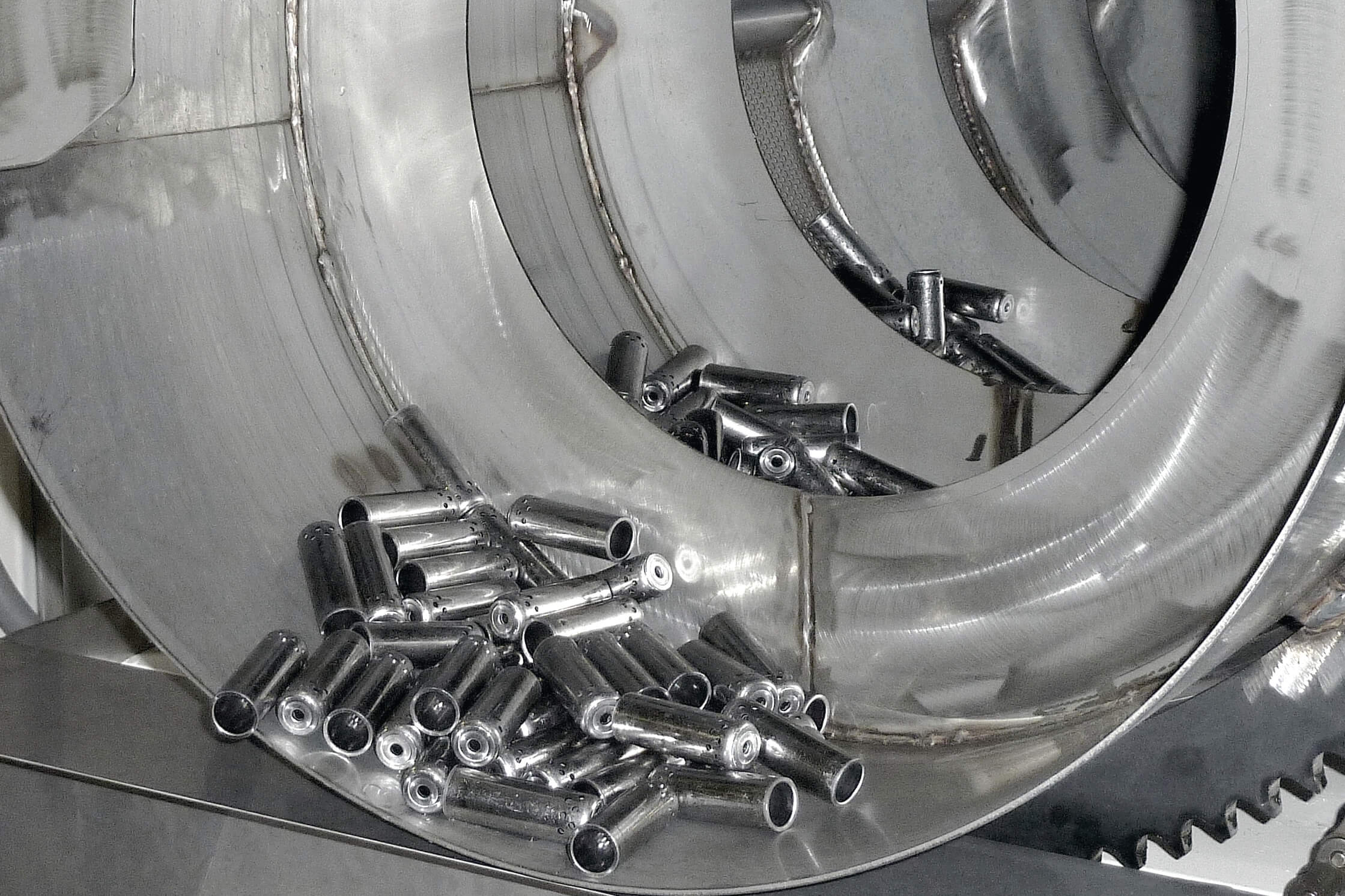
    With a rotary drum washer, parts are fed into a rotating drum continuously or in batches. This drum looks like a long, horizontal cylinder. The drum’s internal helix causes parts to move through it as it rotates. During washing and rinsing stages, parts are gently tumbled to expose all surfaces and edges to the aqueous solution. 

    Rotary drum washers use both pressurized spray and immersion soaking for a powerful clean. Combining the two techniques removes grime from both the exterior and interior of parts. The spray washes oils, dust and debris from the exterior, and immersing parts into the solution flushes out any hollow areas or blind holes. 

    Need an all-in-one parts washer? Design your custom parts washer as a single or multi-stage system. Rotary drum washers can accomplish washing, rinsing, sealing, passivating and drying stages—all while keeping solutions separate. 

    Common Applications for Rotary Drum Washers

    The parts washer you choose depends on your application. Rotary drum washers are often used in automotive, aerospace, metal forming and ammunition industries. These industries rely on processing high volumes of components efficiently. 

    Rotary drums come in many different sizes and designs:

    • Mini rotary drum washers are great for small machined parts, metal stampings and die cast components. Mini drums can also clean rubber or plastics. Jenfab offers mini drums in 15” and 19” diameters. 
    • Large rotary drum washers tackle high volumes of fasteners, casings, battery cans and more. Larger drums provide heavy-duty cleaning power and come in sizes ranging from 30” to 45” in diameter.
    • Dual drum washers offer two drums in one machine. The drum washers share tanks, heating systems and a dryer, but they can be operated at different speeds and designed to clean separate parts. You’ll be able to do more while taking up less floor space.

    Why Choose A Rotary Drum Washer?

    Rotary drum washers save time and can reduce costs associated with cleaning and processing parts. This type of parts washer is a match for those looking for:  

    • High output. Do you have a high product volume? Need to clean thousands of parts each day? Large rotary drum washers can process anywhere from 10,000 lbs. to 45,000 lbs. per hour.
    • Delicate parts handling. What about parts with external threads? Will the machine damage delicate components? Though parts are tumbled during the process, rotary drum washers clean without causing damage. These parts washers are designed to handle delicate parts with care. 
    • In-line capabilities. Rotary drum washers can be fed continuously by another machine, increasing your ability to clean and dry at high production rates. Rotary washers can still be fed in batches, too, if your manufacturing process doesn’t warrant in-line capabilities. 

    Is a rotary parts washer what you need? 

    Jenfab offers several rotary drum models. Our LJ Drum Washers are made for small to medium parts, while our heavy-duty (HD) drums are built for large parts. 

    Request a quote today to learn more about our aqueous parts washers.

  • Jenfab’s Custom Cleaning Solutions & Everyday Impact

    Jenfab’s Custom Cleaning Solutions & Everyday Impact

    Jenfab has one goal: deliver custom cleaning solutions on spec and on time. Since 1960, we’ve been developing aqueous parts washers to meet the needs of manufacturers across numerous industries. Our custom and industrial parts washers don’t only make an impact on our customers; they also make an impact on the world. 

    Aqueous parts washing touches our lives in many ways. At Jenfab, we do more than develop machines to clean parts and components. We help communities across the country remain vibrant, connected and safe. Together, with other manufacturers, we shape healthcare, build homes and protect communities. 

    We provide solutions for what matters most every day of the year. 

    Our Everyday Impact

    Discover how aqueous parts washing benefits our communities. 

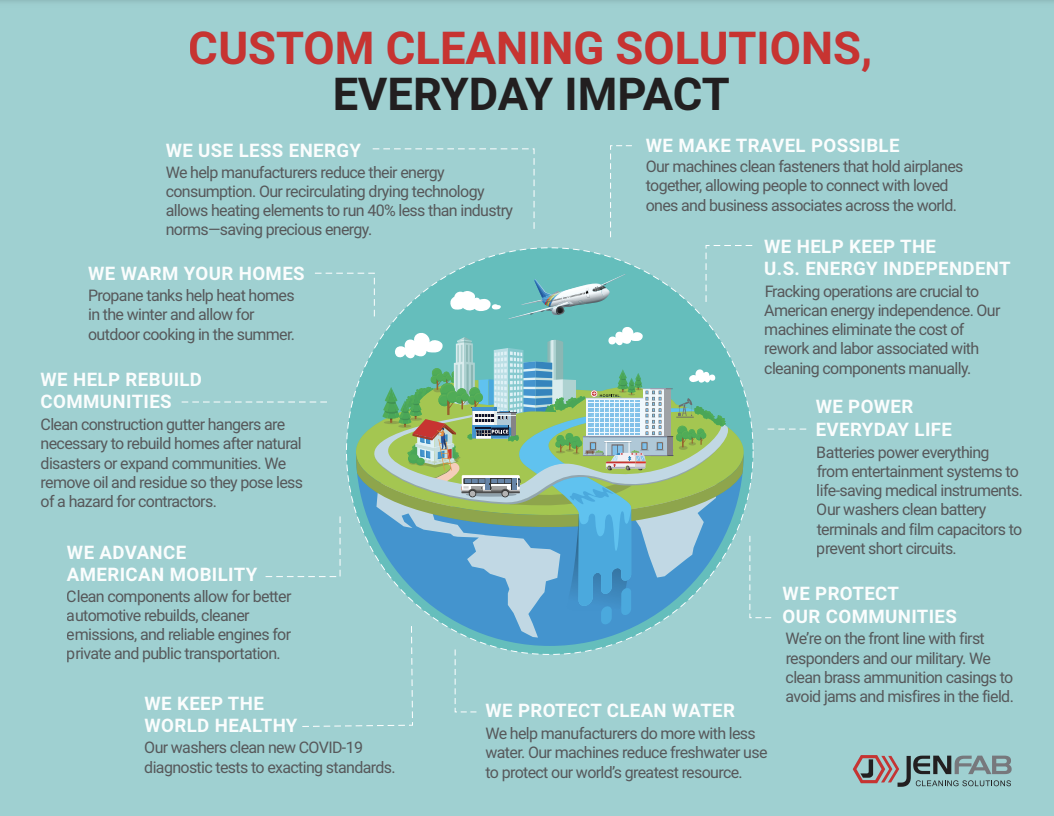
    A globe with points discussing Jenfab's everyday impact.

    We Make Travel Possible

    We help make it possible to travel across the country or globe. Our washers clean fasteners that hold vehicles, ships and airplanes together. We’ve also cleaned blades, bearings, filters and engine components for aerospace manufacturers.

    With the right parts cleaning equipment, we help manufacturers meet their industry’s exacting standards and keep people connected with loved ones and business associates—no matter where they are. 

    We Help Keep the U.S. Energy Independent 

    Fracking operations are crucial to American energy independence and extremely cost-sensitive. Our heavy-duty parts washers eliminate the cost of rework and labor associated with cleaning components manually. We’ve developed aqueous cleaning systems to wash drill bits, pipeline pigs, rotors, stators, and more to save on operation costs. 

    We Power Everyday Life

    Energy storage is necessary for everyday life. Batteries power the products we depend on—from our entertainment systems to life-saving medical instruments. Our parts washers prevent short circuits by cleaning spilled acid from battery terminals. We also clean film capacitors inside and out to provide greater reliability for industrial, medical and specialized applications. 

    We Protect Our Communities 

    We stand on the front lines with first responders and the United States military. Our washers clean brass ammunition casings to avoid weapon jams or misfires in the field. With our automatic parts washers, we help keep our first responders and soldiers safe when using firearms. 

    We Keep the World Healthy

    Medical devices and instruments must meet stringent cleaning standards. We help manufacturers meet those requirements so necessary equipment can be produced and delivered to facilities across the country. 

    Our machines help medical manufacturers provide doctors and patients with the equipment they need. Whether it’s cleaning glass tubes, orthopedic implants or COVID-19 diagnostic tests, we know how important it is to meet the cleaning standards of the medical industry. An exact clean can save lives.

    We Advance American Mobility 

    Vehicles give us freedom of mobility. Your car or truck makes traveling to work and over state lines easy. Reliable public transportation helps people gain access to employment, education and healthcare. The trucking industry powers America’s supply chain, delivering necessities across the country.

    Automotive manufacturers and remanufacturers are crucial to daily life. Clean cores and component parts make for better rebuilds, cleaner emissions and more reliable engines. Jenfab’s automotive parts washers clean steer shafts, inserts, fuel rails and much more. We also clean rocker arms before they arrive at automated final assembly so that debris does not impede the assembly process.

    We Help Rebuild Communities

    In the wake of hurricanes, tornadoes and earthquakes, we help provide safe equipment for construction projects so communities can start again. Contractors use gutter hangers to rebuild homes after natural disasters or expand communities as cities grow. Our machines remove oil and residue from gutter hangers, so they pose less risk to contractors and workers on the site.  

    We Warm Your Homes

    When the weather turns cold, we help you keep your home warm. Propane tanks heat homes in the winter, and they allow for outdoor cooking in the summer. Our propane cylinder cleaning systems remove grease and oils from tanks efficiently. Your BBQ grill can thank us!

    Environmental Considerations 

    Explore Jenfab’s commitment to its environmental impact—one wash at a time.

    We Conserve Water Every Wash

    Clean water is the world’s greatest resource. Over the next two decades, the demand for clean water is projected to increase by 40%, yet access to clean water continues to diminish across the globe. 

    Many manufacturing processes use water. It is necessary for cleaning, sanitizing, food processing, heating and cooling, and oil extraction. At Jenfab, we help our customers do more with less water. Our Smart H2O Management applications reduce freshwater use and recycle water during the cleaning process. 

    We Eliminate Hazardous VOCs

    Cleaning solvents are potentially toxic. Solvents release larger amounts of volatile organic compounds (VOCs) that are toxic to dispose of and can cause health problems for people exposed to them. We eliminate the need for harmful solvents during the cleaning cycle. Aqueous cleaners are water-based solutions that contain little or no VOCs. 

    We Promote Energy Efficiency 

    The global population is expected to grow by one billion in the next ten years. As the population grows, the demand for energy increases. The world’s energy demand is estimated to increase by 30% in the next 20 years. Meeting this demand is becoming more and more difficult. 

    Jenfab helps manufacturers identify and reduce their energy consumption. Our recirculating drying technology allows heating elements to run 40% less than industry norms—saving precious energy. We continue to look for ways to innovate our cleaning cycles and equipment. By reducing our machines’ energy consumption, we help manufacturers save on operational costs.

    Making A Difference Every Day

    Every wash cycle makes a difference to our customers and community. When we develop cleaning solutions and equipment, we recognize the importance of our task. What our team and our aqueous parts washers accomplish affects more than someone’s bottom line. 

    We help our world keep running. We help produce necessities for our soldiers, coworkers, friends and family. We help people get to work. We help people travel the globe. We help minimize our country’s environmental footprint. 

    We make an impact every day. 

    Request a quote from Jenfab today. We promise to deliver on time and on spec because what matters most—your high-quality clean—is our top priority. 

  • How Ultrasonics Can Clean Medical Devices

    How Ultrasonics Can Clean Medical Devices

    When it comes to cleaning, all medical devices and instruments must be free from residuals used or created during the manufacturing process. Anything left behind could affect the device’s function later or pose long-term health risks to the person receiving the device. Medical devices, such as knee, hip or ankle implants, and other equipment, like COVID-19 diagnostic tests, must meet FDA requirements. 

    Many medical devices are hard to clean because they include tubes, blind holes, recesses and crevices. They also may be made of porous materials or include joints where soils can collect. Ultrasonic parts washers perform the fine cleaning needed to remove microscopic and even submicroscopic soils. 

    What is ultrasonic cleaning? How can you start using sound waves to clean parts? Read more about using ultrasonic cleaning systems in medical manufacturing.

    Contaminants From Manufacturing

    Cutting. Shaping. Polishing. Manufacturing processes often create contaminants from pastes or lubricants used while machining, forming or assembling parts. For example, oil may be used to cut and form medical implants. Other pastes may be utilized to create a final polish. 

    Processes like milling and grinding may leave behind tiny metal chips or shavings. These contaminants can get caught in the joints, holes or passages of medical devices and equipment. All contaminants must be removed before sterilization. Anything left behind could pose a threat to the patient receiving that device. 

    The Solution: Ultrasonic Parts Washers

    Ultrasonic parts washing involves one or more cleaning tanks, a cleaning solution, and sound waves. With an ultrasonic parts washer, parts are submerged underwater for cleaning. Ultrasonic transducers within the washer emit sound waves, which agitate the liquid surrounding the parts. 

    Through a process called cavitation, sound waves cause bubbles to form in the liquid. These bubbles grow unstable and collapse, imploding when they hit objects like the parts in the washer. The force of the imploding molecules loosens soils and debris from the parts inside. 

    Most ultrasonic parts washers emit sound waves at a frequency of 25 kHz to 40 kHz. Lower frequencies work well for removing grease, oil and other contaminants from surfaces. For fine cleaning, higher frequencies remove submicroscopic soils and can reach any complexities or detailing on the parts. 

    Though great for specialized cleaning, ultrasonics should not be used for initial soil removal. 

    Ultrasonics & The Aqueous Cleaning Process

    An aqueous cleaning system with ultrasonics is often a multi-tank system. The parts to be cleaned are placed inside a tank (with a basket or carrier) and submerged in the cleaning chemistry. Medical devices and equipment may go through a primary cleaning to remove the initial layer of debris, a secondary cleaning in an ultrasonic cleaning tank, and a final rinse. You may require more wash and rinse steps depending on your application. 

    Choosing An Aqueous Parts Washer

    Selecting an aqueous parts washer and cleaning chemistry can be difficult. At Jenfab, we’re here to help! We can test wash your parts to make sure the system you choose meets your cleanliness standards. Is an aqueous parts washer the solution to your needs? We have the ultrasonic capabilities you need, and many of our parts washers can integrate into your current production line. 

    LeanClean 360 Models

    Combine multiple sound wave frequencies to clean submicroscopic particles from medical devices with the LeanClean 360 series. Inside a LeanClean 360, parts rotate within a basket as they are submerged into an ultrasonic cleaning solution and sprayed with jets. The LeanClean 360 models also feature rocking settings for more delicate parts.

    View our LeanClean models with built-in ultrasonics made to meet critical cleaning specifications. 

    Vertical Agitation (VA) Immersion Models

    Need a precision clean for thousands of parts? Our Vertical Agitation Immersion models are in-line systems made for multiple cleaning and rinsing steps. These models can perform ultrasonic cleaning at 20 kHz, 25 kHz and 40 kHz. 

    Explore our Vertical Agitation Immersion models for fully automated solutions. 


    Ready to find the right parts washer for your application?

    Request a quote from Jenfab to learn more about our aqueous parts washers and their capabilities. 

  • Aqueous Parts Washers for Manufacturing Fasteners

    Aqueous Parts Washers for Manufacturing Fasteners

    Screws. Bolts. Rivets. Nearly every industry uses fasteners to hold materials together. From aerospace manufacturers to those in the automotive industry, fasteners are a component required to produce many final products. 

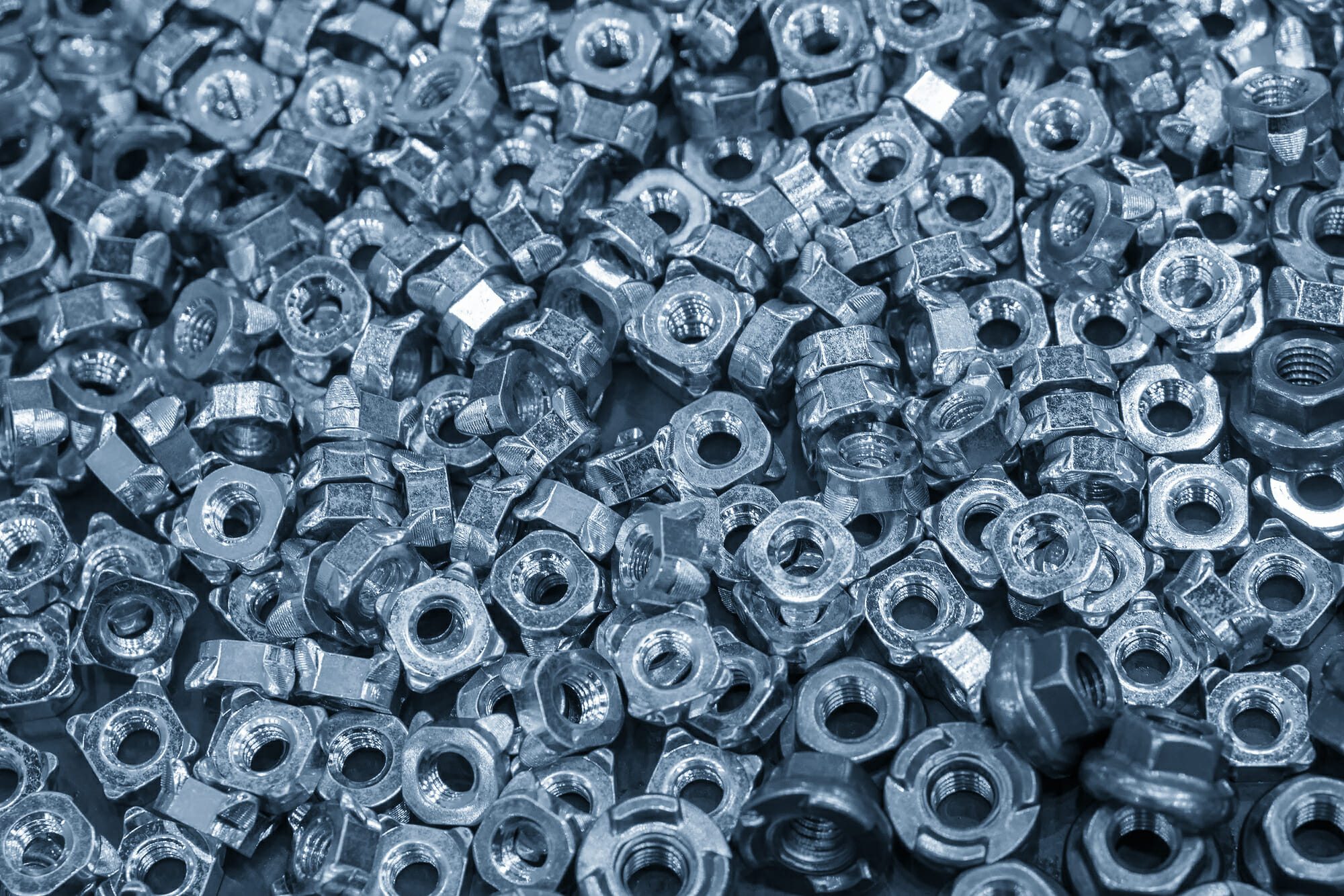
    Like other component parts, fasteners often require a washing or cleaning step to adhere to quality standards during the manufacturing process. Cold heading fasteners can leave behind metal dust and debris. Remanufacturers are likely to work with fasteners covered in rust, grease, and oil. 

    How do you clean greasy bolts? How do you ensure metal debris is removed from newly made fasteners? Both large manufacturers and small shops can utilize aqueous parts washers to clean bolts, screws, and more. 

    Why Use An Aqueous Parts Washer?

    Aqueous cleaning solutions are water-based. They do not use harsh solvents or give off harmful volatile organic compounds (VOCs). Instead of using your typical degreasing agent, aqueous cleaning systems combine flow, pressure, heat, and soap to break down soils and remove contaminants. Though they don’t use petroleum-based solvents, aqueous cleaning systems are just as effective at achieving the clean you need.

    There are no limits on what fasteners aqueous parts washers can handle. They can tackle all types of fasteners, including but not limited to: 

    • Screws
    • Bolts
    • Washers
    • Rivets
    • Nuts
    • Pins
    • Collars
    • Studs
    • Nails

    The first step toward cleaning fasteners is determining the solution, or chemistry, needed to remove the contaminants involved. At Jenfab, we perform a test wash to identify the chemistry and parts washer that will meet your goals. 

    The wash frequency and type of soils that need to be removed will determine what aqueous cleaning system best suits your needs. 

    Cleaning While Manufacturing Fasteners 

    Manufacturing fasteners often includes one or more cleaning steps. After fasteners are cut, tooled, and drilled, they may need to be washed to remove any leftover metal chips, debris, or dust from cold heading and fabrication. If any secondary oils or lubrication were used during manufacturing, an aqueous parts washer and solution will remove those contaminants.

    Depending on your application, you may only need one wash to get the job done. Suppose your setup is complex, or you need to perform multiple washes. In that case, you may opt for a multi-tank system—one tank for the primary cleaning of components and a secondary tank for a final clean or rust preventative application. 

    Some parts need multiple washing stages if they are heavily soiled. While the first stage removes dirt and grime, the second stage provides another rinse to ensure the parts meet the required cleaning standards. A third stage may include corrosion protection. 

    Small shops may only need one washer. Larger operations may need custom automatic parts washers designed to work within the existing production line. Automatic parts washers may include a conveyor or a pass-through handling system that loads and moves parts from one tank to the next. 

    For Larger Manufacturing Operations: Custom Rotary Drum 

    Rotary drum washers can precision clean thousands of fasteners per hour. From mini to large washers, rotary drums come in many sizes and capabilities. Rotary drum washers use spray and immersion cleaning techniques to wash the exterior of the parts and reach the small, hard-to-clean areas, like in-between threads and joints. 

    Multi-tank drum washers can help you complete all parts of your cleaning process: washing, rinsing, passivating, coating, and drying. You can also utilize aqueous parts washers to prepare for the next step of the manufacturing process with tanks made specifically for sealing or lubricating fasteners. 

    Depending on the size of the washer and the system’s design, rotary drum washers can help you clean up to 45,000 lbs. of fasteners per hour—and that’s without damaging delicate threads or mixing materials. 

    Learn more about our precision rotary drum washers.

    For Small Shops: The Top-Loading Avenger 

    Greasy, oily, or dirty fasteners? Stop washing parts by hand. Automatic parts washers help small shops save on time and labor by effectively removing soils from fasteners. Get the benefits of a larger cabinet washer in an easy-to-manage size with the Avenger.

    The Avenger is a mobile, top-loading aqueous parts washer that will easily squeeze into small workspaces. Its soaking reservoir and optional spray brush allow for multiple washing techniques. With a no-drip tray, the Avenger keeps your shop floor dry while unloading clean fasteners. 

    Read more about our durable Avenger

    At Jenfab, we have the equipment and expertise to meet your cleaning needs. We’ll help you find the right aqueous parts washer for your floor.

    Request a quote today for more information about our models.