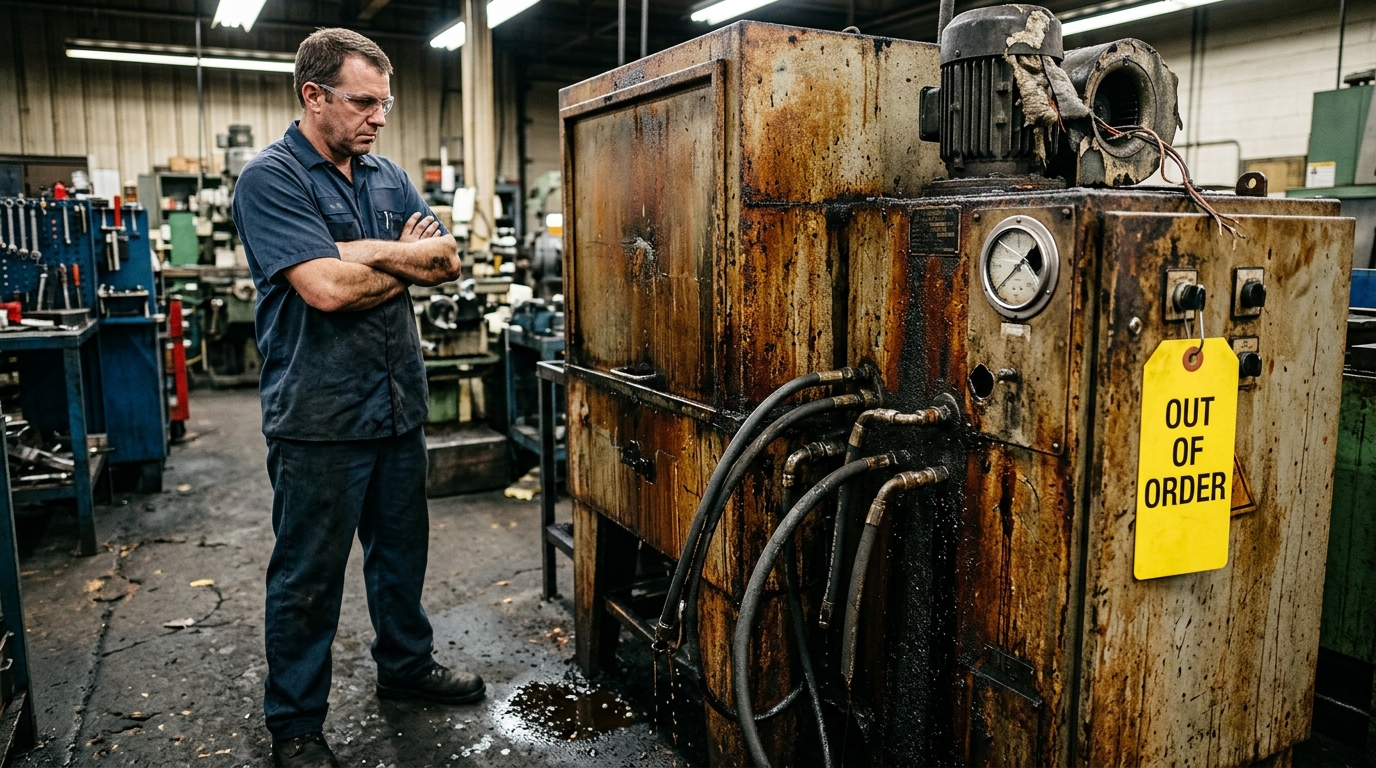

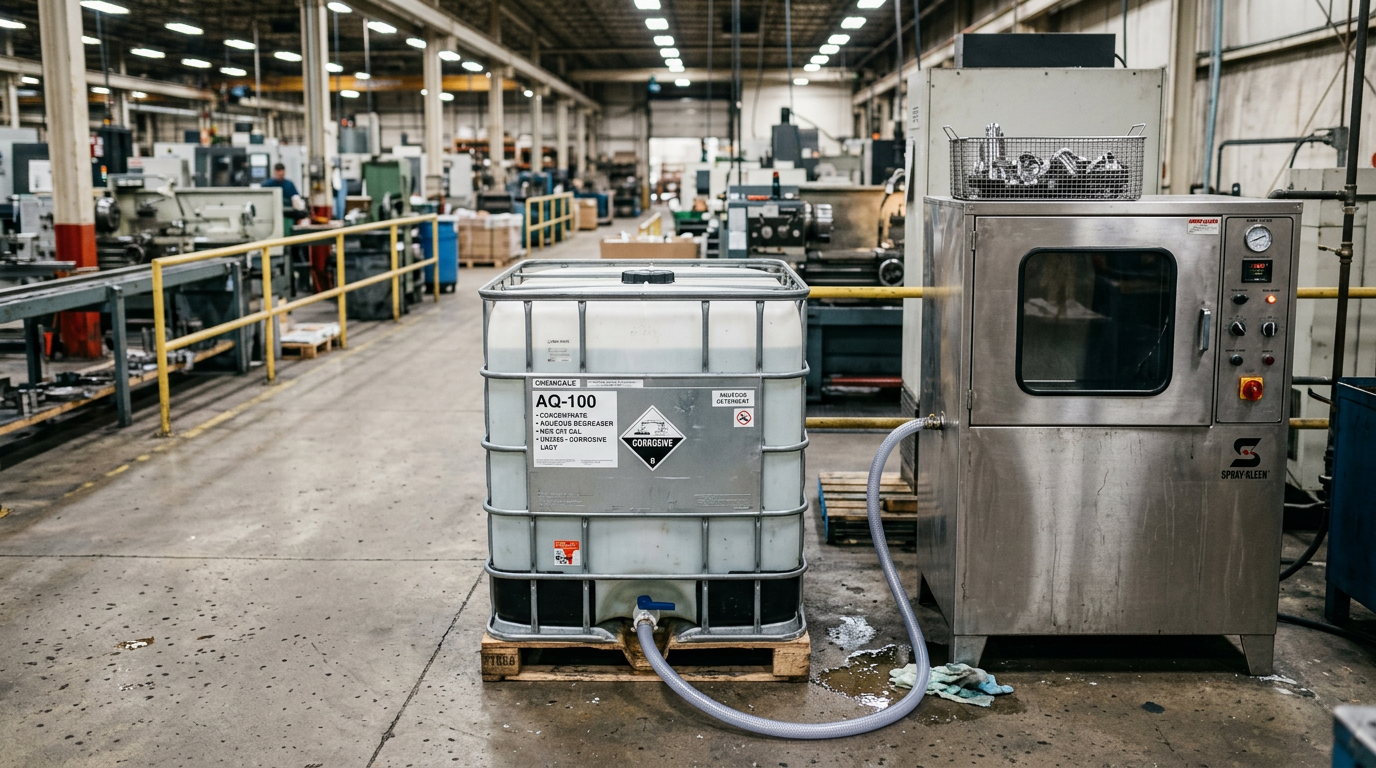
Industrial Aqueous Parts Cleaning Solution – Many solvent users are seeking a safer alternative from traditional petroleum solvents for their parts cleaning process. According to Thurston County Business Pollution Prevention Program, “although petroleum solvents are effective, they have proved to be hazardous with significant environmental, health, and economic concerns.” Aqueous parts cleaning are water based cleaners that reduce costs, liability of waste disposal, air emissions and improve worker safety.
Water Based Cleaners For Effective Parts Washing – Industrial Aqueous Parts Cleaning Solution
Aqueous cleaners, unlike petroleum, are typically nonflammable and contain little or no VOCs. Instead of dissolving grease, the cleaners rely on heat agitation, soap actions, and pressurized water to break dirt into smaller particles. Also, some units are fully automated, which reduces labor costs and increases productivity.
Types Of Aqueous Cleaning Systems
Spray Washers: Aqueous spray cabinets clean parts by spraying heated solutions at high pressures within an enclosed cabinet. Spray cabinets are available in a full range of capacities from small to very large.
Sink-Top/Drum Top Units: These systems are ideal for manually cleaning a small number of parts with light and moderate soil levels. Parts are cleaned with solvent, which is stored and cycled through a flexible spigot or flow through brush for hand use.
Ultrasonic Parts Washer: Ultrasonic units consist of a steel tank filled with an aqueous solution and are equipped with transducers along the bottom or sides of the tank. The transducers generate high frequency sound waves that produce and intense microscopic scrubbing action on parts surfaces, including blind holes and interior surface areas.
Immersion Spray Units: Immersion cleaning offers versatility, as you can clean irregular shapes, as well as tube and cylindrical configurations that cannot be properly cleaned using spray systems. When you immerse parts in the cleaning solution, the adhering contaminants can be removed through the chemical cleaning effects of the medium used. Immersion parts washers typically use a reciprocating platform, which agitates your parts in the water based detergent. These systems ensure all oil and particulate is successfully removed from the outside and internal cavities of your parts.
Belt Conveyor Spray Washers: These machines are compact in size, and are built to capitalize on floor space. Obviously, the parts are carried through the washer by means of a conveyor belt with adjustable speed. Conveyor belt washers offer the ability load at the front and unload at the rear, and they may be either manual or automatic.Conveyor belt washers are designed to provide full and complete access to the internal components of the machine. This can lead to reduced downtime as the contaminants are quickly and efficiently removed for process adjustments and scheduled maintenance.
Rotary Drum Washers: These systems wash parts by utilizing a dual action cleaning processes that uses spray cleaning to wash the exterior surfaces, along with immersion cleaning to flush the inside of the parts under solution. Rotary Drum (Auger) Parts Washers provide one of the most economical approaches to high volume washing, rinsing and drying of manufacturing parts.
Maximizing Aqueous Cleaning Solution Life
According to Department Of Toxic Substances Control, aqueous cleaning solutions last longer than solvents. Further extending the life of an aqueous cleaning solution will save you money by reducing your chemical purchase and waste disposal costs. To maximize aqueous solution life, you should:
Filter the solution. Filters, typically cartridge filters, are used to remove solids as small as 50 microns in size.
Perform oil skimming. Oil skimmers remove free-floating oil from the solution, reducing the amount of oil residuals left on parts and significantly extending solution life. Microbial units do not need oil skimming because microbes degrade the oil.
Accept solution discoloration. Many aqueous solutions turn gray or brown during use, but this discoloration does not affect its cleaning ability. Do not change your cleaning solution just because it looks dirty.
Change the solution only when necessary. Change the solution only when its cleaning performance declines. Do not change the solution on a scheduled basis. Always dispose of cleaning solution appropriately.
Maintain solution concentration. Perform chemical additions as needed to maintain the cleaning strength of your solution. Some vendors offer easy-to-use test kits to measure the concentration of your solution and determine when chemical additions are necessary.
Recycle your solution using microfiltration. Some vendors offer an on-site microfiltration recycling service that removes contaminants from the solution, eliminating waste solution generation and disposal.
JenFab | Aqueous Parts Cleaning Solution
Since 1960, JenFab has developed innovative technology for aqueous parts washers and cleaning solutions. With a versatile product selection, JenFab has what you need to get started on a safer and cost effective cleaning parts path.
Wondering how the systems work? Check out our YouTube Channel. For more information on our aqueous products, fill out our contact form or call us at 860-828-6516. Industrial Aqueous Parts Cleaning Solution