• Refueling Our Tanks: Jenfab’s Servant Leadership Culture

    Refueling Our Tanks: Jenfab’s Servant Leadership Culture

    We measure success by the way we impact people’s lives. 

    “One Team” means working together for a shared purpose. At Jenfab Cleaning Solutions, we have each other’s backs. We foster a servant leadership culture that puts the team’s needs and our community first. 

    A servant leadership style isn’t about a hierarchy or hearing from only one person at the top. Transformational servant leadership empowers everyone to lead in their own way and participate in realizing a shared vision. 

    As servant leaders, we share power and enact change within the company by listening to everyone and helping others grow. We build Trust in Relationships when we lift each other up and view failure as a learning opportunity.   

    The bottom line: People come first here. 
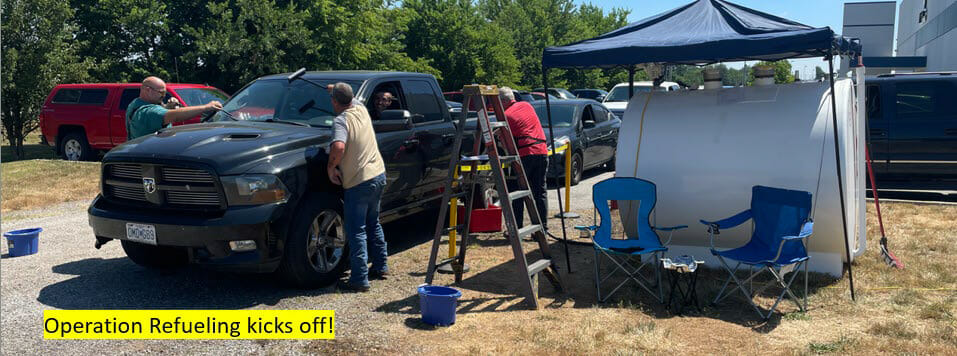
    Jenfab team members fuel a black truck and wash its windshield during the refueling event.

    Tank Refueling Event: Car, Body & Spirit  

    Jenfab is aware that times have been hard. We’re living it alongside our employees and customers. World events in 2022 have caused inflation and gas prices to rise. Higher prices all around mean tighter budgets and added stress for those trying to care for their families. 

    Rising Food & Gas Prices 

    As of late September 2022, the Consumer Price Index (CPI) for all consumer items increased by 8.3% over the previous 12 months. Food prices have increased by 11.34% in the past year, and consumer energy costs have increased by 23.8%. 

    Rising gas prices have also affected the United States. COVID-caused production stalls and the Russian invasion of Ukraine caused gas prices to skyrocket. Regular gasoline prices increased by a record-breaking 49% from January to June 2022, and diesel prices rose by 55% in the same period.

    A Bias for Action & a Heart for Our Team

    We prefer action over inaction. A bias for action pushes us forward faster and champions acting versus reacting. Our bias toward action is reflected in everything we do, including how we support our team. 

    With prices for everyday essentials rising, Jenfab decided to take matters into its own hands. A group of servant leaders saw a need. These individuals hosted a refueling event for the whole team with a farm gas tank and pump. 

    Employees drove through the line and refilled their tanks—physically and spiritually. Team members pitched in to fuel cars, wash windshields and provide homemade lunch for all who attended. 

    In the first hour of the event, the gas pump stopped working. Our team banded together and worked quickly to get a new part delivered that morning. Then the fueling line was back up and running! By lunch, we fueled over 900 gallons. That’s over 900 gallons of free gas for our team’s vehicles! 

    Everyday Impact

    Our recent refueling event was our company’s way of saying, “You matter.” 

    Our team makes a difference every day. We couldn’t build the machines we do without our employees. Together, our efforts serve our customers and the industries the world relies on.

    Our custom cleaning solutions have an everyday impact. We help customers build homes. We advance travel and healthcare for communities across the globe. We aid in protecting our cities and our country. It all starts with our employees. 
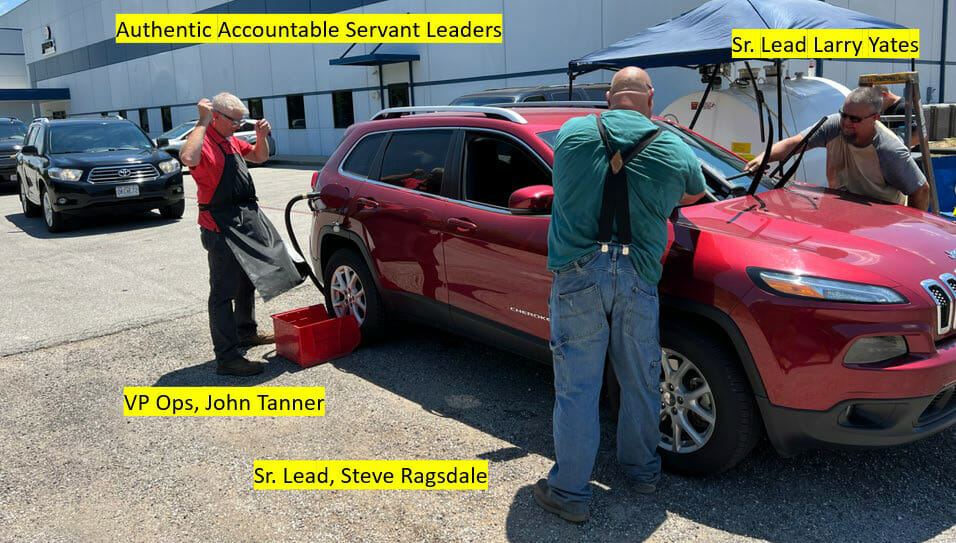
    Servant leaders on the Jenfab team fuel up a red SUV with gas and clean the windshield.

    Growing Together: Servant Leadership Qualities 

    Refueling our tanks in times of need is one example of our servant leadership. We’re fostering a culture of people who put others’ needs first. In doing so, we create a better work environment for our team with more effective processes and stronger relationships. 

    We value safety, development, feedback and a One Team mindset. As we practice these values, we gain new skills that help us grow as professionals and people. 

    The servant leadership qualities we strive for include:

    • Listening. We listen to comprehend, and we hear out all voices.
    • Empathy. We’re in this together. We have each other’s backs. 
    • Awareness. We pay attention to the challenges of others, and we respond with compassion. 
    • Conceptualization. We share a vision. We all understand where we are going. 
    • Stewardship. Everyone participates. We lead and help each other where we can.

    Additional Team Activities 

    We find ways to give back to our team and our community. Several team members helped the Salvation Army with their holiday kettle collection. We painted kettles for our local Salvation Army Corps in Springfield, MO

    At the end of the summer, we had some fun on a team-building float trip. We kayaked down the James River in Missouri and hosted a potluck barbecue. This trip gave our team the chance to bond outside of the shop. 

    Want to Be a Part of Our One Team? 

    Do work that has a purpose. Use your technical skills. Hone your craftsmanship. Trust your team. Grow. 

    When you join Jenfab, you’re joining a company with a team-first mindset. At Jenfab, you have a voice. Let us know what you need to grow. We support your ideas, treat you with respect and always have your back.

    Join our team of servant leaders. We know you have something unique to bring to the table. 

    We’re hiring experienced fabricators. Metal and steel fabricators are encouraged to apply! Check out our benefits and see why Jenfab is a great place to work. 

    We hire veterans and those looking for a second chance. We believe everyone deserves the opportunity to make a living and build a career.   

    Apply to Jenfab today. If you have questions, please reach out to our HR department at [email protected]

  • Stay Cool, Stay Safe: Jenfab & Heat Illness Prevention

    Stay Cool, Stay Safe: Jenfab & Heat Illness Prevention

    Heat is a workplace health hazard. The Bureau of Labor Statistics reports that 344 workers died from environmental heat exposure from 2011 to 2019. Hot weather doesn’t only pose risks for construction workers and those with outdoor occupations. 

    People working in indoor manufacturing facilities or warehouses are at risk when temperatures heat up. When the temperature rises outside, so does the temperature inside facilities and warehouses. Employees at manufacturing and fabrication companies also use machines and tools that produce heat. 

    In early 2022, the Occupational Safety and Health Administration (OSHA) announced its new National Emphasis Program on heat safety. OSHA’s heat regulations enforce related safety measures under the federal Occupational Safety and Health Act’s general duty clause.

    Midwest manufacturers know that summer days can average 90℉ and 100℉ outside, making it harder to keep it cool indoors. OSHA heat regulations are meant to inspire actions to keep workers safe.

    Jenfab Cleaning Solutions focuses on doing the right thing for our team because it is the right thing to do, not because of the threat of enforcement. Taking care of our team is a part of our culture. We like to say, “I’ve got your back.” 

    Learn more about how Jenfab cares for our team when working in the heat. 

    Heat Safety Awareness

    Temperatures can change quickly, affecting the conditions of the workplace. Everyone must be aware of this and have the agility to adjust in a timely fashion.

    First and foremost, the leadership team must actively watch out for the team’s safety throughout the day. It is not a “check the box” exercise to comply with regulations. Authentic care keeps us aligned with OSHA heat safety regulations and creates an atmosphere that goes above and beyond regulatory checklists. 

    Heat illness prevention in indoor places of employment starts with considering environmental heat from the employees’ surroundings and metabolic heat from the employees’ activity levels. When creating a heat injury prevention plan, companies must consider these risk factors:

    • Working outdoors in warm weather
    • Ovens, fires, furnaces and other heat sources
    • Strenuous physical activity 
    • Heavy, non-breathable work clothes 
    • Individual health issues 

    We train employees to identify heat hazards, recognize heat stress symptoms in co-workers, and know when and how to contact emergency medical services. 

    Pay Attention to New Hires Who Aren’t Used to Heat 

    New employees may push themselves to make a good impression. We watch new employees closely, especially if they are not used to working in hot and humid conditions. 

    Over 70% of heat-related deaths happen during a worker’s first week on the job. Over time, our bodies acclimate to our surroundings. New workers may need time to adapt to warm workplace conditions. 

    Pay Attention to Employees With a History of Heat-Related Stress Injuries

    Team members that have experienced heat-related stress in the past are more susceptible to heat injuries. Leaders must be vigilant and take increased interest in monitoring these individuals without making them feel singled out. That is a delicate balance. 

    Heat-Related Illnesses & Symptoms to Watch for

    Some heat-related illnesses are more severe than others. The most serious is heat stroke, when the body can no longer maintain its temperature.

    When the body’s temperature rises too quickly, sweating no longer works to cool it down. In only 10 to 15 minutes, a heat stroke can cause the body’s temperature to rise to 106℉ or higher. Someone who experiences a heat stroke must receive medical attention immediately. 

    Common symptoms of heat stroke include: 

    • Confusion 
    • Slurred speed
    • Loss of consciousness 
    • Dry skin or profuse sweating
    • Seizures 
    • High body temperature 

    Heat exhaustion is another heat-related condition caused by an excessive loss of water and salt. Symptoms of heat exhaustion include nausea, headaches, dizziness, weakness, thirst, cramps, decreased urine output and heavy sweating. 

    If someone is suffering from a heat-related illness:

    • Call emergency medical services immediately, especially for someone you think may be having a heat stroke. 
    • Move the employee to a shaded or air-conditioned area.
    • Remove unnecessary outer clothing, including shoes and socks. 
    • Place cold, wet cloths, compresses or ice on the worker’s head and neck.
    • Soak the person’s clothing with cold water.
    • Circulate the air around the employee. 
    • Encourage the employee to drink water. 

    Less Serious Reactions to Heat

    Team members exposed to warm environments may experience heat cramps or develop heat rashes. Sweating can cause heat cramps as the body loses moisture and salt. Workers who experience heat cramps should be sure to drink water or an electrolyte-replenishing beverage often.  

    Heat rashes are skin irritations caused by excessive sweating and should be kept dry. Both heat cramps and rashes should go away once the individual has cooled down.

    Jenfab’s Proactive Heat Illness Prevention Plan 

    At Jenfab, we take employee safety seriously and work together as One Team to prevent injuries and accidents. When the weather gets warmer, we look out for one another throughout the day and encourage each other to stay hydrated.

    Our heat illness prevention plan includes set precautions for when the temperature in our shop rises above 91℉. Each day, we measure the temperature and humidity inside the shop with a sling psychrometer. We also measure the heat output levels of machines like our laser cutter. 

    If the National Weather Service sends a heat alert, we prepare accordingly and take precautions. 

    We take the following protective measures to keep our team safe. 

    Heat IndexRisk LevelProtective Measures
    91℉ to 103℉Moderate– Remind workers to drink water (about 4 cups/hour)
    – Run shop exhaust fans
    – Provide electrolyte heavy beverages and frozen popsicles 
    – Review and post heat-related illness topics with workers: how to recognize heat-related illness, how to prevent it and what to do if someone gets sick
    – Establish and enforce a 5-minute cool down break every hour (breaks should be taken in cool areas)
    – Set up a buddy system and instruct supervisors to watch workers for signs of heat-related illness
    – Monitor workers closely 

    If workers must wear heavy, protective clothing or perform strenuous activities, additional precautions are recommended: 
    – Schedule activities at a time when the heat index is lower
    – Develop work and rest schedules 
    103℉ to 115℉HighIn addition to the steps listed above: 
    – Alert workers of high risk conditions
    – Actively encourage workers to drink water (about 4 cups/hour)
    – Limit physical exertion 
    – Supervisors to walk around every hour with popsicles 
    – Establish and enforce a 10-minute cool down break every hour (breaks should be taken in cool areas)
    – Limit work around machines that put off excessive heat or work that requires the use of heavy or non-breathable clothing
    – Adjust work activities 
    – Use cooling techniques 
    – Watch and communicate with workers at all times 
    – When possible, reschedule activities to a time when the heat index is lower 
    >115℉Very High or Extreme– Reschedule non-essential activity for days with a reduced heat index or to a time when the heat index is lower
    – Move essential work tasks to the coolest part of the work shift; consider earlier start times, split shifts, or evening and night shifts
    – Strenuous work tasks, work around machines that put off excessive heat and work requiring the use of heavy or non-breathable clothing or impermeable chemical protective clothing should not be conducted when the heat index is at or above 115℉ 

    If essential work must be done, in addition to the step listed above: 
    – Alert workers of extreme heat conditions 
    – Establish water drinking schedules (about 4 cups/hour)
    – Develop and enforce protective work and rest schedules
    – Conduct physiological monitoring 

    Stop work if essential control methods are inadequate or unavailable.   

    Making It Easy for the Team to Stay Hydrated

    Hydration is a critical component to keeping our team safe. Drinking enough water each day is crucial for many reasons:

    • Regulates body temperature
    • Keeps joints lubricated
    • Prevents infections
    • Delivers nutrients to the cells
    • Keeps organs functioning properly

    Being well-hydrated also improves sleep quality, cognition, mood and overall shop productivity.

    Jenfab makes drinks, popsicles and other hydration products readily available to our team. We have tried different products like Gatorade, Sqwincher and Liquid I.V. We are constantly modifying what we have available based on what our team uses the most. If our team likes the drinks we have available, then they are more likely to use them and stay hydrated. 

    Lately, we have found that our team likes Liquid I.V. It may be more expensive than other hydration options, but you cannot put a price on the team’s safety. Actions must speak louder than words. We don’t just say, “I’ve got your back.” We back it up with our actions.

    Staying Engaged to Ensure the Team Is Safe

    Jenfab has a prevention plan in place. We don’t shy away from discussing workplace hazards. Our team is aware of hazards and informed on what to do should someone get sick or have an accident. A knowledgeable and prepared team creates a safer environment for everyone.  

    We strive for Goal Zero—that’s zero accidents and injuries. By working together, we can prevent occupational safety issues like heat injuries and illnesses. 

    Are you interested in a career at Jenfab? We offer opportunities for you to grow in your craft and skill set. Start your fabrication or engineering job here today.

    Explore our job opportunities, and apply today online. You may also contact our HR department at [email protected].