
• Forging A Sustainable Future With Aqueous Parts Washers

    Forging A Sustainable Future With Aqueous Parts Washers

    Jenfab Cleaning Solutions is proud to deliver “Custom Cleaning Solutions with Everyday Impact.” Smart water management is critical for efficient operations and risk reduction for most industrial businesses. As governments around the world respond with new regulatory frameworks, manufacturers have begun to shift their approach to water usage, with the goal of doing more sustainably with less.

    Water is used throughout the manufacturing process.  It is used for heating, cooling, energy conduction, fabrication and cleaning.  According to the U.S. Environmental Protection Agency, the production of one metric ton of steel can require more than 60,000 gallons of water.

    Water was once considered cheap and plentiful. Water is increasingly viewed as a limited  precious resource. The World Resources Institute estimates demand of fresh water will exceed supply by more than 56% by 2030. Many do not have enough water to meet basic life needs. At Jenfab, we actively seek to improve the use of water resources in our operations, and we help our customers clean parts with less water.

    You can get an exceptionally clean part without harsh solvents or wasted water.  Jenfab’s custom cleaning solutions help provide methods to restore and protect the earth’s natural resources. 

    The Work We Do Matters 

    Aqueous parts washers are the most environmentally friendly choice in the industry. At Jenfab, we actively work to reduce our effect on air and water resources and help our customers do the same. 

    It is important to remember that water is an incredibly valuable and diminishing resource. Jenfab’s parts washers not only remove solvents from the equation but also encourage the reuse of water. 

    The work we do matters. How we do it matters even more. Safe, reusable water is the way to sustainably clean parts.

    Are you familiar with aqueous parts cleaning? Keep reading to learn about aqueous parts washers and their environmental benefits. 

    What Are Aqueous Solutions? Why Not Use Solvents? 

    What’s the difference between solvent-based cleaners and aqueous solutions? For many years, using parts washer solvents to clean was the status quo. Though solvents dissolve soils quickly, they’ve earned a bad reputation for the harm they can cause employees and the environment. 

    Parts Cleaning Solvents

    First, let’s define parts cleaning solvents. Solvent cleaners quickly dissolve dirt and grime. Examples of solvent-based cleaners include using mineral spirits for cleaning auto parts or acetone to remove greases. 

    Many manufacturers and auto shops use petroleum-based solvents to clean parts. These solvents are highly flammable, and they release chemicals into the air as they evaporate. 

    Petroleum-based solvents include:

    • Benzene 
    • Butyl Cellosolve or Butoxyethanol
    • Mineral Spirits 
    • Petroleum Naphtha
    • Stoddard Solvent
    • Toluene
    • Trichloroethane
    • Trichloroethylene 

    Aqueous Parts Washers

    The best way to clean parts is with an aqueous parts washer. Mineral spirits or other petroleum-based solvents dissolve soils. Water-based solutions don’t dissolve soils; they knock them off. Cleaning rests on four factors with Aqueous parts washers (https://jenfab.com/blog/sinners-circle-the-4-factors-of-cleaning/): time, chemistry, mechanics and of course temperature.    

    Aqueous cleaning solutions are mostly made of water; therefore, they are less toxic than solvents. Aqueous cleaning solutions may also include wetting agents, chelating and sequestering agents, and alkaline salts. The exact makeup of a solution depends on the soil, grease and petroleum compounds that need to be removed. 

    managing more than water – Protecting the Earth’s Resources 

    In modern manufacturing, smart water management drives business value for operators beyond the satisfaction of regulatory requirements or the preservation of social capital. The myriad ways water use is intimately connected to manufacturing processes means companies can benefit from improved efficiency, starting with power consumption.

    Heated aqueous cleaning solutions save the time it takes to clean and process parts.  Our gas burners help reduce the full load amps by more than 50% versus electric heaters. This save energy directly and reduces the water and energy  demand in electricity generation.

    Solvent-based parts washers release emissions into the air and require more water use to scrub contaminants. Using a solvent-based parts cleaner also creates hazardous waste. If not handled properly, this waste could contaminate water tables and nearby ecosystems. 

    Aqueous cleaning systems are a better choice for the environment and your shop floor.

    Save Water with Aqueous Cleaning Systems 

    Water covers 70% of our planet, and it is easy to think it will always be plentiful. However, freshwater—the stuff we drink, bathe in and use to irrigate farm fields—is incredibly rare.  

    Only 3% of the world’s water is freshwater. Two-thirds of that is tucked away in frozen glaciers or otherwise unavailable for our use. As a result, an estimated 1.1 billion people lack access to water worldwide. A total of 2.7 billion people find water scarce for at least one month of the year. In the United States, the average freshwater consumption is 100 gallons per day. 

    Our Aqueous parts washers recycle the solution and water used. With aqueous cleaning, you significantly reduce the amount of water needed to clean parts.

    How we help our customers use less water is incredibly important. For example, Jenfab’s recirculating rinse systems use 10 gallons of water per hour over and over for about five days. After five days, the water needs to be replaced. Contrast that with a 10 gallon per minute freshwater rinse system. That’s a 590 gallon per hour difference for five days, which would meet the daily water needs of 142 people. That’s just for one machine. With an average of 75 machines deployed per year we are saving 387 million gallons of water annually.

    Reduce Emissions with Aqueous Cleaning Solutions 

    Solvents contain high amounts of volatile organic compounds (VOCs), which are made of carbon. When solvents evaporate, they release VOCs into the air as gases. These gases react with sunlight and add to our ground-level ozone, reducing the quality of the air we breathe. 

    Stratospheric ozone protects us from the sun’s powerful ultraviolet rays, but ground-level ozone, or tropospheric ozone, is an air pollutant. Ground-level ozone can make breathing difficult and cause other health problems. Ozone near the ground can also affect vegetation and crop growth. 

    Aqueous cleaning solutions contain little to no VOCs. They don’t release large amounts of harmful chemicals into the air, if any at all. Using an aqueous parts washer helps protect another one of earth’s precious resources: clean air. 

    Avoid Creating & Handling Hazardous Waste 

    Aqueous cleaning solutions reduce the risk of contaminating your workplace or local ecosystem with hazardous substances. Waste created from aqueous parts cleaning is less toxic. Generally, the used aqueous solution is considered non-hazardous. Of course, this depends on the solution and what was cleaned with it. Some soils may make aqueous cleaning solutions hazardous waste.

    Reduce Your Company’s Environmental Footprint 

    Aqueous parts washers reduce the impact we have on our world without compromising cleanliness. When you switch to aqueous cleaning, your company or shop chooses to practice environmental sustainability and protect the planet we call home.

    Request a quote for a custom aqueous parts washer from Jenfab today. Our team will design the machine you need. Let us help you implement an efficient and environmentally conscious parts washing process.

    Need a machine soon? Order our ready-to-ship Orca and Avenger for your shop floor. These machines are available on our website. 
  • How to Refurbish Your Used Parts Washer

    How to Refurbish Your Used Parts Washer

    Take your company’s used industrial parts washer to the next level! If your current parts cleaning system isn’t cutting it, you should look for signs of wear and corrosion. Routine maintenance checks and part replacements help used parts washers run efficiently. 

    Older parts washers may need component updates or new features to keep cleaning well. Is your aqueous parts washer not cleaning as it should? If you’re not ready to invest in something new, upgrade your current machine!

    Contact Jenfab’s experts. Our reconditioning services improve your parts washer’s cleaning ability or help you repurpose your machine for another application. Continue reading to learn about our process for reconditioning old parts washers. 

    How Does Machine Reconditioning Work?

    Parts cleaning machines last many years. However, any machine’s longevity is partly due to good maintenance. You must replace elements at the five-, 10- and 15-year marks. 

    You’ll know it’s time to renew your aqueous parts washer when its cleaning performance changes. Your machine may have a few worn components, or you may need to outfit it with newer, better technology.

    Our machine reconditioning process follows these steps:

    1. Contact the Experts

    The first step to refurbishing an old parts washer is to call Jenfab at 800-524-9274 or reach out online

    We’ll take down your contact information and machine serial number. We’ll also note the problems you’re experiencing or the new features you’d like to add to your cleaning system. 

    We can repair components, replace parts, repaint equipment and modernize your machine.

    2. Introduce Us to Your Parts Washer

    Send your parts washer to our facility in Springfield, MO, or have us come to you! Our service technicians travel to perform maintenance and repair machines. Together, we’ll map out the best way to refurbish your parts washer based on your needs.

    3. Make a Game Plan

    Our experienced technicians examine your parts washer to find the root of the problem. We give you our recommendations, and you choose how to move forward. 

    You may need to replace damaged, corroded parts or repair fabricated components. Our in-house fabricators and welders will build new components for your machine’s specifications. 

    If you’re repurposing your parts washer, we give you our plan and timeframe for outfitting your machine with new capabilities, like ultrasonics

    4. Restore Your Old Parts Washer

    We make your machine as good as new! Whether we’re fixing cosmetic issues or switching to modernized components, we’ll take care of your used industrial parts washer and bring it up to date.

    5. Install at Your Facility 

    Once the machine is ready and on its way back to you, we’ll schedule an appointment to install it at your facility. You’ll be up and running in no time!

    Machine Reconditioning Services

    The most common reason for refurbishing a parts washer is its function. How well is it cleaning? Used industrial parts washers may have damage, or they may need the latest version of a component to clean at an optimal level. 

    You may want to update the appearance of your machine if your parts washer looks worse for wear. Dirt, dust and oil can make machines look old and worn. Our team will update and repaint your machine to better represent your facility and company.

    Our machine reconditioning services include: 

    • Adding new features to your parts cleaning system
    • Replacing broken or worn components 
    • Installing the latest components 
    • Painting your parts cleaning machine 

    When to Retool Aqueous Parts Washers

    Customers often shift their business or wish to maximize their current resources. That may include a new vision for their parts cleaning machine. 

    If you’d like to use your parts washer in a new way, we can help you repurpose your machine. Our team can retool your machines for other cleaning applications and install them at your facility. 

    Let’s Talk About Your Machine

    Reach out today to learn more about our services! We can help you start fresh with a custom parts washer or update what you have now. Refurbishing your used parts washer can save you time and money. 

    Contact us to talk about your parts washer today! We’re ready to discuss your cleaning needs and how we can enhance your current system. 

  • Meet Billy: “Basically, This Is My Family”

    Meet Billy: “Basically, This Is My Family”

    When Billy Masten fell off a roof, he wasn’t sure what to do next. The 25-foot fall broke eight ribs, collapsed one lung and fractured his pelvis. He didn’t want to renovate homes anymore. 

    On paper, Billy wasn’t a perfect job candidate—he’d been in prison.

    Go back 10 years. Jason Tatum struggled to start a new life as a recovering addict. Getting a company to take a chance on him after prison was hard. He asked Jenfab Cleaning Solutions to give him a shot. 

    After Billy’s accident, he called his friend, Jason, and asked if he knew of any available jobs. Jason was now Jenfab’s senior shift supervisor. He put in a good word for Billy.

    Two second chances made all the difference. 

    Hired By A Second-Chance Employer

    Jenfab Cleaning Solutions is a second-chance employer. We hire people with prior felonies and past experiences with addiction. Starting over is tough. Closed doors make the journey even harder. 

    It’s not easy to find second-chance jobs for felons, but everyone deserves the  opportunity to do more than survive. Everyone should have the chance to be financially independent, support their families, reach their goals, and move forward. 

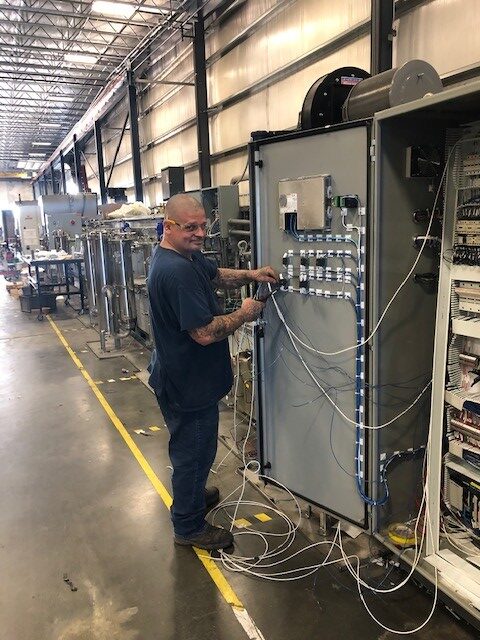
    Billy started his role as an industrial electrician two years ago, and the team at Jenfab has never looked at him differently. 

    “The first thing I noticed is how well they took care of people,” says Billy. 

    He gave an example of how our company shows we care about people. The company held a free gas refueling event in the summer of 2022.

    “They brought a gas truck up here and gave us gas during the peak time after the pandemic when gas prices were super high,” says Billy. “I didn’t hear of anybody else doing that. They [another company] could offer me a $50-an-hour job, and I wouldn’t go there because I’d never get the same kind of treatment.” 

    New Possibilities to Grow & Make Good Money

    Billy started working at the shop, where he wires, paints and welds machines. 

    Since his first day, his responsibilities have grown. He now goes on the road for installations. He meets with customers to install machines in the field once they’ve been shipped. 

    “It’s a cool experience to see what our equipment is doing in the field. You get a new perspective on what the customer is going to be looking for, and I really just try to represent our company when I’m out there,” he says. 

    “I’m sure they probably look at me and go, ‘he’s pretty rough around the edges,’” he continues, “but I just work my butt off and try to make them happy. By the time it’s all said and done, we leave pretty well friends.

    We recognized Billy as the Culture Champion of the Month in September 2022. He always goes the extra mile, helping customers and doing what needs to be done. Everyone at Jenfab is a leader. Leading is not about titles; it is about action. Billy is quickly emerging as a leader on our team. 

    Learning New Skills

    At Jenfab, Billy has had several opportunities to learn new skills, from taking courses to training with his team. He went through PLC training and took hydraulics classes. He’s now taking blueprint reading classes to learn about the mechanical side of building machines.

    With help from his team, he’s also practiced something he’s always wanted to master—welding. Knowing how to weld and fabricate are skills that will always be needed in our workforce. 

    “I had a plan whenever I was locked up. I really wanted to go into welding, but I just couldn’t afford it,” he says. “Getting started here, even if I started out wiring machines, I’ve had the guys show me how to weld on their time. I’ve picked it up and practiced and got better at it.”

    Finding Good Role Models 

    Billy’s dad wasn’t around when he was growing up. He didn’t have a good idea of how a role model or leader should act. That changed when he started at Jenfab and saw people in recovery in leadership positions.

    Leadership is action. It is also how you care for, teach and encourage others. Billy describes many people at the company as coaches or father figures. 

    Everyone at Jenfab takes on the company’s bias for action to become leaders in their roles and tasks. Everyone is a leader, even if you’re only in charge of yourself. As such, you choose how to carry yourself and lift others.

    Our company’s One Team mindset means we have your back. We create a comfortable environment for sharing feedback and challenges as we work toward our shared vision. If one team member needs something, others pitch in to keep the ship afloat. We all help steer us in the right direction. You’re never on your own. 

    “This is like my second—well, basically, this is my family. It’s not a second family. I couldn’t put one in front of the other at this point,” says Billy. 

    Second-Chance Hiring Opens Doors

    Today, Billy drives a new car—a Camaro Super Sport. He’s preparing to buy a house. He makes a good living and keeps up with passion projects, like building and painting cars. He’s helping his parents out with extra money, and he can give his daughter the things she needs.

    “I grew up dirt poor. I couldn’t afford college. All the money I ever had I just worked for,” he says. “To have an opportunity to be at a job where you can grow and make decent money and be a part of something, it’s huge. It’s kept me from going back and doing the wrong things to survive.”

    Starting fresh is like walking down a hallway, CEO and President Jim Chew describes. You’re between two doors: the one in front of you and the one behind you. The hallway represents the shift from one chapter of life to the next.

    “He’s [Billy] closed the door on the bad part of his life, and he’s in that hallway transitioning. We open a door to go to hydraulic training or open a door to go learn about PLCs,” says Jim. “We help folks be the best version of themselves tomorrow. Tomorrow can always be better than today. If everyone goes home feeling that way, then we’ve done something.”

    Tomorrow can always be better. Your future is yours. 

    Your Journey Starts Here: Find Second-Chance Jobs for Felons

    As a second-chance employer, Jenfab Cleaning Solutions offers the support you need to start fresh and build your career. You’ll make a great living and contribute to a larger purpose: our One Team. 

    Are you interested in working for Jenfab? Are you looking for fabricator jobs, welder jobs or electrical work? Are you open to learning and trying something new? 

    Click here to apply online for our manufacturing jobs in Springfield, MO! The application is at the bottom of the page.

    We’d love to hear from you. Feel free to send in your resume or drop us a line regardless of your background or past experiences. 

    If you’d rather talk to someone, please email [email protected] or call 800-524-9274 for more information about our company and open jobs. Our HR department can also answer questions about our second-chance hiring policy. We interview candidates at the Greene County Jail and several area prisons.

  • Can Oil Coalescing Lengthen the Life of Your Solution?

    Can Oil Coalescing Lengthen the Life of Your Solution?

    Aqueous parts washers offer a safer, better clean. That’s one reason manufacturers choose aqueous cleaning systems over washing parts with petroleum solvents. As parts are cleaned in an aqueous solution, they leave grease and oil behind. Too much oil and residue build-up in your solution will render it ineffective. 

    You’ve got to clean oily parts to finish fabrication or start remanufacturing. What should you do? Oil skimmers and coalescers remove left-behind oil so you can continue using the cleaning solution. With some form of oil removal in place, you can maximize the reuse of your aqueous solution.  

    The Science Behind Oil and Water Separation

    Oil and water don’t mix. When put together, natural separation occurs. Oil would have to bond with water to be soluble in it, but the molecules in oil cannot bond with water molecules because they are non-polar. In other words, the two don’t attract. Water molecules are attracted to water molecules, while oil molecules are attracted to oil molecules. That’s why oil often forms a separate layer on water’s surface. 

    Removing Oil from Aqueous Solutions

    Water is the base of every aqueous cleaning solution. When oil is left in a water-based solution, it floats to surface because of its density. Oil is less dense than water. Removing free-floating oil is how you can keep your solution fresh. 

    There are two types of oil removal systems: oil skimmers and oil coalescers. When oil floats to the surface, oil skimmers can collect and remove it from the tank. You can also use an oil coalescer to “filter” oil from the solution and avoid recleaning parts later.

    Skimming the Surface: Types of Oil Skimmers

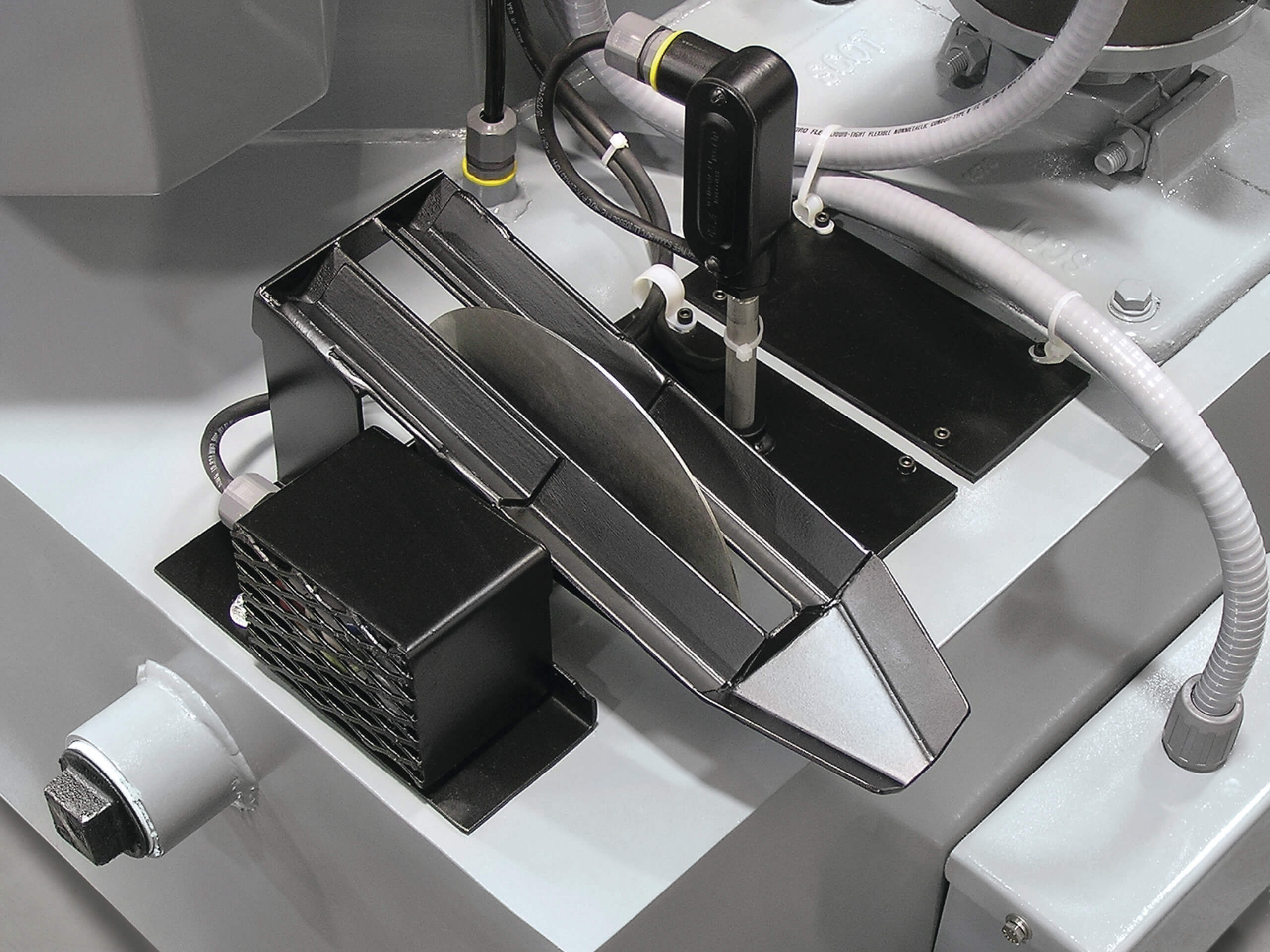
    How do oil skimmers work? Oil skimmers pick up oil floating on the surface of the solution. Skimmers are mounted to the top of the tank and made with an elastomer or polymer medium that causes oil to cling to them. They are best for picking up small to medium amounts of oil. Skimmers are often used when parts washers are not running to give oil time to separate after a wash cycle. 

    There are several types of oil skimmers:

    • Belt skimmer. A belt lowers into the cleaning or rinsing tank. The belt picks up oil as it moves through the solution. Once it leaves the solution, wiper blades remove oil from the belt. The belt moves and collects oil continuously. 
    • Disc skimmer. Oil clings to a disc that’s partially submerged in the solution. This disc rotates to pick up oil at a higher rate. As it turns, wiper blades scrape oil off into a container. For a disc oil skimmer to work well, the solution must cover at least half of the disc’s surface. 
    • Drum skimmer. A large, rotating drum removes oil from the solution. Drum skimmers work similarly to disc skimmers.
    • Mop skimmer. This skimmer resembles a mop with a long rope of tendrils. It enters the solution and picks up oil. Next, pinch rollers wring out the oil—like wringing out a wet floor mop.
    • Tube skimmer. These skimmers use floating hoses or tubes to collect oil. A tube skimmer goes into the solution, grabs oil and returns to dispose of what it has collected. 

    Working with Gravity: Using Oil Coalescers 

    Another way to separate oil from water-based solutions is through an oil coalescer. Parts washers that use sprays or ultrasonics to clean may cause an emulsion. When oil emulsifies, it temporarily mixes with water. You may not have time to stop production and allow oil to separate in order to remove it. An oil coalescer helps you get the job done.

    Coalescers attract small oil droplets in the solution and allow them to collect until they are large globules that can float to the surface. Coalescers pull the solution through a series of weir plates that capture the oil. As oil droplets gather together, they stick to one another and let the oil-free solution pass by. Gravity pulls the oil-free solution back into the wash or rinse tank for reuse. 

    Oil coalescing systems quickly remove oil from solution when cleaning at high rates. They recirculate the cleaning solution continuously as parts are cleaned and may also utilize an oil skimmer. Any oil that’s collected by the coalescer moves into a separate container. 

    Lengthening Your Solution’s Life

    Removing oil and grease from your cleaning solution can add time to its lifespan. If you care for your aqueous solution, you will be able to use it for many cleaning cycles. Reusing solution—and still achieving a precise clean—cuts down costs over time and reduces water waste. 

    Need to tackle heavy and light duty cleaning? Our Orca parts washer takes cleaning to another level. Trade in your scrub tub or pressure washer for the roll-in door Orca—equipped with an oil skimmer to handle high-residue parts. 

    Request a quote today or call (417) 866-8855 to get started.