• Guide to Selecting an Aqueous Parts Washer

    Guide to Selecting an Aqueous Parts Washer

    Manufacturers and remanufacturers have unique needs. Many of which are influenced by their industry. The aqueous parts washer that best fits an application hinges on several factors, including floor space, part materials, throughput requirements and cleanliness standards.

    Is your aqueous parts washer no longer up to par? Do you need a new system for cleaning parts? Start the machine selection or design process with the steps outlined in this article. 

    7 Considerations for Custom Parts Washers 

    Before designing a custom machine, you must identify your needs and goals and how you measure them. Sharing these details with the manufacturer of your parts washer is essential! 

    For your aqueous cleaning system to succeed, it’s essential to interact closely with the machine’s manufacturer. A clear line of communication between your company and the manufacturer produces the best result—a parts washer tailored to your needs.

    First, you must define the scope of work through a discovery phase. As the end user, you must outline your expectations for the parts washer manufacturer. Here’s what to consider before ordering a parts cleaning machine.

    1. Floor Space Availability

    Floor space is a manufacturing plant’s most precious commodity. Space constraints can affect the type of aqueous cleaning system deployed. 

    At the beginning of a project, the equipment manufacturer must understand the space where the machine is to go and be made aware of obstructions. Any beams or aisleways that may make it challenging to install the machine should be noted. 

    Take note of the following things:

    • Square footage available 
    • Ceiling height 
    • Overhead door sizes
    • Obstructions

    2. Utility Accessibility

    What utilities are in place? Can utilities be added for the parts cleaning equipment? Electricity, water and natural gas must be accessible where the parts washer will be installed. 

    • Water. A must! A water supply line is required to use an aqueous parts washer. 
    • Electricity. Every machine needs power. Nail down the available electric supply voltage (460-480V/3PH, 230V/3PH, 208V/3PH) and amperage.
    • Natural gas. Heated parts washers may employ natural gas. The availability of natural gas can factor into a system’s design but is not always necessary.
    • Compressed air. Access or lack of access to compressed air can change your system’s operation, but it may not be required.

    3. Part Information

    What parts are you processing? Manufacturers need to know what parts will go through the parts cleaning equipment—whether it’s a single part or hundreds of different part numbers. 

    The parts’ specs affect the system’s design. Materials, sizes, weights and complex geometries could change how the manufacturer recommends designing your aqueous cleaning system. 

    Common materials include steel, stainless steel, brass, aluminum, plastics, Inconel and titanium. Along with materials, geometries, like blind holes or through holes, impact how parts must be cleaned.

    4. Throughput Requirements

    Another consideration is your company’s throughput requirements. How many parts need to be processed hourly? How many cubic feet of material must go through the system?

    If multiple SKUs will be cleaned by one system, it’s crucial to consider the changeover time required to prevent any lot mixing depending on the type of equipment. 

    5. Material Handling

    How will the parts move to and from the parts washer? How will they be loaded onto the machine and unloaded after processing? Parts cleaning machines can be loaded and unloaded via conveyance, hoppers, vibratory feeders, robotics or by hand. 

    This step helps the parts washer manufacturer decide if automation integration is required for the system to communicate with other equipment within a manufacturing line or cell. 

    6. Cleanliness Standards

    Not all companies define “clean” the same way. Cleanliness differs from application to application. You can measure part cleanliness in a variety of ways. 

    You may determine cleanliness based on visual inspection or particulate size. Millipore testing identifies particulate sizes. Your company may judge cleanliness by measuring the surface energy of the parts, either through dyne or water break testing. 

    Your cleanliness specifications influence the design of the machine greatly! After all, you want an aqueous parts washer that meets your standards. The manufacturer of the cleaning system and the end user must work together to define the cleanliness expectations on the front end of a project. 

    7. Target Contaminants

    We saved the most important for last: The contaminants. 

    It may seem obvious, but it is necessary to understand what’s being removed from the part. Contaminants may be oils, coolants, particulate matter, grease or burnt carbons. In any cleaning application, knowing what should be removed is critical.

    Designing Parts Cleaning Equipment

    Parts cleaning machines can be designed once the technical specifics of the parts and manufacturing process are established. 

    Mechanical interaction, cleaning compounds, temperature, time and adequate rinsing are critical cleaning factors. These factors ultimately determine the success of the cleaning system. 

    Options for Mechanical Interaction 

    Mechanical interaction can be accomplished with soaking, spraying, ultrasonic immersion, agitation, rotation or a combination of methods.

    Soak

    When soaking parts in chemistry, you rely solely on the mechanical interaction of the chemistry to attack, dissolve or emulsify the soils. Chemistries must be aggressive for soaking to work well. The cleaning process must allow adequate time for the chemistry to interact effectively with the contaminants.

    Spray

    Spray parts washers direct the cleaning solution to impinge the parts from above, the sides and below. Spray headers use stainless steel or brass nozzles to direct the solution and generate overlapping spray patterns. 

    Parts are typically drawn through spray zones by some form of conveyance, like belts, rotating turntables or rotating baskets. 

    Spray mechanical interaction impinges part surfaces with pressure and a high volume to remove soils. High volume is as significant as high pressure. The volume of the solution—not the pressure—sweeps the soils loosened by impingement away.  

    In conjunction with heated chemistry, the combination of pressure and volume removes soils, oils, dirt, chips and other by-products associated with manufacturing.

    Agitation 

    Vertical agitation has the highest degree of mechanical interaction between parts and chemistry. Its movement produces a natural hydraulic cleaning action, generating cavitation in the tank.

    Cavitation forces the cleaning solution between parts and inside recesses. With vertical agitation, the aqueous cleaning solution flushes out contaminants and scrubs all parts’ surfaces, crevasses, holes and recesses.

    You can combine vertical agitation with rotation to further increase mechanical interaction. 

    Ultrasonics 

    Ultrasonics are often used in precision cleaning applications where blind holes are present. Ultrasonics emit sound waves underwater, causing cavitation.

    The cavitation process goes like this: 

    1. A generator transfers an electrical current to a transducer. 
    2. The transducer creates sound energy in the water. 
    3. The sound waves cause water molecules to become volatile. 

    As cavitation bubbles form and travel, they eventually strike the parts’ surfaces and implode. When a cavitation bubble hits a rigid surface, it becomes deformed, losing its spherical shape. 

    The extreme deformation causes the bubble to implode or burst against the surface. These bursts help shake soils and clean the parts. 

    Choosing Cleaning Compounds or Chemistries 

    We can’t talk about aqueous parts washers without discussing chemistry. Every system uses a specific cleaning compound, or chemistry, to achieve the best results. Chemistry affects overall performance. 

    Without a good compound, your cleaning process won’t be effective. There are thousands of compounds on the market. It’s important to remember that not all compounds are created equal. Not all compounds can be used for all applications. 

    Your choice of chemical is influenced by the following: 

    • Part material 
    • Contaminants 
    • Method of mechanical interaction 

    Some compounds foam if sprayed, but they work well in ultrasonic soak processes. Others foam at low temperatures but are very effective at high temperatures. Ultimately, your parts cleaning equipment is as effective as the cleaning compound you pair it with. 

    Solve Your Parts Cleaning Challenges

    Many factors play into selecting an aqueous parts washer. Determining the right system for your application is a joint effort. The equipment manufacturer and you, the end user, must communicate well for the unit to succeed once installed in your facility.

    Don’t wait to upgrade your current setup. Start the discovery phase today. Get an aqueous parts washer for your application, floor space and cleanliness standards. 

    Request a quote online or call our toll-free number at 800-524-9274. Partner with Jenfab Cleaning Solutions to design and manufacture your custom parts washer. 

    This article was written by John Davidson, Chief Commercial Officer of Jenfab Cleaning Solutions. John has been with Jenfab since 2011. He has experience in sales, production and quality capacities. Connect with John on LinkedIn.

    Jenfab Cleaning Solutions is one of the largest parts washer manufacturers in the United States. The company has provided innovative custom cleaning solutions since 1960. Jenfab serves automotive, medical, ammunition, heavy equipment and aerospace manufacturers. 

  • Ultimate Guide to Rinsing in Aqueous Cleaning

    Ultimate Guide to Rinsing in Aqueous Cleaning

    Wash. Rinse. Repeat. 

    The age-old saying translates to aqueous parts washers too. Washing is the first step in the parts cleaning process, but rinsing is essential for optimal part cleanliness.

    Parts are exposed to detergents during the aqueous cleaning process. Cleaning compounds help break down soils, but they may leave residue behind. 

    Rinsing removes residual detergents, chemicals and oils. A good rinse also sweeps off soils and particulates that the washing stage did not remove.

    In this article, find out how to achieve a quality rinse and learn more about your rinse water options.

    Jump to:

    3 Reasons for Rinsing

    You wouldn’t wash your hands without rinsing or leave detergent to dry on your clothes. The same goes for industrial parts cleaning. Rinsing is a crucial step that improves part appearance and cleanliness. 

    1. Appearance 

    Spotting and chemical hazing are common parts cleaning issues. Rinsing reduces the chance that either will appear on part surfaces. 

    Hard water deposits and residual detergents can cause spotting. Leftover oils and cleaning compounds can leave a chemical haze on part surfaces. Rinsing helps prevent both of these issues! 

    2. Surface Cleanliness

    After washing, rinsing further improves cleanliness by removing fine particles and debris left from the manufacturing process. 

    Cleaning detergents can also leave behind particles and residue, skewing particle sizing. A rinse stage after washing ensures these solids get removed. 

    3. Surface Energy

    When you remove oil and detergent remnants, you increase the substrate surface energy. This creates a higher molecular attraction, increasing the ability to bond with the substrate. You can measure the surface energy with dyne readings.

    How to Get a Quality Rinse 

    Not all rinses are the same. A proper rinse is the only way to guarantee a spot-free finish on your components. 

    You can get a quality rinse by properly sizing the rinse exposure so that all wash water is displaced. If you use city water in your initial wash, properly sizing the rinse exposure is even more critical.

    Every application and parts washer varies. Here’s an example of how an aqueous parts cleaning system works, from washing to rinsing. This example includes two wash tanks and two rinse tanks that recirculate water

    1. Wash Tank 1

    It uses 3% to 5% detergent with DI water (deionized water).

    2. Wash Tank 2

    It uses 1% to 2% detergent with DI water.

    3. Recirculating Rinse Tank 1

    The DI water tank is reused until the microsiemens reaches above five. Once the value is reached, the second rinse kicks on, overflowing until the value is reached in Tank 1.

    4. Recirculating Rinse Tank 2

    The DI water tank is reused until the microsiemens reaches above three. When the value is reached, the water is added, overflowing the tank into the first rinse.

    5. Optional: Adding a Final On-Demand Rinse

    The DI water sprays a light rinse from the spray bar within the parts washer. The spray can either be directed to drain or flow into Rinse Tank 2. If it flows into Rinse Tank 2, it backflows into Rinse Tank 1, and from Rinse Tank 1 goes into the drain.

    Rinse Water Options for Aqueous Parts Washers

    When planning your rinsing stage, you must consider the water you’re using. The water you run through your rinse tank can affect the parts’ finish.

    Quick Rinse: Go for City Water

    City water is often hard water. Hard water leaves mineral deposits and water spots on surfaces. Some parts cleaning applications don’t require spot-free surfaces, so using city water meets the manufacturer’s needs. 

    Using hard water still yields a good appearance and helps reduce chemical haze. Some example applications that use city rinse water include:

    • A quick rinse to remove chemical carryover. 
    • When a spot-free finish is not required.
    • A secondary rinse with a lower concentration of detergent.


    Hard water works well in applications with multiple rinses. Progressively decreasing strength cleaning stages with hard water could look like washing at 3%, rinsing at 2%, rinsing at 1% and then drying.

    Spot-Free Finish: Choose DI & RO Water

    DI or RO water will do the trick if you need spot-free surfaces. 

    DI (deionized) is purified water with almost all its mineral ions removed. The ions include sodium, calcium, iron, copper, chloride and sulfates. An industrial DI water system features resin tanks that exchange hydrogen and hydroxyl ions for dissolved minerals.

    RO water is deionized through reverse osmosis. A pump pushes water through a semipermeable membrane in an industrial reverse osmosis system. As water flows through the filter, it removes contaminants. Higher-purity water may require multiple inline membranes and increase the waste stream.

    Both of these water types are hungry for minerals. They can strip minerals from ferrous metals, which causes oxidation. Save pure DI and RO rinses for high-grade stainless steel, non-ferrous metals and oxidation-resistant substrates.

    How to Measure Rinse Water Quality

    Get that spot-free finish! Measuring water quality helps ensure you get a finish that meets your standards. 

    Both DI and RO effectively reduce the total dissolved solids (TDS). Rinse water with less than 20 TDS is considered “spot-free” water. There is potential to see spots at 25 TDS.

    For spot-free applications, you can better measure water quality by measuring the water’s resistance and conductivity. 

    Resistance 

    You measure resistance in megohms (MΩ). Increasing measurements indicate that the purity of the water is improving. Water is “pure” at 18 MΩ at 25℃. That doesn’t mean your water has to meet that measurement! 

    A 1.0 to 0.2 MΩ is reasonable for most industrial parts washing applications. A reading of 0.2 MΩ is the minimum recommendation for a spot-free rinse applied for cosmetic purposes.

    Keep in mind that temperature can affect your readings. Probes also need to be calibrated regularly for accurate measurements. 

    Conductivity  

    You can also measure conductivity to determine water quality. Conductivity is measured in microsiemens/centimeters (µS/cm) at 25℃. 

    “Pure” water at a resistance of 18 MΩ at 25℃ corresponds to a conductivity of 0.05 µS/cm at 25℃. A reasonable conductivity range for parts cleaning is 1.0 to 5.0 µS/cm at 25℃. 

    The highest reading is 5.0. Any reading below 5.0 µS/cm is the minimum recommendation for spot-free rinsing. 

    3 Rinse Water Systems: DI, RO or a Combination 

    DI System

    Between DI and RO water, DI water is considered the purer of the two. You can get DI water as pure as 18 MΩ and 0.05 µS/cm at 25℃. However, the ranges listed in the sections above are best for industrial applications. 

    DI water is an on-demand system. In an industrial deionized water system, resin tanks exchange hydrogen and hydroxyl ions for dissolved minerals within the water. 

    Contaminants will exhaust the resin over time. If you have high mineral water sources, they will quickly exhaust the resins, causing more frequent changeovers.

    RO System

    RO water effectively reaches a purity level of 90% to 99%. It’s also capable of resistance and conductivity ranges of 1.0 to 0.2 MΩ and 1.0 to 5.0 µS/cm, respectively. 

    Obtaining water with higher purity levels may require several inline membranes. These systems often produce more waste for a small volume of purified water. The waste can be up to 20 gallons for every 1 gallon of purified rinse water. 

    Using an RO water system works best for middle to high-range water purity when water and disposal costs are low. System membranes also last a long time, so you cut down on the cost of regular replacements. 

    Water and disposal costs are low. System membranes also last a long time, so you cut down on the cost of regular replacements.

    DI & RO Combination 

    Combining DI and RO systems to purify water is common in parts cleaning. First, the system uses the RO method to remove most of the total dissolved solids. The RO reservoir supplies water for the DI system, where resins will further deionize the water.

    Implementing both methods achieves high-purity water consistently. Starting with RO helps reduce the impact on DI resin tanks, extending the life of the resin.

    Get Insight from the Experts

    Find out what rinse water system would work best for your application. Our team will guide you in the right direction based on the material you need to clean and the soils contaminating it.

    Get started with aqueous cleaning. Talk to our team about designing a custom aqueous parts washer today. 

    Request a quote online or call our toll-free number at 800-524-9274

    This article was written by Joe Hubbert, the Director of Regional Sales at Jenfab Cleaning Solutions. Joe has an extensive background in manufacturing sales. He has worked within several industries, including automotive, aerospace, petroleum and parts cleaning. 

    Jenfab Cleaning Solutions is one of the largest parts washer manufacturers in the United States. The company has provided innovative custom cleaning solutions since 1960. Jenfab serves automotive, medical, ammunition, heavy equipment and aerospace manufacturers. 

  • How Infrastructure Spending Benefits Heavy Equipment Manufacturers

    How Infrastructure Spending Benefits Heavy Equipment Manufacturers

    In November 2021, the president signed the biggest infrastructure spending bill in decades. The Infrastructure Investment and Jobs Act, also known as the Bipartisan Infrastructure Law, provides an estimated $1.2 trillion for roads, bridges, public transit, internet access, drinking water, clean energy and much more.

    In the bill’s first year, the current Administration announced $185 billion in funding for over 6,900 projects. As agencies distribute funding, new projects will require materials and large equipment. That means more demand for companies that make those materials and heavy-duty machinery.

    If you manufacture components for heavy equipment, it’s time to assess your process. Infrastructure projects will require more pavers, dump trucks, excavators and the like! As demand increases for parts to these machines, you may need to upgrade your parts cleaning system. 

    The Grade: America’s Report Card

    How is America’s infrastructure? The United States earned a “C-” on its Infrastructure Report Card in 2021, a grade given by the American Civil Society of Engineers every four years. Our country’s report card shows that improvements are needed. 

    When we break down America’s grade by topic, we struggle in some subjects more than others. For example, American roads earned a “D,” with over 40% of the road system in poor or mediocre condition. The country’s water infrastructure earned a “C-.” Currently, about 6 billion gallons of treated water are lost each day.

    These are a few examples of infrastructure in need of an update. Road construction and water infrastructure projects are only the beginning. Heavy equipment is needed now and will be needed in the future.

    How Infrastructure Spending Affects Parts Cleaning 

    Despite the pressures of inflation, the Association of Equipment Manufacturers (AEM) reports that the long-term outlook of the construction industry is optimistic. Much of this optimism is based on infrastructure spending.

    The government’s investment in infrastructure benefits companies, like Caterpillar and John Deere, that sell the heavy machinery needed to tackle big projects. Dozers and draglines help get construction jobs done. The infrastructure bill also benefits companies that produce materials, such as concrete, stone, asphalt and gravel. 

    Many components make up machinery. Those components need to be cleaned after initial production or before rebuilding. Jenfab Cleaning Solutions designs custom aqueous cleaning systems, whether you need to clean diesel engine parts for CAT compactors or bolts for Bobcat skid-steer loaders.

    Heavy Equipment Part Suppliers & Dealers 

    Heavy equipment often needs a repair or adjustment after use. Sometimes, what’s required is to clean the equipment. Dirty components affect how equipment runs. 

    If you’re a heavy equipment manufacturer, installing an automatic cleaning system helps you take care of your customers and save on labor. Having an aqueous parts washer at your facility lets you clean large parts as you make repairs. 

    Cleaning internal components helps equipment operate efficiently and may be necessary to make certain repairs. 

    Heavy Equipment Remanufacturers 

    Heavy machinery gets dirty on the job. That’s what it’s made for. When restoring parts, remanufacturers remove the old, caked-on dirt, carbon and grime left from hours spent on construction sites. 

    It’s not feasible to clean large or complex parts by hand—especially if you’re cleaning hundreds daily. Remanufacturers need custom cleaning systems that process high part volumes and knock off stubborn soils. 

    Redevelopment and smaller projects often acquire used construction equipment because it can be less expensive. With future infrastructure spending, the used construction equipment market is bound to grow. The market’s compound annual growth rate is projected to grow at 1.97% through 2028.

    Find the Right Heavy Equipment Parts Washer

    It doesn’t matter if you’re cleaning engine internals or tractor wheels. Jenfab will design and build a custom aqueous parts washer for your application. Talk with our team today to create your parts cleaning system. 

    Here are some options that might work for your application: 

    • Heavy-duty parts washers. Talk about a machine made for big parts. Our team can tailor this machine series by adjusting the turntable. We offer turntables of up to 144” in diameter and can design for the capability of holding up to 50,000 lbs.
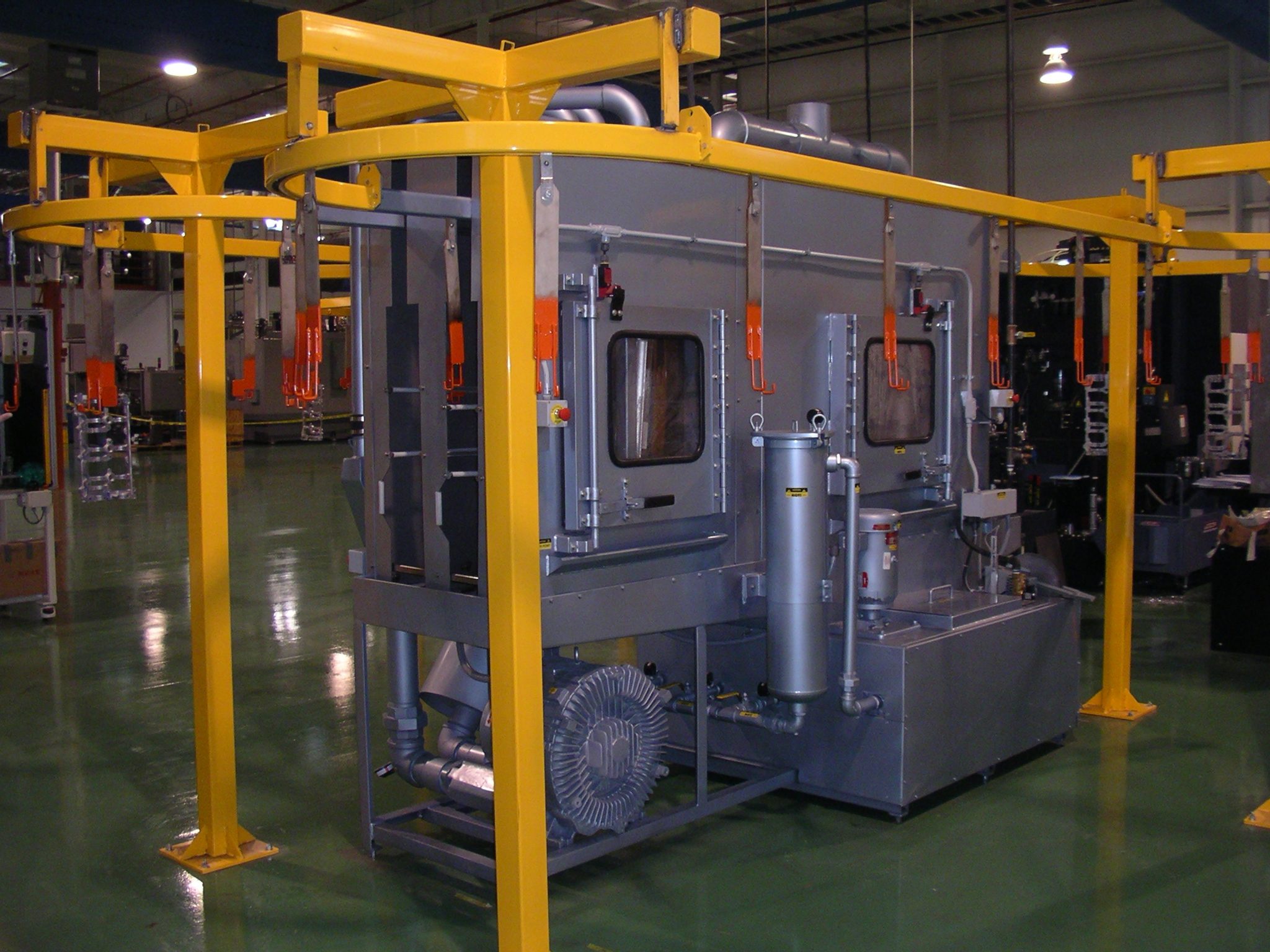
    • Monorail parts washers. Move parts quickly through the cleaning process with a monorail parts washer. Components travel through the machine via an overhead conveyor, and we can customize it to your specific application. 
    • Vertical agitation washers. Clean high volumes of engine components continuously, as parts are dipped into the cleaning solution and rinse tanks. 
    • Completely custom! Get a machine made for your application and facility. Jenfab designs and fabricates custom aqueous parts washers, so you can get what you need as a heavy equipment manufacturer.


    No matter your choice, you’ll have the Jenfab team on your side for maintenance and repairs or to help upgrade your parts washer down the line. We’ll install your parts cleaning system initially, so you can rely on the experts to set everything up.

    Contact us today. Be ready for demand in the construction industry, and invest in your company’s future with a new aqueous parts washer. 

  • Refueling Our Tanks: Jenfab’s Servant Leadership Culture

    Refueling Our Tanks: Jenfab’s Servant Leadership Culture

    We measure success by the way we impact people’s lives. 

    “One Team” means working together for a shared purpose. At Jenfab Cleaning Solutions, we have each other’s backs. We foster a servant leadership culture that puts the team’s needs and our community first. 

    A servant leadership style isn’t about a hierarchy or hearing from only one person at the top. Transformational servant leadership empowers everyone to lead in their own way and participate in realizing a shared vision. 

    As servant leaders, we share power and enact change within the company by listening to everyone and helping others grow. We build Trust in Relationships when we lift each other up and view failure as a learning opportunity.   

    The bottom line: People come first here. 

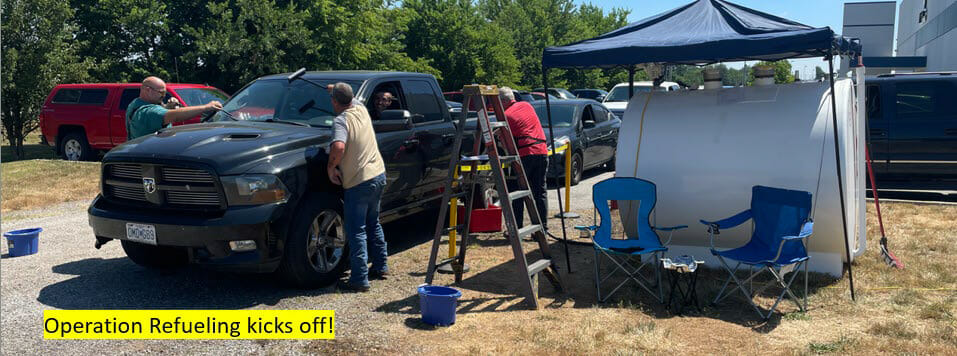
    Jenfab team members fuel a black truck and wash its windshield during the refueling event.

    Tank Refueling Event: Car, Body & Spirit  

    Jenfab is aware that times have been hard. We’re living it alongside our employees and customers. World events in 2022 have caused inflation and gas prices to rise. Higher prices all around mean tighter budgets and added stress for those trying to care for their families. 

    Rising Food & Gas Prices 

    As of late September 2022, the Consumer Price Index (CPI) for all consumer items increased by 8.3% over the previous 12 months. Food prices have increased by 11.34% in the past year, and consumer energy costs have increased by 23.8%. 

    Rising gas prices have also affected the United States. COVID-caused production stalls and the Russian invasion of Ukraine caused gas prices to skyrocket. Regular gasoline prices increased by a record-breaking 49% from January to June 2022, and diesel prices rose by 55% in the same period.

    A Bias for Action & a Heart for Our Team

    We prefer action over inaction. A bias for action pushes us forward faster and champions acting versus reacting. Our bias toward action is reflected in everything we do, including how we support our team. 

    With prices for everyday essentials rising, Jenfab decided to take matters into its own hands. A group of servant leaders saw a need. These individuals hosted a refueling event for the whole team with a farm gas tank and pump. 

    Employees drove through the line and refilled their tanks—physically and spiritually. Team members pitched in to fuel cars, wash windshields and provide homemade lunch for all who attended. 

    In the first hour of the event, the gas pump stopped working. Our team banded together and worked quickly to get a new part delivered that morning. Then the fueling line was back up and running! By lunch, we fueled over 900 gallons. That’s over 900 gallons of free gas for our team’s vehicles! 

    Everyday Impact

    Our recent refueling event was our company’s way of saying, “You matter.” 

    Our team makes a difference every day. We couldn’t build the machines we do without our employees. Together, our efforts serve our customers and the industries the world relies on.

    Our custom cleaning solutions have an everyday impact. We help customers build homes. We advance travel and healthcare for communities across the globe. We aid in protecting our cities and our country. It all starts with our employees. 

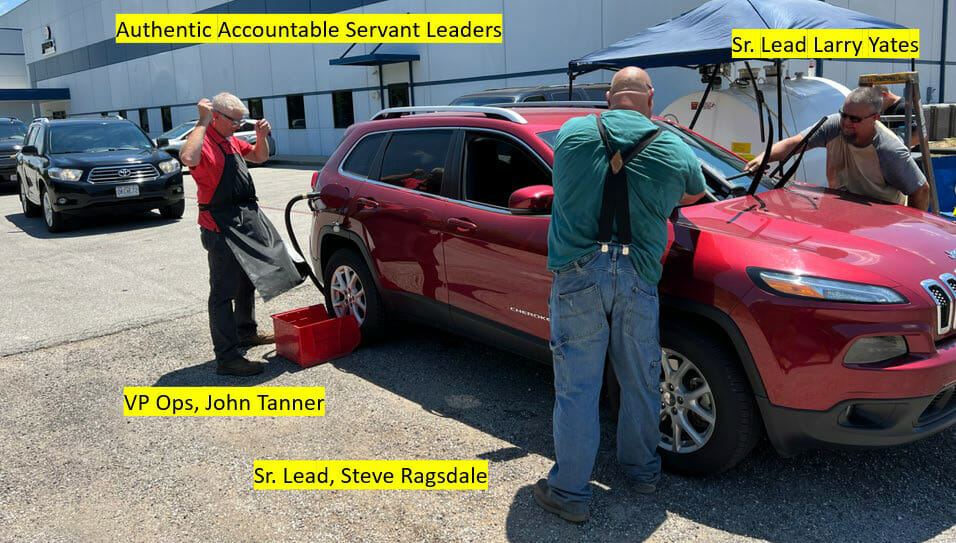
    Servant leaders on the Jenfab team fuel up a red SUV with gas and clean the windshield.

    Growing Together: Servant Leadership Qualities 

    Refueling our tanks in times of need is one example of our servant leadership. We’re fostering a culture of people who put others’ needs first. In doing so, we create a better work environment for our team with more effective processes and stronger relationships. 

    We value safety, development, feedback and a One Team mindset. As we practice these values, we gain new skills that help us grow as professionals and people. 

    The servant leadership qualities we strive for include:

    • Listening. We listen to comprehend, and we hear out all voices.
    • Empathy. We’re in this together. We have each other’s backs. 
    • Awareness. We pay attention to the challenges of others, and we respond with compassion. 
    • Conceptualization. We share a vision. We all understand where we are going. 
    • Stewardship. Everyone participates. We lead and help each other where we can.

    Additional Team Activities 

    We find ways to give back to our team and our community. Several team members helped the Salvation Army with their holiday kettle collection. We painted kettles for our local Salvation Army Corps in Springfield, MO

    At the end of the summer, we had some fun on a team-building float trip. We kayaked down the James River in Missouri and hosted a potluck barbecue. This trip gave our team the chance to bond outside of the shop. 

    Want to Be a Part of Our One Team? 

    Do work that has a purpose. Use your technical skills. Hone your craftsmanship. Trust your team. Grow. 

    When you join Jenfab, you’re joining a company with a team-first mindset. At Jenfab, you have a voice. Let us know what you need to grow. We support your ideas, treat you with respect and always have your back.

    Join our team of servant leaders. We know you have something unique to bring to the table. 

    We’re hiring experienced fabricators. Metal and steel fabricators are encouraged to apply! Check out our benefits and see why Jenfab is a great place to work. 

    We hire veterans and those looking for a second chance. We believe everyone deserves the opportunity to make a living and build a career.   

    Apply to Jenfab today. If you have questions, please reach out to our HR department at [email protected]

  • Stay Cool, Stay Safe: Jenfab & Heat Illness Prevention

    Stay Cool, Stay Safe: Jenfab & Heat Illness Prevention

    Heat is a workplace health hazard. The Bureau of Labor Statistics reports that 344 workers died from environmental heat exposure from 2011 to 2019. Hot weather doesn’t only pose risks for construction workers and those with outdoor occupations. 

    People working in indoor manufacturing facilities or warehouses are at risk when temperatures heat up. When the temperature rises outside, so does the temperature inside facilities and warehouses. Employees at manufacturing and fabrication companies also use machines and tools that produce heat. 

    In early 2022, the Occupational Safety and Health Administration (OSHA) announced its new National Emphasis Program on heat safety. OSHA’s heat regulations enforce related safety measures under the federal Occupational Safety and Health Act’s general duty clause.

    Midwest manufacturers know that summer days can average 90℉ and 100℉ outside, making it harder to keep it cool indoors. OSHA heat regulations are meant to inspire actions to keep workers safe.

    Jenfab Cleaning Solutions focuses on doing the right thing for our team because it is the right thing to do, not because of the threat of enforcement. Taking care of our team is a part of our culture. We like to say, “I’ve got your back.” 

    Learn more about how Jenfab cares for our team when working in the heat. 

    Heat Safety Awareness

    Temperatures can change quickly, affecting the conditions of the workplace. Everyone must be aware of this and have the agility to adjust in a timely fashion.

    First and foremost, the leadership team must actively watch out for the team’s safety throughout the day. It is not a “check the box” exercise to comply with regulations. Authentic care keeps us aligned with OSHA heat safety regulations and creates an atmosphere that goes above and beyond regulatory checklists. 

    Heat illness prevention in indoor places of employment starts with considering environmental heat from the employees’ surroundings and metabolic heat from the employees’ activity levels. When creating a heat injury prevention plan, companies must consider these risk factors:

    • Working outdoors in warm weather
    • Ovens, fires, furnaces and other heat sources
    • Strenuous physical activity 
    • Heavy, non-breathable work clothes 
    • Individual health issues 

    We train employees to identify heat hazards, recognize heat stress symptoms in co-workers, and know when and how to contact emergency medical services. 

    Pay Attention to New Hires Who Aren’t Used to Heat 

    New employees may push themselves to make a good impression. We watch new employees closely, especially if they are not used to working in hot and humid conditions. 

    Over 70% of heat-related deaths happen during a worker’s first week on the job. Over time, our bodies acclimate to our surroundings. New workers may need time to adapt to warm workplace conditions. 

    Pay Attention to Employees With a History of Heat-Related Stress Injuries

    Team members that have experienced heat-related stress in the past are more susceptible to heat injuries. Leaders must be vigilant and take increased interest in monitoring these individuals without making them feel singled out. That is a delicate balance. 

    Heat-Related Illnesses & Symptoms to Watch for

    Some heat-related illnesses are more severe than others. The most serious is heat stroke, when the body can no longer maintain its temperature.

    When the body’s temperature rises too quickly, sweating no longer works to cool it down. In only 10 to 15 minutes, a heat stroke can cause the body’s temperature to rise to 106℉ or higher. Someone who experiences a heat stroke must receive medical attention immediately. 

    Common symptoms of heat stroke include: 

    • Confusion 
    • Slurred speed
    • Loss of consciousness 
    • Dry skin or profuse sweating
    • Seizures 
    • High body temperature 

    Heat exhaustion is another heat-related condition caused by an excessive loss of water and salt. Symptoms of heat exhaustion include nausea, headaches, dizziness, weakness, thirst, cramps, decreased urine output and heavy sweating. 

    If someone is suffering from a heat-related illness:

    • Call emergency medical services immediately, especially for someone you think may be having a heat stroke. 
    • Move the employee to a shaded or air-conditioned area.
    • Remove unnecessary outer clothing, including shoes and socks. 
    • Place cold, wet cloths, compresses or ice on the worker’s head and neck.
    • Soak the person’s clothing with cold water.
    • Circulate the air around the employee. 
    • Encourage the employee to drink water. 

    Less Serious Reactions to Heat

    Team members exposed to warm environments may experience heat cramps or develop heat rashes. Sweating can cause heat cramps as the body loses moisture and salt. Workers who experience heat cramps should be sure to drink water or an electrolyte-replenishing beverage often.  

    Heat rashes are skin irritations caused by excessive sweating and should be kept dry. Both heat cramps and rashes should go away once the individual has cooled down.

    Jenfab’s Proactive Heat Illness Prevention Plan 

    At Jenfab, we take employee safety seriously and work together as One Team to prevent injuries and accidents. When the weather gets warmer, we look out for one another throughout the day and encourage each other to stay hydrated.

    Our heat illness prevention plan includes set precautions for when the temperature in our shop rises above 91℉. Each day, we measure the temperature and humidity inside the shop with a sling psychrometer. We also measure the heat output levels of machines like our laser cutter. 

    If the National Weather Service sends a heat alert, we prepare accordingly and take precautions. 

    We take the following protective measures to keep our team safe. 

    Heat IndexRisk LevelProtective Measures
    91℉ to 103℉Moderate– Remind workers to drink water (about 4 cups/hour)
    – Run shop exhaust fans
    – Provide electrolyte heavy beverages and frozen popsicles 
    – Review and post heat-related illness topics with workers: how to recognize heat-related illness, how to prevent it and what to do if someone gets sick
    – Establish and enforce a 5-minute cool down break every hour (breaks should be taken in cool areas)
    – Set up a buddy system and instruct supervisors to watch workers for signs of heat-related illness
    – Monitor workers closely 

    If workers must wear heavy, protective clothing or perform strenuous activities, additional precautions are recommended: 
    – Schedule activities at a time when the heat index is lower
    – Develop work and rest schedules 
    103℉ to 115℉HighIn addition to the steps listed above: 
    – Alert workers of high risk conditions
    – Actively encourage workers to drink water (about 4 cups/hour)
    – Limit physical exertion 
    – Supervisors to walk around every hour with popsicles 
    – Establish and enforce a 10-minute cool down break every hour (breaks should be taken in cool areas)
    – Limit work around machines that put off excessive heat or work that requires the use of heavy or non-breathable clothing
    – Adjust work activities 
    – Use cooling techniques 
    – Watch and communicate with workers at all times 
    – When possible, reschedule activities to a time when the heat index is lower 
    >115℉Very High or Extreme– Reschedule non-essential activity for days with a reduced heat index or to a time when the heat index is lower
    – Move essential work tasks to the coolest part of the work shift; consider earlier start times, split shifts, or evening and night shifts
    – Strenuous work tasks, work around machines that put off excessive heat and work requiring the use of heavy or non-breathable clothing or impermeable chemical protective clothing should not be conducted when the heat index is at or above 115℉ 

    If essential work must be done, in addition to the step listed above: 
    – Alert workers of extreme heat conditions 
    – Establish water drinking schedules (about 4 cups/hour)
    – Develop and enforce protective work and rest schedules
    – Conduct physiological monitoring 

    Stop work if essential control methods are inadequate or unavailable.   

    Making It Easy for the Team to Stay Hydrated

    Hydration is a critical component to keeping our team safe. Drinking enough water each day is crucial for many reasons:

    • Regulates body temperature
    • Keeps joints lubricated
    • Prevents infections
    • Delivers nutrients to the cells
    • Keeps organs functioning properly

    Being well-hydrated also improves sleep quality, cognition, mood and overall shop productivity.

    Jenfab makes drinks, popsicles and other hydration products readily available to our team. We have tried different products like Gatorade, Sqwincher and Liquid I.V. We are constantly modifying what we have available based on what our team uses the most. If our team likes the drinks we have available, then they are more likely to use them and stay hydrated. 

    Lately, we have found that our team likes Liquid I.V. It may be more expensive than other hydration options, but you cannot put a price on the team’s safety. Actions must speak louder than words. We don’t just say, “I’ve got your back.” We back it up with our actions.

    Staying Engaged to Ensure the Team Is Safe

    Jenfab has a prevention plan in place. We don’t shy away from discussing workplace hazards. Our team is aware of hazards and informed on what to do should someone get sick or have an accident. A knowledgeable and prepared team creates a safer environment for everyone.  

    We strive for Goal Zero—that’s zero accidents and injuries. By working together, we can prevent occupational safety issues like heat injuries and illnesses. 

    Are you interested in a career at Jenfab? We offer opportunities for you to grow in your craft and skill set. Start your fabrication or engineering job here today.

    Explore our job opportunities, and apply today online. You may also contact our HR department at [email protected].

  • Parts Washer Maintenance: How to Tune A Gas Burner

    Parts Washer Maintenance: How to Tune A Gas Burner

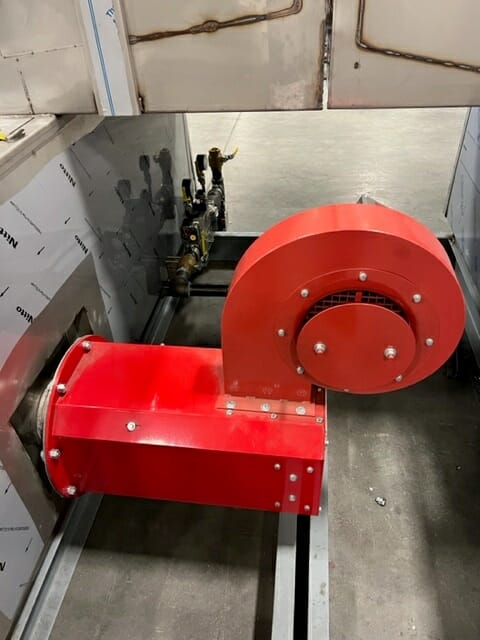
    Your ability to clean increases as the temperature increases. Many heated parts washers use industrial gas burners to reheat aqueous cleaning solution. 

    Gas burners require tuning to burn efficiently. Companies should tune gas burners periodically, adding it to your regular parts washer maintenance.

    Is your heated parts washer struggling to maintain the correct temperature? It may be time to tune its gas burner. 

    5 Steps to Tune an Industrial Gas Burner

    Combustion occurs when hydrocarbon fuel reacts with oxygen in the air. It produces carbon dioxide, water and heat. When you tune a gas burner, you adjust the fuel-to-air ratio (FAR). 

    You can find the fuel-to-air ratio by analyzing the flow of air and gas. The ratio compares the measure of fuel to the measure of air. Adjustments to this ratio can increase efficiency and prevent the burner from running too rich. 

    Inefficient burners consume more fuel and increase wear on the equipment. Tuning the burner also lets you check for any buildup, dirt or warping on the surrounding parts.  

    Always go slow and be thoughtful when tuning a gas burner. Follow safety measures set by the manufacturer and your company. 

    1. Set the gas burner to high fire. 

    You want to tune a burner when it is hot. A cold heating system can throw off your readings. Start when the heating system is at room temperature, then set the burner to high fire. If the burner system uses a blower, you should hear the blower’s motor kick on. 

    2. Open the air header and gas header. 

    Open the burner’s valves. If your combustion heating system has multiple burners, open the valves for each one. 

    3. Allow the gas burner to reach the required temperature. 

    Before checking the oxygen levels, let the burner reach a high temperature. 

    4. Analyze the exhaust oxygen levels.

    You can use a gas analyzer to measure oxygen in the flue gas or monitor the machine’s combustion control system (CCS) if one is available.  

    Excess oxygen is excess air. Generally, the amount of excess air should be around 3%. Some excess air is necessary for safe heating. Too much excess air causes inefficiencies, as you burn fuel heating the air instead of the cleaning solution. 

    5. Make necessary adjustments. 

    Adjust the fuel flow based on your analysis from step four. Oxygen levels should be between 2.5% and 4%. 

    If the machine’s burner has high oxygen levels, increasing the flow of the natural gas will lower the amount of oxygen. Too little oxygen? Decreasing the flow of natural gas will increase the oxygen available. 

    More About the Fuel-to-Air Ratio

    Controlling the fuel-to-air ratio helps you run your heated parts washer more efficiently. Tighter ratios increase your control over combustion and reduce fuel usage. 

    Stoichiometric combustion is the “perfect” combustion ratio, but it is not always the most efficient or practical way to run a machine. You achieve stoichiometric combustion with an air-to-gas ratio of 10:1—or when the reaction consumes all of the fuel with no excess air (oxygen). 

    Combustion Products: Carbon Dioxide Levels

    Combustion creates exhaust, or flue gas. The flue gas contains carbon dioxide, water and nitrogen. 

    If you use natural gas, you want to see carbon dioxide levels between 9% and 10%. Carbon dioxide levels should remain between 10% and 12% for those using propane gas. 

    The Need for Excess Air: Safe Carbon Monoxide Levels 

    Excess air ensures a safe combustion process. Not adding enough air to the fuel means you won’t burn all of the gas. When too little oxygen is present in the mixture, it produces carbon monoxide instead of carbon dioxide. 

    According to OSHA, workers should not be exposed to more than 50 PPM (parts per million) of carbon monoxide within an eight-hour timeframe. Carbon monoxide can be deadly, so monitoring its levels and ensuring you have enough oxygen available is essential. 

    Know What Type of Gas Burner You Have 

    The burner type can affect its consistency and heat output. Knowing what kind of burner your machine has helps you understand how heat is created and transferred. 

    Forced-draft burners utilize blowers that run continuously. The pressurized air from the blowers oxidizes the fuel. Natural-draft burners do not use blowers. These burners rely on their design to draw air in using the kinetic energy produced by the gas stream. 

    You can control the fuel-to-air ratio by:

    • Using a fixed air system so that air flow remains constant. You control output by adjusting the burner’s fuel flow. 
    • Implementing a variable-frequency drive to control the air and regulate the blower’s speed. 
    • Monitoring the flow of air and gas with sensors. A control system can regulate the flow of both air and fuel, adjusting as needed. 

    Check Heat Transfer Surfaces

    Flue gas can cause contaminants to appear on surfaces where heat is transferred. When tuning a machine burner, take the time to look for signs of soot, scale and oxide buildup on nearby surfaces. Clean the surface if you notice any deposits. 

    Unwanted deposits are signs that something is off. You may have a low air-to-fuel ratio or improperly prepared fuel. Continual buildups may mean that your gas burner is malfunctioning. 

    Dirty heat transfer surfaces can reduce efficiency by approximately 1% for every 40℉ increase in stack temperature. 

    For the best cleaning results, you must maintain your aqueous parts washer. Add tuning gas burners to your regular parts washer maintenance. 

    When you tune the machine’s gas burners, you ensure your heated parts washer will run efficiently and safely. Tuning burners reduces fuel consumption while helping you achieve the clean you need. 

    Partner With Jenfab for Maintenance & Custom Parts Washers

    Need help tuning your parts washer’s burner? Connect with a technician to send a maintenance request. Our experienced technicians help with preventative maintenance and repairs. We can offer advice and instructions on tuning a gas burner or visit your facility to help out. 

    Is your parts washer not working as well as it used to? Time for an upgrade? At Jenfab, we design and manufacture heated parts washers to your specifications. Request a quote from our experts to get started. 

  • How to Replace a Screw Plug Heater

    How to Replace a Screw Plug Heater

    Heated parts washers boost cleaning efficiency. Heat increases chemical reaction rates, which speeds up your cleaning time and helps sanitize parts. 

    When your immersion heater stops operating correctly, your parts washer won’t clean as it should. Check your heater regularly to catch wear and corrosion that could be affecting its operation.  

    Is your screw plug heater on its last leg? Learn how to replace an immersion heater plug on a parts washer. This article covers installing a screw plug heater and choosing the best type for your application.

    How to Install a Screw Plug Immersion Heater 

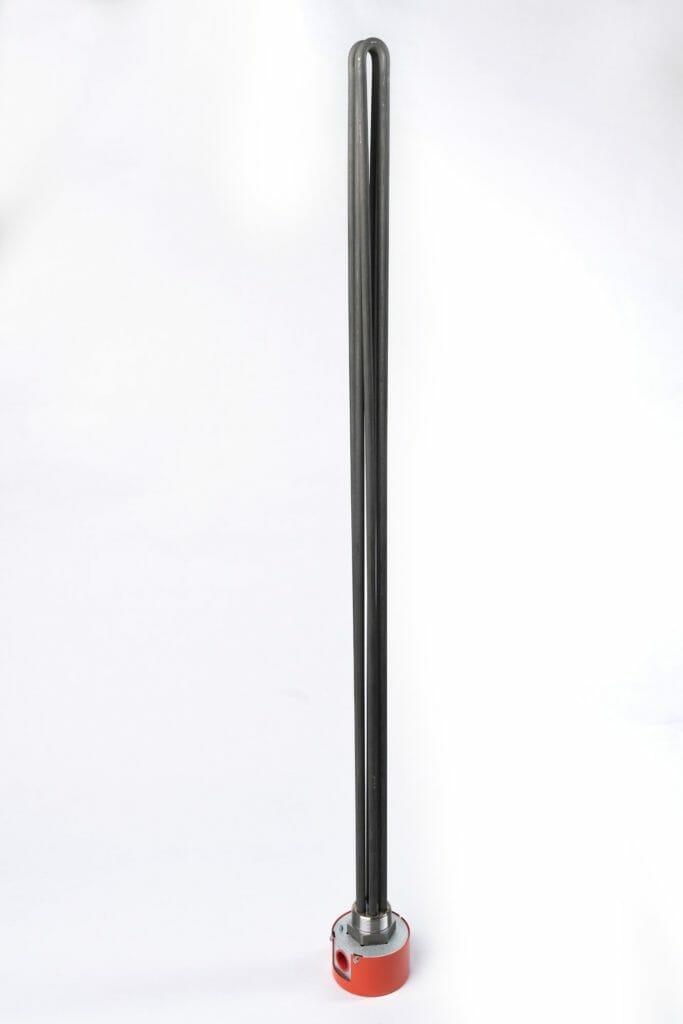
    An immersion screw plug heater from Jenfab Cleaning Solutions.
    Pictured is a screw plug heater from Jenfab.

    Screw plug immersion heaters work well for warming small tanks. These heaters sit inside the solution tank, transferring heat directly to the aqueous cleaning solution. 

    Installing a screw plug heater is simple. These heaters are screwed directly through a threaded opening in the machine’s tank. Before you begin, make sure your parts washer is not in operation. 

    Do not install a screw plug heater near combustible vapors or in a flammable gas atmosphere because it could ignite. 

    If you have questions about replacing your screw plug heater, contact the experts at Jenfab. We will walk you through the process or schedule a visit to repair your machine. 

    1. Turn the system OFF 

    Ensure the aqueous parts washer is OFF and not in operation. Empty the solution tank. 

    2. Uninstall the old heater 

    Carefully remove the worn or broken screw plug heater from the threaded opening in the parts washer’s tank. 

    3. Check the new heater 

    Examine the new screw plug immersion heater for any missing pieces or damage before installing it. Do not install a heater you think may be faulty. 

    4. Review the heater’s placement 

    The threaded opening already on your tank should be in the correct position for your application. Just in case, make sure your heater placement meets these recommendations. 

    A screw plug heater should be 2” below the tank’s minimum liquid level and 1” to 2” above the maximum expected amount of sediment. 

    Screw plug heaters should always remain immersed entirely in the aqueous solution. They should always be covered by the liquid. They must be installed below the lowest liquid level that occurs during cleaning. 

    Sludge and sediment will collect at the bottom of the tank, so the heater should sit above these collections for optimal results.  

    5. Apply a sealing compound

    Before installing, cover the heater’s threads with a pipe sealing compound.

    6. Screw the heater into the threaded opening

    Bring the heater up to the threaded opening in the tank wall. Use a wrench to tighten the hex portion of the heater in the threaded opening. 

    Be careful not to over-tighten the heater. Doing so could damage the treads and cause the tank to leak. 

    Once it’s in place, test it out! Fill the tank with solution again and run a test cleaning cycle. 

    You want to ensure the tank comes to the required temperature and that the heater’s thermostat or controls are not going to get wet via condensation or a leak.

    Choosing the Right Screw Plug Heater for Your Heated Parts Washer 

    Screw plug heaters are hairpin tubular elements welded onto a pipe threaded fitting. The components of a screw plug heater include a sheath and heating elements that come in various wattages.  

    Protection from Corrosion: Sheath Material 

    Screw plug sheaths can be brass, copper, steel or stainless steel. A popular sheath material is Incoloy®, a corrosion-resistant material with a nickel-iron-chromium base. 

    An immersion heater’s sheath material must be able to withstand the cleaning solution or liquid it rests in. If you pair cleaning solutions or soils with an incompatible material, it will damage the heater.

    Sheath MaterialMaximum TemperatureCommon Uses
    Copper350℉Clean Water
    Steel750℉Oil, Petroleum 
    Stainless Steel1200℉Food Processing Equipment, Cutting Oils, Medical Equipment, Alkaline Cleaning Solutions, Wax
    Incoloy®1500℉Cleaning & Degreasing Solutions, Pickling Solutions, Corrosive Solutions

    Electrical Power: What’s Enough Watts?

    Effective heaters increase and maintain the cleaning solution’s temperature. Too much electrical power can scorch the liquid, potentially harming the parts inside the machine. Too little, and the solution tank won’t maintain its temperature.

    Screw plug heaters work best for small heated parts washers. Smaller tanks are easier for this type of immersion heater to warm and maintain. When determining the appropriate heater wattage for a parts washer, consider these three things:

    1. Startup 

    Creating the starting temperature takes the most wattage. Can the heater transfer enough heat to meet the required temperature? The temperature difference, size of the tank and type of cleaning solution affect how much power the heater needs initially to warm the tank.

    2. Operation 

    Once the heater meets the required temperature, it must maintain it without losing too much heat or overheating. Operational heat is the heat required to keep a consistent temperature during the cleaning process.

    3. Heat Loss

    Every heated parts washer loses heat as it operates. A heater’s task is to preserve the required temperature while facing potential heat loss. The tank material and insulation can decrease the amount of heat lost per cleaning cycle.

    Parts Washer Maintenance: Screw Plug Heater

    All equipment needs to be repaired or replaced eventually. You can ensure your screw plug immersion heater lasts a bit longer by first selecting a material that suits your application. Over time, buildup can form on screw plug heaters because they sit inside the liquid cleaning solution. 

    Limescale can develop if you’re heating water and water-based solutions. For those heating oils, overheating can cause coking, which may burn oil onto the immersion length of the heater. These buildups can be cleaned and scrubbed off with a wire brush.

    If your heater is no longer working, you can find a replacement online at Jenfab Cleaning Solutions. We offer spare parts and replacement heaters for parts washers. 

    Our options include 9KW, 12KW and 18KW screw plug heaters, each welded to 2” NPT fittings. 

    Not sure what you need? 

    Want our technicians to take a look? 

    Connect with a technician and send us a maintenance request today. We’d be happy to help you determine what to order or visit your facility to upgrade your worn screw plug heater. 

  • What to Know About Becoming an Electrical Engineer

    What to Know About Becoming an Electrical Engineer

    Is engineering the right career for you? Engineers are creative problem-solvers who make an impact on the world. In the parts cleaning industry, electrical engineers design systems and panels that distribute electricity throughout custom parts washers

    Aqueous parts washers clean components for the next manufacturing stage or the consumer. Electrical engineers help make clean parts happen. Becoming an electrical engineer in this industry lets you work on a variety of machines for aerospace, automotive, ammunition, oil and gas, and medical companies.

    What Is Electrical Engineering? 

    Electrical engineers design, research and test electrical equipment, which powers the buildings, machines and electronics around us. These individuals use analytical skills, mathematical modeling and imagination to circulate electricity in products or machines. 

    At Jenfab Cleaning Solutions, our electrical engineers design custom control panels for parts washing machines. Most custom parts washers include a programmable logic controller (PLC) with a touch screen human-machine interface (HMI). Our electrical engineers use AutoCAD, a computer-aided design software, to develop electrical control circuits for our custom products. 

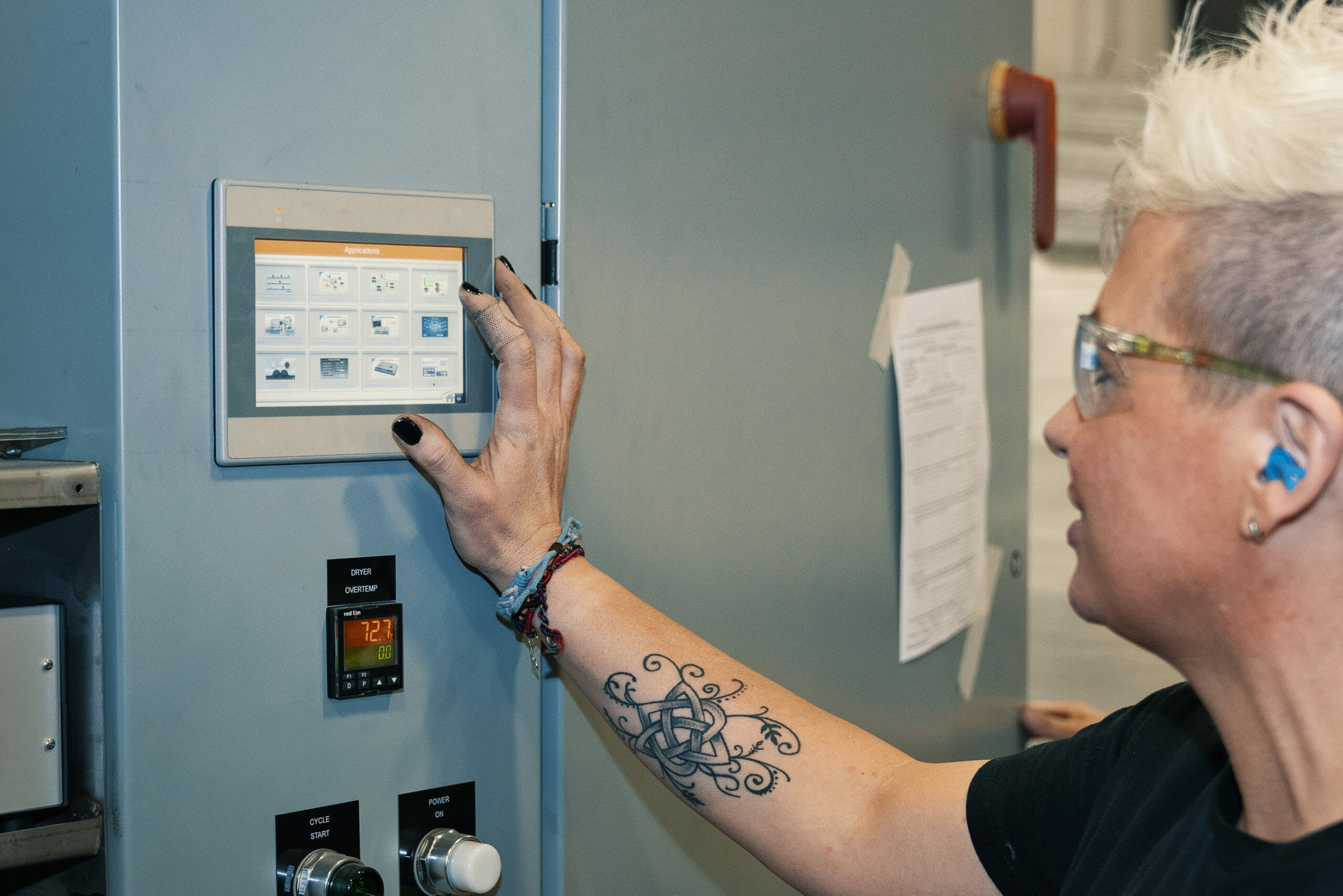
    Jenfab's custom parts washers feature automation. An employee uses a Human Machine Interface system to test out a machine.
    A Jenfab employee tests out an HMI (human-machine interface) on a custom parts washer.

    Electrical Engineering Job Responsibilities  

    Electrical engineers focus on energy. They consider the customer’s needs while designing circuit layouts that distribute electricity correctly and at the right voltage.

    As an electrical engineer, you will: 

    • Create circuit and wiring designs according to provided specifications
    • Test electrical designs for potential errors
    • Receive feedback on designs and make revisions if necessary
    • Optimize control panels for customers

    Electrical engineers collaborate with mechanical engineers to design a product that works for the customer. At Jenfab, our engineering team uses their electrical expertise to help with the design process and the automated control of the machines.

    “I get to be a really big part of the design process. I also get to work with the machines, which is a lot of fun,” says Kyrie, one of our entry-level electrical engineers.

    Other responsibilities of an electrical engineer include:

    • Reading blueprints and technical drawings
    • Researching new technology and innovations 
    • Estimating materials, time and prices for electrical component wiring and installation  
    • Overseeing the installation of electrical components and systems 
    • Communicating with clients, engineers and fabricators 

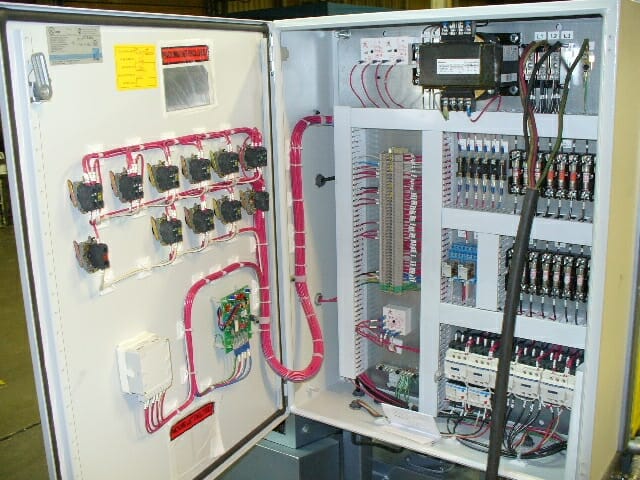
    Inside a Jenfab parts washer’s electrical control panel.

    What Are the Qualifications to Become an Electrical Engineer?

    You can’t see electrons or voltage. Electricity is invisible. Designing a functioning electric panel takes mathematical skills and the ability to visualize the abstract. Electrical engineers use computer-based modeling, so a level of comfort with computer software is a big plus to anyone starting in this career field.

    Great electrical engineers are: 

    • Good at math 
    • Interested in physics 
    • Creative and curious
    • Problem-solvers
    • Detailed and focused
    • Great communicators
    • Team players
    • Timely

    Many electrical engineers have a bachelor’s degree. Most engineering jobs require a degree, but not all require four years of formal education. If you don’t have a bachelor’s degree, you may be able to get a job based on your interests, work experience and prior training.

    At Jenfab, we prefer engineering candidates to have a bachelor’s degree and prior work experience. However, these are not requirements for a position. If you think you’d be a good fit for our team, we’re open to reviewing your application and learning more about you. 

    Why Choose This Career? Benefits of Electrical Engineering Jobs

    Electrical engineers have a challenging and engaging job. Beyond the day-to-day, individuals in this career field can increase their earning potential over time and make a difference for their customers and communities. 

    Exciting Work Each Day

    An engineering career keeps you on your toes. It lets your curiosity and imagination take the lead. No project is alike, and technology continues to advance. There’s always more to learn. You’ll test your brain every day to figure out the best way to design control panels and circuits.

    Earning Potential 

    Electrical engineers can up their earning potential as they grow in the field. While your experience, specialty and geographic area affect your earnings, all engineers have the opportunity to develop new skills and earn more over time. 

    Continuing to learn helps you create better designs, opening the door for career advancement. As you gain experience, you will help with more complex projects and possibly enter team leadership roles.

    Make an Impact 

    Most engineers report high job satisfaction. They enjoy the technical challenge and ability to see the fruits of their labor in a finished product. Most importantly, engineers relish the opportunity to make a difference. 

    Electrical engineers play a big part in producing products that benefit society. What good is a perfectly designed product if it can’t run on electricity? As an electrical engineer, your work makes an impact every day. You’ll help businesses and communities across the globe. 

    Start Your Career at Jenfab

    You will grow at Jenfab. Start your career here with an entry-level engineering job, or bring your experience to our creative, action-oriented team. We don’t compete with each other. We work together as One Team to move projects forward and help everyone succeed. 

    Every individual is a vital part of our company. We want you to bring your unique perspective to the table.

    Professional Development: Never Stop Learning  

    Are you curious and ready to learn? We train employees on the job. You can pick up new skills as you work alongside other team members. We offer opportunities for professional growth and support your efforts to keep learning. You will accomplish your career goals while driving the company forward with new ideas.

    Career Advancement: Get Where You Want to Go

    We map out every role in the company. Our employees know the expectations and requirements for each position. We help you understand how to advance at Jenfab as you gain expertise and work toward your goals. Jenfab is a place where you can build your career, whether you need to strengthen your foundation or you’re ready to climb higher.

    Employee Benefits: Taking Care of You Like Family

    Your health is important and so is time spent with the ones you love. We invest in benefits that help you care for yourself and your family. Jenfab employees can enroll in company-sponsored health, dental and vision insurance. We pay 80% of each employee’s health insurance premium. Vacation time, paid holidays and a 401(k) retirement plan are included in our benefits package. 

    We have your back—from the team environment on the shop floor to supporting your plans for the future. 

    Are you looking for an electrical engineering job or internship? Do you want to explore the parts cleaning industry? Come grow with our team.

    Reach out to Jenfab Cleaning Solutions in Springfield, MO. We’re always looking for potential candidates to join us. 

    Fill out our quick pre-application form or email our HR Department at [email protected]